GTA 6: Made in Bengaluru, set in Miami
GTA 6 launches set in Vice City (Miami), with over 1,600 developers at Rockstar’s Bengaluru studio contributing; Newzoo projects $4.5B launch-week sales.
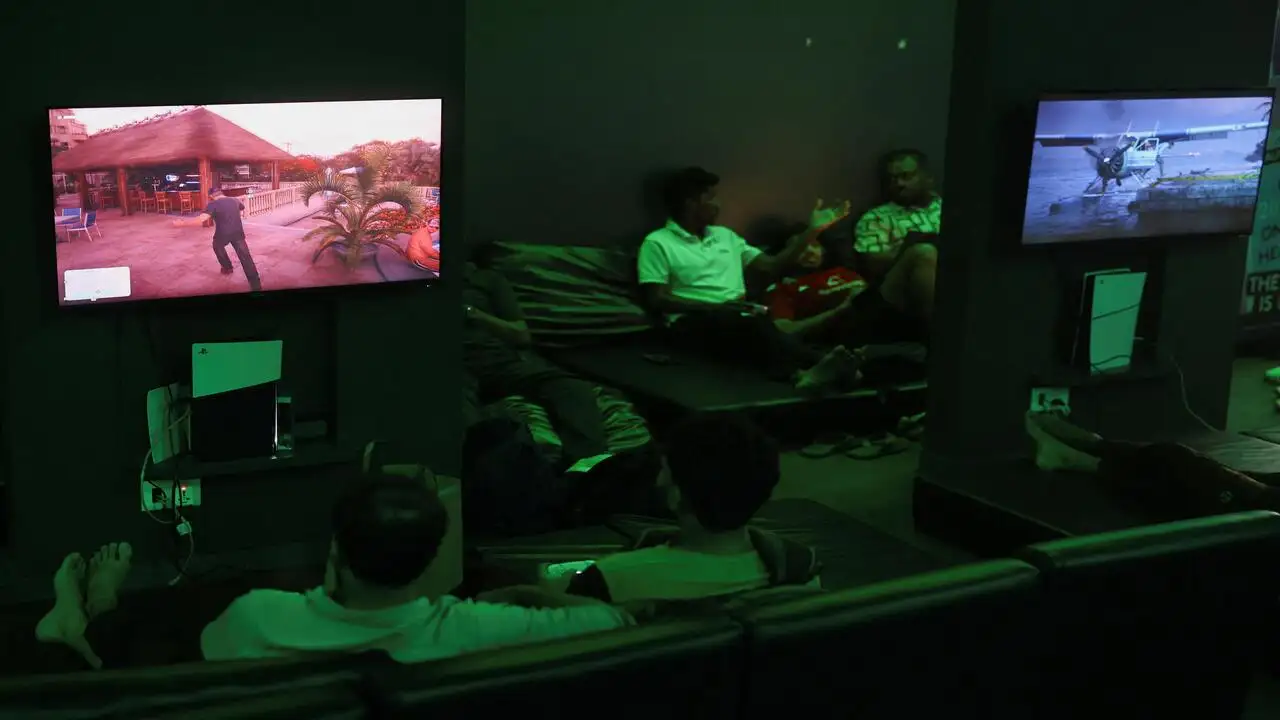
Bengaluru: The first thing that strikes you when you boot up GTA 6 is how good Vice City looks, right down to the neon reflected in a convertible’s windscreen.Grand Theft Auto VI, the action-adventure game developed and published by Rockstar Games, is set in a fictional city modelled on Miami. But part of the game took shape much closer to home. More than 1,600 developers at Rockstar’s Bengaluru studio worked on it, Bengaluru South MP Tejasvi Surya said on X on the eve of its release.In July, games researcher Newzoo projected that Grand Theft Auto VI could generate $4.5 billion in worldwide sales by the end of its launch week, including pre-orders. When the game arrived on Thursday, players had waited 13 years for a sequel to GTA V, which had sold nearly 235 million copies.Some of the details that bring Vice City to life require painstaking research. Rockstar developers travelled to Miami and visited nightclubs to study their lighting. Aaron Garbut, one of the game’s development leads, told Bloomberg that the team had to work out what each patron would do, animate those movements and make the lights change in sync with the music.Rockstar has said little about which parts of Vice City its Bengaluru team worked on. But the city’s contribution to the game has roots in a local studio whose recruits once spent their first two weeks playing video games at work.Rajesh Rao, founder of Dhruva Interactive, started a multimedia business in Bengaluru in 1995 and moved into game development in 1997. Many of his early hires, he recalled, had never even seen a gaming console.Joshi Mark Premnath, a founding member of Dhruva, recalled on LinkedIn how the team visited British Library to study picture books and sketch from them. Its engineers also figured out how to render three-dimensional scenes on a Pentium PC without a separate graphics accelerator.In November 1998, Dhruva won a contract to develop a PC version of Mission: Impossible. The publisher eventually shelved the project, leaving the developers with a game they could demonstrate to prospective clients but one that never went on sale.At a game developers’ conference in 2001, Rao spotted Microsoft’s Ed Fries on a street corner and stopped him to demonstrate the game on his laptop. At a subsequent meeting with Microsoft, Dhruva showcased cars its artists had modelled for British games company Codemasters. Microsoft had just approved a racing game called Forza Motorsport.Studios on Microsoft’s shortlist were given four weeks to build four cars. Each had to look convincing up close, show damage after a crash and have a simpler model for when it appeared in the distance. Dhruva’s artists used the same tools as their counterparts at Microsoft, and both teams reviewed the work. “Since then we’ve worked on every Forza that’s ever been built,” Rao said in 2017.By 2016-17, overseas studios were sending Dhruva rough layouts of game levels and relying on its team to turn them into detailed environments that players could explore. When Rockstar acquired Dhruva in 2019, about 300 employees joined its Bengaluru studio. Rockstar already had around 500 employees in the city.There is an interesting parallel between the work on Vice City’s nightclubs and one of Dhruva’s early demonstrations for American publishers. Years before Rockstar’s developers travelled to Miami to study its clubs, Dhruva had built a bar of its own to showcase its capabilities. It was a Wild West saloon after closing time, with the barman cleaning up.The idea, Rao told Thomas Friedman for his book The World Is Flat, was to give prospective clients a piece of their own culture to judge the studio’s work. Nobody on the Bengaluru team had ever set foot in a real saloon.Money habits form by age 7. Is your child learning the right ones? Join the TOI Money Masterclass.
Topics in this story
Gathered from external sources. Rights to this text belong to whoever originally published it.