Diesel export ban backed by Trump could result in 'unintended consequences,' experts warn
Market watchers said a diesel export ban could have unintended consequences.
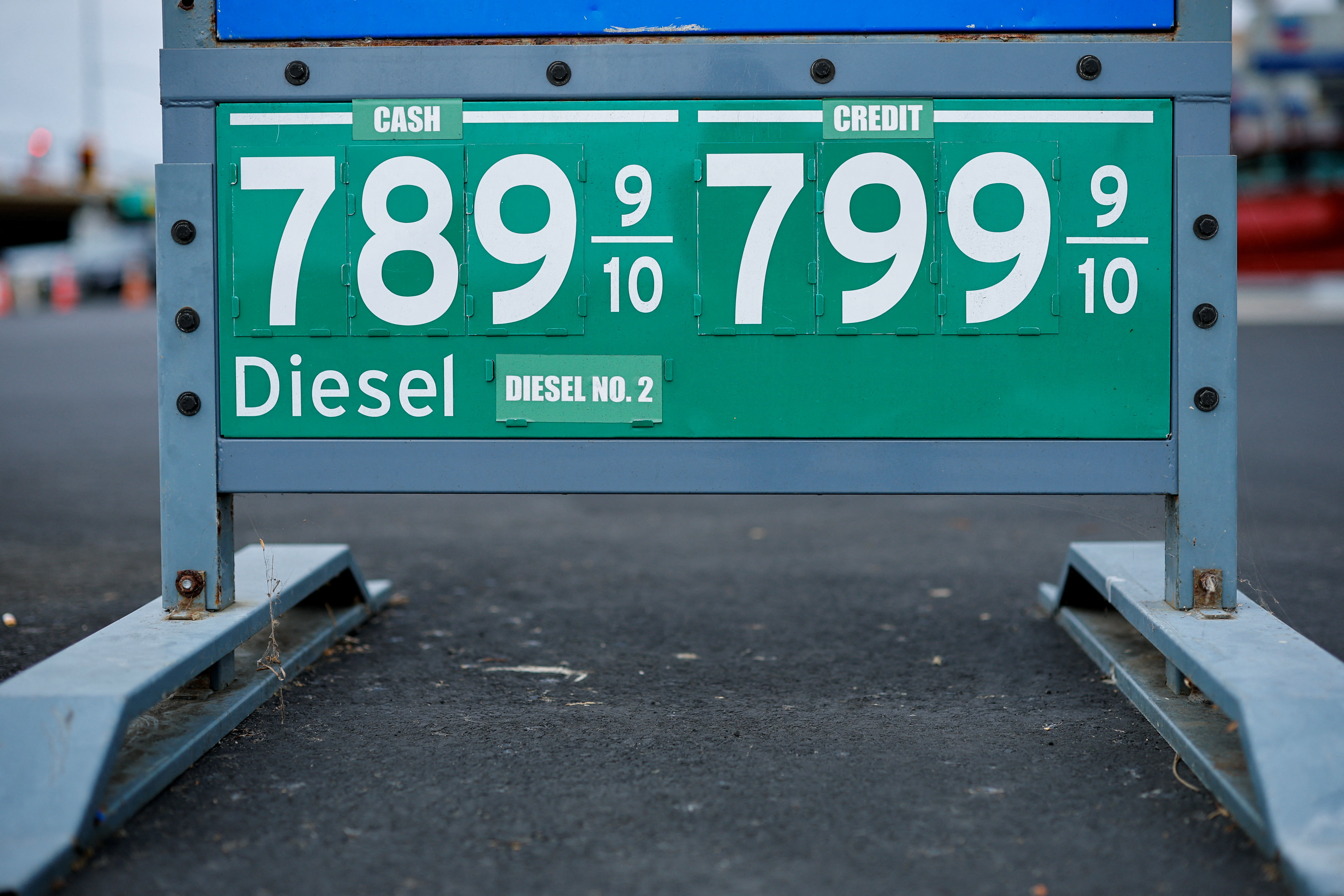
Diesel prices have surged since the start of the Iran war , putting pressure on businesses facing substantially higher costs for the workhorse fuel of the US economy.
Seeking solutions ahead of midterm elections critical for the Republican Party's control of Congress, President Trump and the White House are reportedly preparing a 90-day diesel export ban as the administration faces increasingly loud calls from the farming lobby, Republican lawmakers on Capitol Hill, and other constituencies to get a handle on fuel prices that have reached all-time highs.
Yet doing so is likely to be much more complicated and more economically disadvantageous than the White House may be hoping, according to a growing chorus of fuel experts, economists, and market watchers — even as there appears to be little short-term prospect of an end to the Iran war.
"[Trump] does seem to want to do something to respond to calls for relief," Tobin Marcus, head of US policy and politics at Wolfe Research, wrote to clients. Yet, "the White House is clearly aware that a ban could have unintended consequences."
The US currently produces 5.3 million barrels per day (bpd) of diesel fuel, a distillate created by refining crude oil. Roughly 3.6 million bpd of that is kept in the US to meet domestic demand for the fuel, per RSM Research data, while the remaining 1.67 million bpd is exported abroad, accounting for around 18% of the world's diesel supply.
As of Wednesday, the White House is reportedly preparing to implement a 90-day diesel export ban, according to reporting by Politico , which would run roughly through the end of the year if implemented within the following days or the next few weeks.
The theory behind a full or partial export ban goes like this: By keeping diesel inside the country, domestic supply will rise, putting downward pressure on prices as there's more diesel to go around. Moscow has since July enforced an export ban on diesel inside Russia in an attempt to subdue domestic prices, as the Ukrainian military's strikes on Russian refineries have caused price hikes and shortages throughout the country.
While the idea could work in the US in theory, economists and oil market experts argue that such a ban could create more problems than solutions.
The first is free-market correction, Joe Brusuelas, chief economist of RSM US, wrote to clients on Wednesday. A ban intended to artificially lower distillate prices would lower revenues throughout the US energy industry, he argued. If that were to occur, he said, energy firms would likely rein in their production levels until prices reach a new equilibrium, thereby only displacing — instead of addressing — the price dynamics.
Topics in this story
Gathered from external sources. Rights to this text belong to whoever originally published it.