‘It’s discouraging’: Increasingly expensive housing market stymies would-be buyers
Interest rates on a 30-year fixed mortgage soared to 7.2%. Coupled with near record high prices, it’s putting homeownership out of reach for millions.
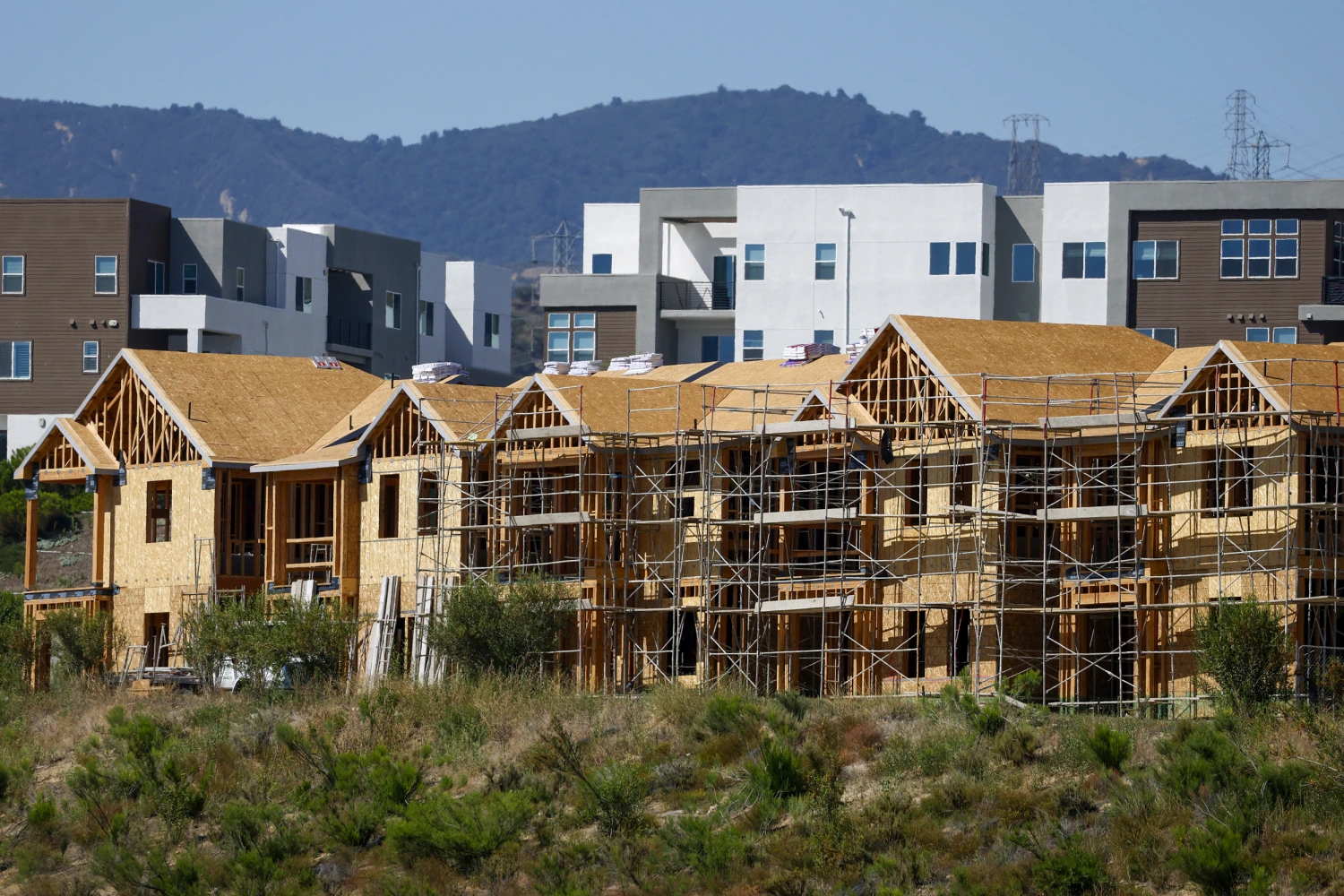
The average interest rate on a 30-year fixed mortgage soared to 7.2% this week, its highest in a year and a half. Coupled with home prices near record highs, it’s putting the American dream of owning a home further out of reach for millions. “We don’t want to buy this big, beautiful house only to just sit in it, staring at each other, stressing about a mortgage payment every month,” said Alexandra DeCandia, who teaches biology at Georgetown University. DeCandia and her husband, Edward Schrom, both 33, are looking for their first home in the Washington area. They hope to start a family and want to buy a home before they do. “It’s something that’s a huge decision and one that will impact us, as well as our future family,” DeCandia said. “It’s very stressful to try to figure that out in this shifting landscape.” Mortgage rates were on a downswing earlier this year, hitting 5.99% in late February. But ever since the U.S. and Israel attacked Iran on Feb. 28, they have skyrocketed. Mortgage interest rates are heavily influenced by the yield on 10-year Treasury bonds, which has been rising as oil prices soar and drive up the cost of goods across the economy. And mortgage rates could keep rising. The Federal Reserve this week hiked its key interest rate in an effort to get a handle on inflation — and it suggested it may raise rates again this year. Higher rates can drive up borrowing costs across the economy. Meanwhile, the average home price nationwide is near a record high, at $429,100 as of August. One bright spot for homebuyers, however, is inventory. There were 1.62 million unsold homes on the market in August, according to the National Association of Realtors. That’s equal to 4.9 months’ supply, which is measured as the time it would take at the current pace of sales to sell all those homes. That is the highest level in more than a decade, and it gives prospective homebuyers more room to negotiate prices. Still, pending home sales — in which contracts have been signed but the sales haven’t closed yet — fell 4.7% over the past year, which economists attribute to higher mortgage rates. Realtors say higher interest rates on mortgages, combined with inflation more broadly, are persuading some people to put off buying homes. “It’s definitely impacting the psyche of the buyer,” said Kerry Adams, a Realtor with Compass Real Estate in the Washington area. “They’re saying: ‘I’m already feeling it at the gas pump, at the grocery store, and now I’m feeling it in mortgage rates. Maybe I’ll sit on the sidelines a little while longer.’” Many young adults today are moving back in with their parents instead of renting or buying their own homes. Last year, a record 25.2 million adults under 35 lived with their parents, according to Realtor.com. The median age of a first-time homebuyer today is 40, an all-time high, according to the National Association of Realtors. Ian Sohan, 26, hopes to buy a house in Virginia — but the math isn’t looking good. “It’s discouraging,” Sohan said. “I’d like to one day own my own home.” Sohan is looking for a house with his fiancée, Eden Law, that has enough room for any future kids and maybe their moms, too. In their area of Northern Virginia, houses that fit their needs start around $600,000. In the couple’s ideal neighborhood, in Arlington, those houses are closer to $1 million. “I haven’t quite been priced out of the market entirely,” Sohan said. But he may “get pushed out of the areas I’d like to live in or maybe expect a longer commute than I really wanted.” “It’s just making it a lot more intimidating to even go for the purchase and have the confidence that the economy will be enough to be able to afford that house five, 10 years from now, let alone 30 years,” he said.
Topics in this story
Gathered from external sources. Rights to this text belong to whoever originally published it.