Fed officials on watch for overheating demand as they weigh interest rate path
Federal Reserve officials are monitoring the strength of demand in the US economy as they consider how high interest rates need to go to tame inflation.
Federal Reserve officials are monitoring the strength of demand in the US economy as they consider how high interest rates need to go to tame inflation.
Despite expected moratoriums on data centers in several states, Chicago Fed president Austan Goolsbee said Monday that the AI build-out is starting to look like more than just "old-fashioned demand overheating," noting that, anecdotally, everyone is trying to hire an electrician at the same time, which could cause prices to go up.
"The danger with that is nobody ever was under the impression that [inflation] just goes away on its own," Goolsbee said during a Q&A at the Chicago Fed. "If you get the economy overheated, the conventional wisdom is be aggressive up front to never let the economy overheat because once it gets overheated, it's extremely painful to get rid of that kind of overheating. So I think we got to watch out in that space."
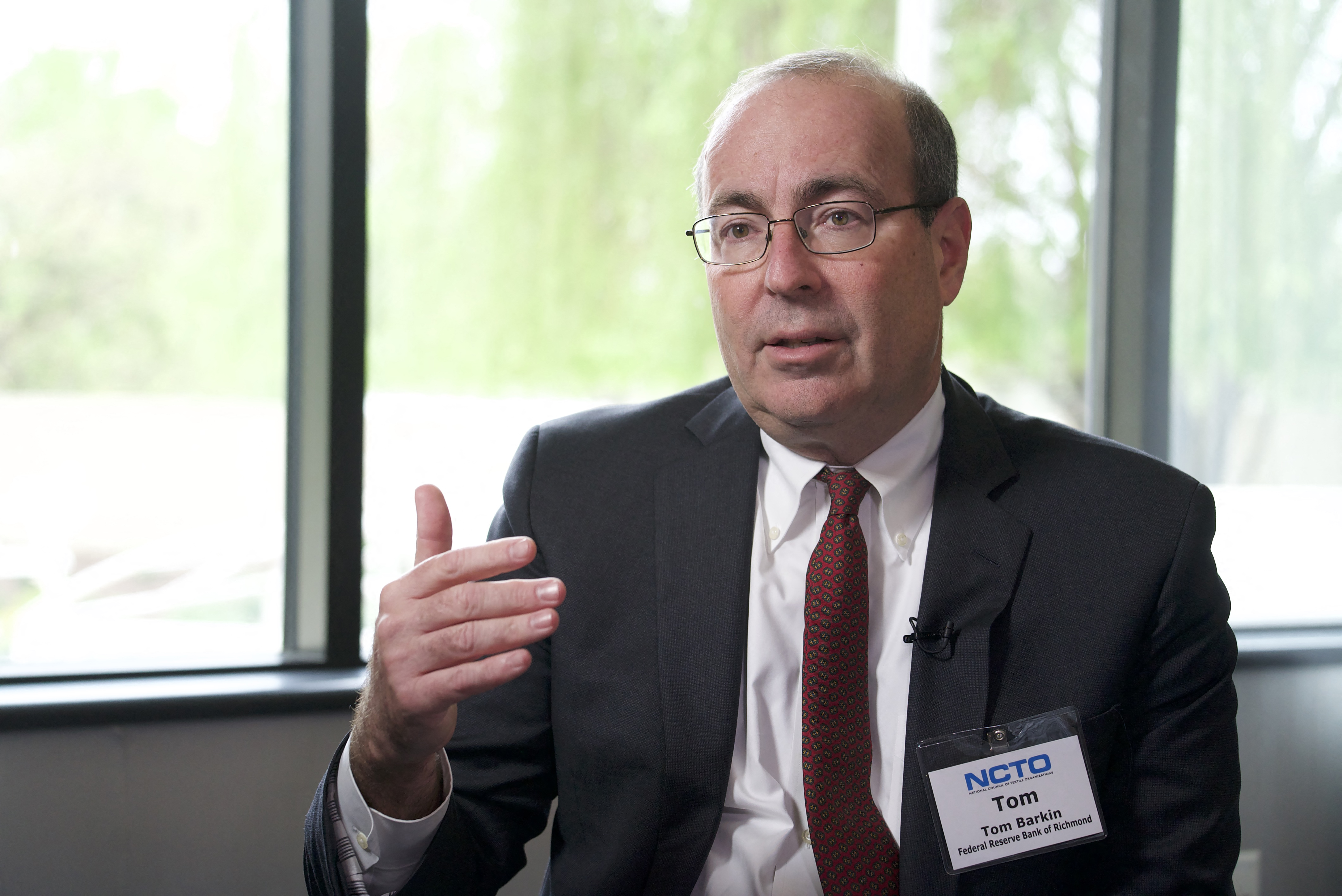
Richmond Fed president Tom Barkin was a little more cautious, saying Monday that while inflation remains stubborn, there are risks to the durability of demand in the economy and that the Fed needs to move cautiously as it raises rates to tame inflation, so as not to knock the economy off course.
"With demand healthy and inflation stubbornly elevated, the appropriate direction of monetary policy is relatively straightforward," Barkin said in a speech in South Carolina. "However, risks to the demand outlook remain easy to envision. Because of that, it is wise to move policy with care."
Barkin noted that strong corporate earnings have been driven by explosive growth in the tech sector and strong demand, which has boosted profits for companies that had planned conservatively. Not to mention that GDP grew at 3.4% in the third quarter and productivity grew at 3.6% while wages have remained subdued.
However, Barkin said he wonders how long this earnings strength can last, noting that he's hearing widespread reports of broad-based cost pressures across health insurance, gas and diesel prices, trucking and ocean freight, memory chips, interest rates, and tariffs.
"The question is how businesses will react to margin pressure as we move into next year," Barkin said. "Will they find new avenues for growth? Scale back headcount and investment? Or find a way to recover these costs by raising their prices further?"
Barkin added that there's a question about the durability of consumer strength as well, noting that even as real incomes have flattened, consumers have found ways to keep spending. He said consumers are trading down to private labels and discount retailers, moving from beef to cheaper proteins, or turning to local food banks to supplement groceries. They're also making trade-offs by buying used items instead of new ones and choosing to repair rather than replace.
Topics in this story
Gathered from external sources. Rights to this text belong to whoever originally published it.