Three ways the Iran war changed the global economy
The effects of the Iran war are obvious to most Americans: Gas prices have been hovering above $4 for weeks, mortgage rates are rising toward 7% and companies are adding shipping surcharges to make up for record diesel costs.
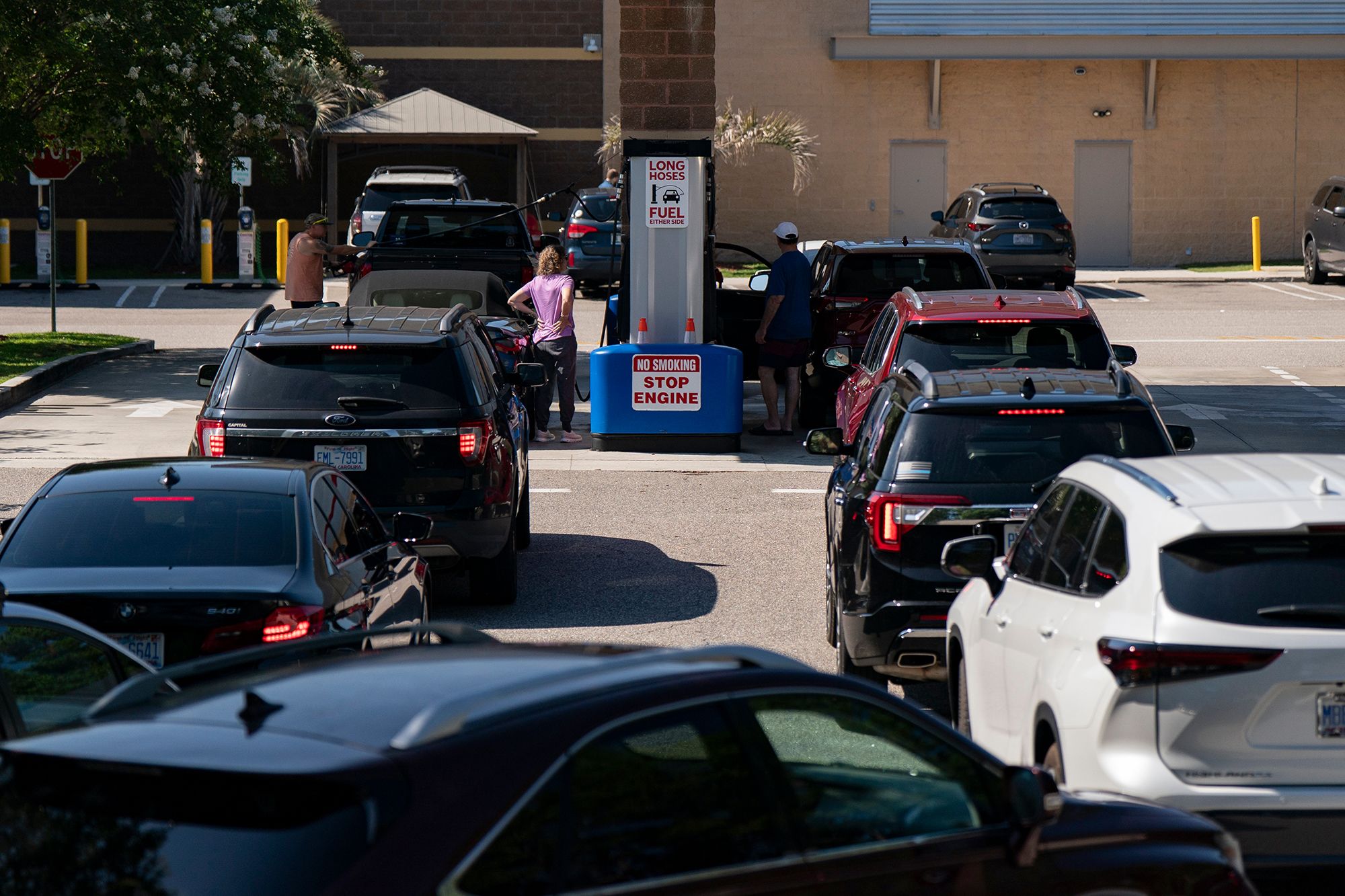
The effects of the Iran war are obvious to most Americans: Gas prices have been hovering above $4 for weeks, mortgage rates are rising toward 7% and companies are adding shipping surcharges to make up for record diesel costs. Those cost-of-living increases have lasted longer than the Trump administration had claimed they would, although they should eventually reverse themselves if and when the United States and Iran reach a ceasefire agreement. But other economic changes won’t be so easily reversed. The war has altered the global economy in lasting ways that have reshaped the way the world does business. Iran controls the Strait of Hormuz Before the war, ships under any country’s banner could freely transit the Strait of Hormuz to collect and deliver goods to and from the Middle East. A fifth of the world’s oil traveled through the narrow passage every day. The idea of who controls the strait permanently changed after the United States and Israel attacked Iran in late February. Iran declared the strait its own to control, and it attacked vessels that tried to enter or exit the Persian Gulf. The effective closure of the strait gave Iran economic leverage over the United States and its Gulf state allies, closing off 13 million barrels of oil supply to the global economy. Iran changed its strait tactic in May. Rather than attempting to close the strait, it started regulating the channel’s use. It formed the Persian Gulf Strait Authority and began requiring transiting ships to register with the group, follow an authorized navigation path and pay a toll to cross. After signing a Memorandum of Understanding with the United States in June, Iran agreed to stop charging tolls for 60 days, but it continued to attack transiting ships that failed to register with the authority. After effectively tearing up the memorandum of understanding, the US military began coordinating and escorting “dark,” nighttime transits across the strait to increase Persian Gulf oil exports and avoid Iranian drone attacks. The effort has been working, but the need for such a massive, taxing and expensive operation proves how much influence Iran has gained over the Strait of Hormuz. “It seems likely that Iran will emerge from the war with a stronger position over control of the strait, and that will force countries reliant on Middle Eastern crude to adapt,” said Ross Mayfield, investment Strategist at Baird. “Hormuz closure went from a hypothetical tail risk to a demonstrated and effective tactic.” Oil analysts believe the conflict’s eventual resolution could ultimately involve some kind of agreement to allow Iran to charge tolls for safe passage through the strait. Some critics fear that would set a precedent for other countries to charge ships to pass through international waterways. But such precedent already exists, noted Natasha Kaneva, head of commodities analysis at JPMorgan. The United Nations allows countries to charge service fees – not to transit waterways but for navigational safety, traffic management, security escorts, emergency response and environmental protection. Turkey, Denmark, Sweden, Russia and Indonesia all charge service fees for transiting various straits, Kaneva pointed out. The change could add $1 or so to the price of oil if Iran adopts a fee structure similar to what Turkey charges for the Turkish Straits, Kaneva said. A very large crude carrier could pay around $260,000 for a round-trip transit. China cements its role as an oil market power It doesn’t produce much oil, but China proved it is the most powerful force in the oil market during the Iran war. That’s because China demonstrated a unique ability to modulate its demand, said Joe Brusuelas, chief economist for RSM US. China’s heavy reliance on the massive oil stockpiles it built up before the war dramatically reduced the country’s crude imports by around 5 million barrels per day. At some point, it will need to refill its stockpiles and demand will pick up again. But some changes in Chinese consumer behavior will become permanent. For example, during the five-day May Day holiday, EV charging on China’s highways surged 55.6% over the previous year, according to China’s Ministry of Transport. Over the course of the holiday, just under a quarter of cars traveling on China’s highways were EVs — up 33% from a year earlier. China was also able to quickly switch from oil- and gas-burning electricity plants to coal, demonstrating unparalleled resilience in the face of an unprecedented oil shock. Demand for oil plunged during the war — much more than oil industry analysts had expected — proving that the world is much more flexible about its oil usage than previously believed. Of the 1.9 billion barrels of Middle Eastern crude that the market lost during the course of the war, 800 million barrels — just under half — were absorbed by people and businesses consuming less oil, according to JPMorgan. It’s not clear how much of that flexibility is permanent and how much is temporary. But permanent declines in oil usage, even just from China, could dent demand enough that it never fully recovers. We may have reached peak oil. “History suggests that past oil shocks often left lasting declines in gasoline demand, and this episode may prove no different,” said Kaneva. Production outside the Middle East ramped up Another significant adjustment during the Iran war was the ramp-up in oil production from unexpected sources. Exploration and alternative energy development outside the Middle East is ramping up, noted Andy Lipow, president of Lipow Oil Associates. And existing oil projects are dialing up their drilling: Brazil added 800,000 barrels per day to its crude output. Guyana added 300,000, Canada 200,000 and Norway 150,000, according to JPMorgan. And the United States, which initially resisted increasing its output out of fear of getting burned by a temporary oil price spike, now produces 900,000 barrels a day more than it did at this point last year. Most of America’s increased production came from privately operated rigs shipping to refineries to produce jet fuel and natural gas for the European market, which is running low on supplies. US production could dip a bit once the Strait of Hormuz is fully opened, but JPMorgan expects America’s output to remain close to today’s levels. Brazil surprised oil analysts by producing far more than thought capable of at this point, but strong execution in its oil projects will probably lead the country to ramp up production even more. And a new offshore production vessel arriving off the coast of Guyana this month will help the country up the pace of its production from its gigantic well. To compensate, Middle Eastern producers are changing the way they transport crude, developing alternate routes. Saudi Arabia hired massive truck convoys to ship goods across the country to the Red Sea and maxed out its East-West pipeline to bypass the strait. Iraq is in conversations with Chevron to build a pipeline to the Mediterranean Sea. Meanwhile, OPEC is in a fight for its own survival after the United Arab Emirates, one of the consortium’s most significant members, announced it would leave the group in April. Iraq, the bloc’s second-largest oil producer, is reportedly the next shoe to drop — the country’s oil minister told Bloomberg that Iraq would have to decide whether or not to remain with OPEC if production targets don’t dramatically increase. Iraq wants permission to produce a record 5 million barrels a day coming out of the war, with a long-term aim of up to 7 million barrels a day, Bloomberg reported. That could force Saudi Arabia to allow other countries to produce more oil than the world demands. That could be good for consumer prices, driving them lower. But it could also create a permanent oil glut that could dramatically reduce oil profits.
Topics in this story
Gathered from external sources. Rights to this text belong to whoever originally published it.