G7’s 100-million-barrel diesel fix: What happens after the emergency release
The G7 is tapping its emergency oil stash, with plans to release 100 million barrels of oil and fuel products to ease the diesel crunch.
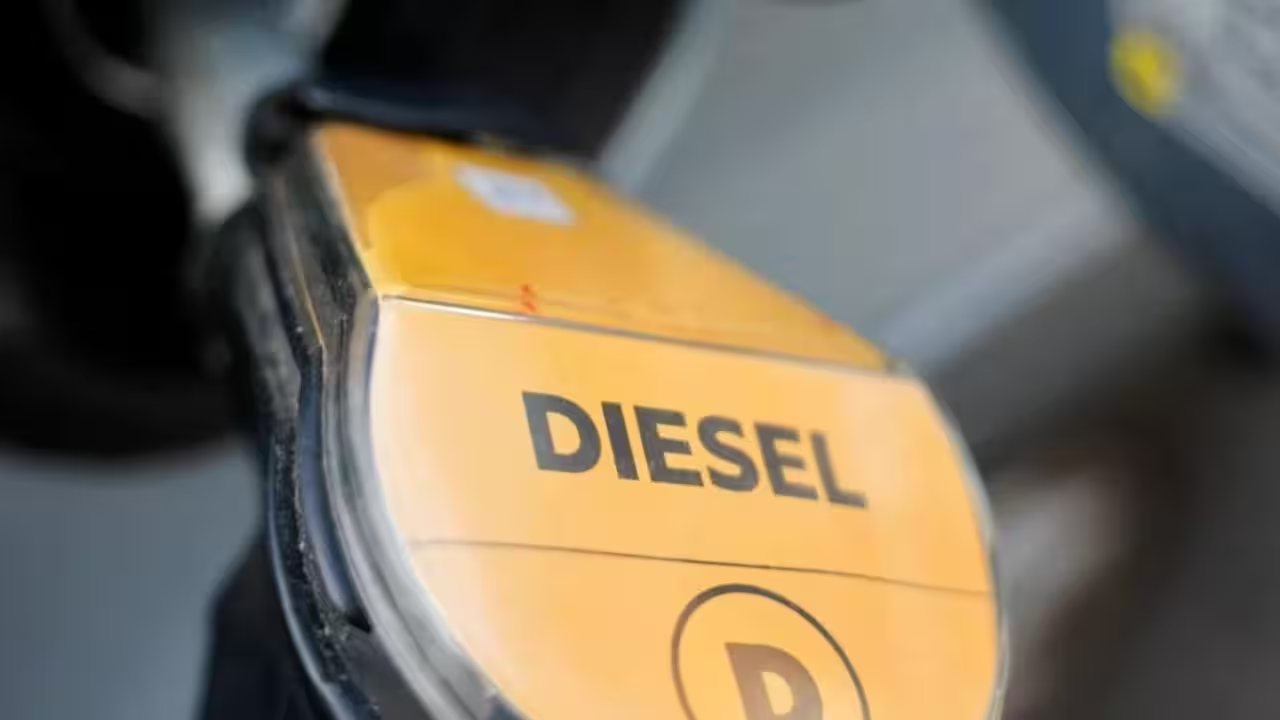
The G7 is tapping its emergency oil stash, with plans to release 100 million barrels of oil and fuel products to ease the diesel crunch. Earlier on Friday, the bloc said it would start opening the taps in the coming weeks, beginning with a “frontloaded substantial release” of diesel “immediately” and within the next 20 days. The remaining volumes will be released over four months.However, the strategy comes with its own share or risks and gaps.US President Donald Trump said that the diesel release would happen “immediately”, as fuel prices remain elevated across the US and Europe. The average US diesel price stood at $6.37 a gallon on Friday, according to AAA, after hitting a record $6.52 on September 22. In Europe too, diesel prices have reached record levels.France, which currently holds the rotating G7 presidency, announced the release after a videoconference led by President Emmanuel Macron, involving the G7 nations and EU representation. The move follows a March commitment by IEA members to release 426 million barrels, including around 92 million barrels from EU countries, largely refined products such as diesel, with Macron saying the latest release should add liquidity and lower prices.But the big question is whether the barrels coming out of emergency storage can keep pace with the pressures pushing prices higher.Russia has banned exports following Ukrainian drone strikes on its refineries, while refined fuel shipments from Persian Gulf producers have fallen because of war damage and blocked export routes.Though Europe does not import Russian diesel, countries such as Turkey and those in Latin America that buy it are now competing with Europe for the barrels still available.So, while the G7 is putting more fuel into the market, the squeeze on supplies has not necessarily disappeared. The emergency oil stash may offer some relief, but the supply problems behind the squeeze remain.The replenishment challenge The biggest risk identified by experts is what happens after the reserves have been used.Jim Krane, energy research fellow at Rice University's Baker Institute, told AP that the move could temporarily reduce retail fuel prices but would also leave Europe with less emergency cover.“Draining stocks will reduce retail fuel prices for a while, at the cost of leaving Europe with less emergency cover,” Krane said. “At some point in the future Europe and the rest of the G7 will have to refill their strategic reserves. Normally they try to do this when prices are low. Nobody knows when that will happen. It’s a risk.”That creates a second challenge for the strategy: the countries releasing the fuel will eventually have to rebuild their reserves, but the timing and cost of that replenishment are uncertain.Krane said the decision comes at a particularly uncertain point for energy markets, with two wars involving attacks on refineries and exports.With two wars raging that involve attacks on refineries and exports, “it’s not the best time to be frittering away your emergency stocks -- especially when there is no visibility on future prices or peace agreements,” Krane said.How much is actually being added?There is also uncertainty over the scale of the intervention.The G7's announcement comes after a March commitment by International Energy Agency member countries to release 426 million barrels of oil and products to stabilise the oil market. European Union countries had committed about 92 million barrels, with the release weighted towards refined products such as diesel.The G7 has now announced 100 million barrels, but it is unclear whether that figure represents an additional release or part of the earlier commitment.The lack of clarity limited the initial market reaction. US oil prices fell 2% following the G7 statement, but Pavel Molchanov, investment strategy analyst at Raymond James, said an important question remained unanswered.“The impact was lessened by lack of clarity on an important question,” Molchanov said. Is the 100 million barrels in addition to the amount already agreed in March, or “is this the final portion of the existing pledge?” he said.Until that is clear, the headline volume of 100 million barrels does not by itself show how much additional supply the market is actually receiving.Supply routes under pressureThe G7's decision is focused initially on diesel, the fuel whose prices have surged to records in the US and Europe.Michael Lynch, distinguished fellow at the Energy Policy Research Foundation, said releasing diesel in Europe could reduce the amount of diesel exported from the US. That, in turn, could bring US prices down by 25-50 cents a gallon after a few weeks.But the intervention is taking place while fuel flows remain disrupted elsewhere.Russia's export ban has reduced supplies available to buyers that previously relied on Russian diesel. Meanwhile, shipments from Persian Gulf producers have declined because of war damage and blocked export routes.The G7 release can therefore put more barrels into the market, but the factors affecting the movement of fuel between regions remain in place.Now, as the Middle East conflict has stretched for over seven months now, the Strait of Hormuz continues to remain disrupted, choking nearly one fifth of the total energy supplies.You use AI every day. Now get your AI Quotient. Take the AIQ test.
Topics in this story
Gathered from external sources. Rights to this text belong to whoever originally published it.