Shares skid in Asia as oil climbs, yields stay high
By Wayne Cole SYDNEY, Aug 31 (Reuters) - Share markets slid on Monday in Asia as fresh fighting broke out between the U.S. and Iran, lifting oil prices, whil...
SYDNEY, Aug 31 (Reuters) - Share markets slid on Monday in Asia as fresh fighting broke out between the U.S. and Iran, lifting oil prices, while bond yields stayed elevated after investors narrowed the odds on a U.S. rate hike.
Brent futures climbed 2.8% to $90.60 a barrel after U.S. forces struck two of Iran's launchers on its island of Larak on Sunday. In response, Iran was attacking U.S. forces stationed in Jordan, Fox News said.
President Donald Trump later posted that Kharg Island, Iran's main oil terminal, was being "blown to smithereens," though there was no confirmation of this from the military.
The resulting risk to inflation kept bond markets on edge after Federal Reserve Chair Kevin Warsh emphasised on Friday the central bank had work to do to control inflation.
Markets reacted by lifting the probability of a September rate increase to 57%, shoving short-term Treasury yields sharply higher and flattening the curve.
"We continue to expect that a hike won't come until December, though agree that the September meeting is live," said Michael Feroli, chief U.S. economist at JPMorgan.
"Moreover, regardless of the exact timing of hikes, Warsh's speech suggested a chair more willing to translate his concern about inflation into a policy tightening."
Key to the chance of an early hike will be the outcome of Friday's August payrolls report and consumer price data due on September 11.
Analysts are forecasting a bounce of 58,000 in jobs, following July's shock drop of 23,000, with unemployment holding at 4.1%. It would probably need a much weaker outcome to greatly lessen the risk of a September rate move.
The inflation threat is expected to spur New Zealand's central bank to hike rates for a second straight meeting on Wednesday, while the Bank of Canada is seen on hold, given the damage a trade war with the U.S. could do to the economy.
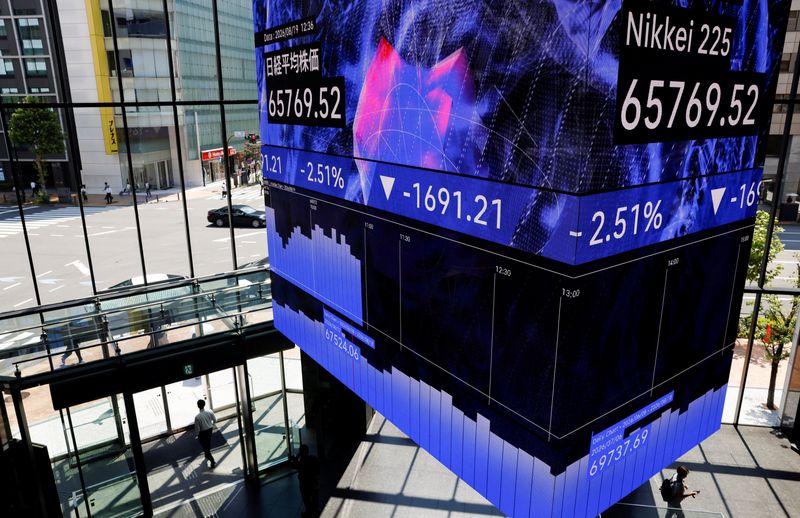
Higher yields combined with geopolitical stress to push Japan's Nikkei down 1.6%, while South Korean stocks fell 2.2%. MSCI's broadest index of Asia-Pacific shares outside Japan lost 1.2%.
Chinese blue chips eased 0.7% as the official manufacturing purchasing managers' index (PMI) picked up to 49.8 in August from 49.2 in July, pointing to activity that remains subdued.
In Europe, EUROSTOXX 50 futures dropped 0.5%, while DAX futures eased 0.4%. On Wall Street, S&P 500 futures dipped 0.4% and Nasdaq futures shed 0.5%.
Inflation and interest rates will be high on the menu when G20 finance ministers and central bankers meet in North Carolina on Monday and Tuesday.
Topics in this story
Gathered from external sources. Rights to this text belong to whoever originally published it.