Prediction: Nvidia's Shares Will Fall for a 5th Consecutive Quarter After Reporting Earnings on Aug. 26
Nvidia's stock has a dubious post-earnings track record, fueled by investors' lofty expectations.
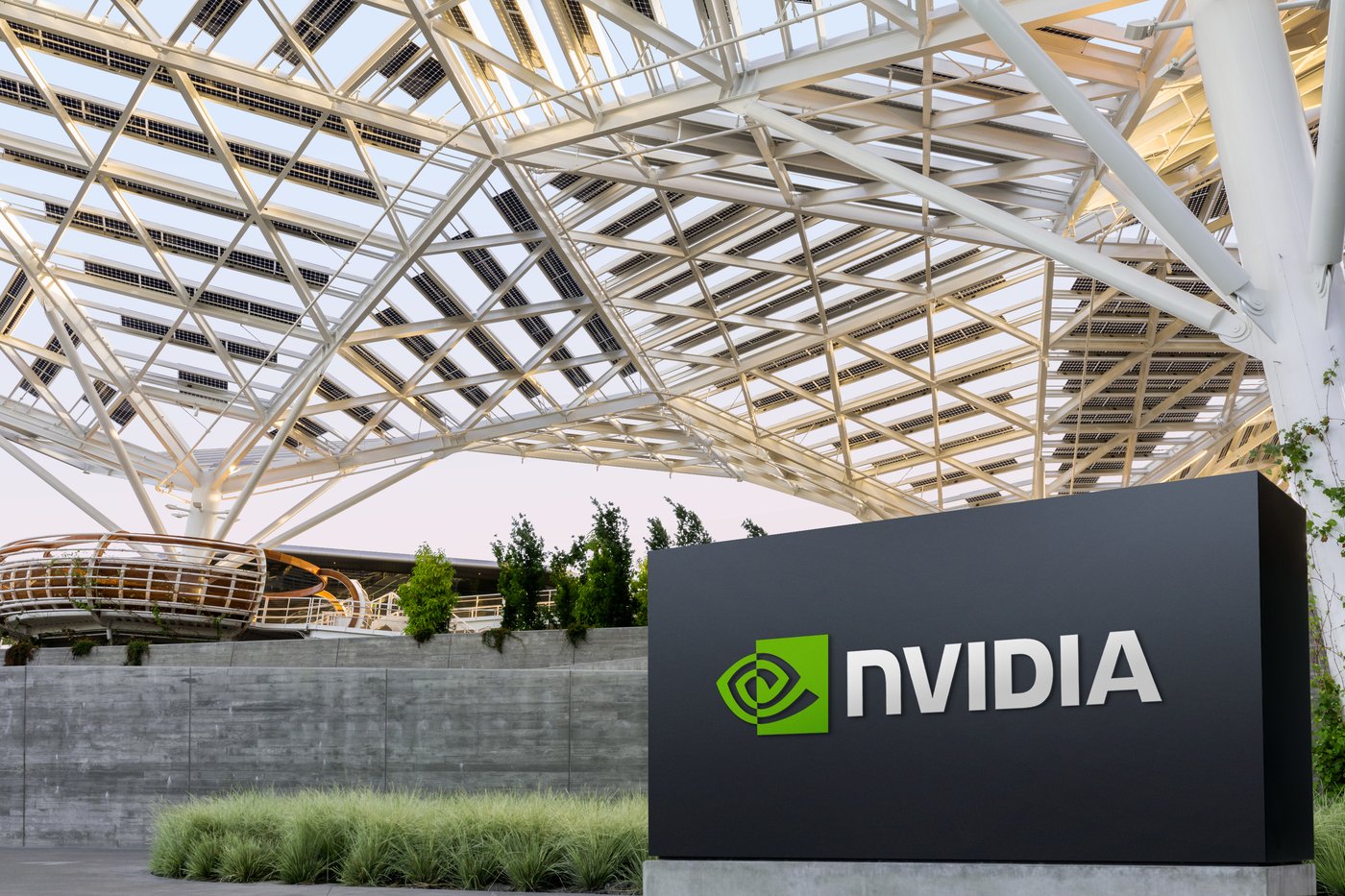
Although the peak of earnings season -- the six-week period in which most S&P 500 companies report their quarterly operating results -- is in the rearview mirror, what's arguably the most important earnings report of the entire quarter is set to be unveiled after the closing bell tomorrow, Aug. 26.
Wall Street's largest public company, Nvidia (NASDAQ: NVDA), is set to lift the hood on its fiscal second-quarter operating results. Given that Nvidia's graphics processing units (GPUs) are the backbone of the artificial intelligence (AI) data center build-out, the company's sales, profits, margins, and guidance have a significant bearing on this game-changing technology.
Missed Nvidia in 2009? This Rare Signal Is Flashing Again. In 2009, a "Double Down" signal flashed for a little-known chipmaker called Nvidia. For the first time in years, that same "Total Conviction" signal is flashing for a company 1/100th the size of Nvidia. Continue »
While Nvidia should deliver another outstanding report on Aug. 26, the stars appear to be aligning for yet another pullback .
Nvidia usually crushes Wall Street's consensus
If Nvidia is anything, it's consistent. The company has surpassed Wall Street's consensus earnings per share estimate in 10 of the last 11 quarters by an average of almost $0.06 per share.
Additionally, Nvidia's fiscal second-quarter sales are expected to have surged 97% to a hair over $92 billion. Given that many of Wall Street's most influential AI stocks have blown past consensus expectations, Nvidia's sales projections have been steadily climbing.
It's certainly not hard to understand why Nvidia has investors excited. The company's several generations of GPUs, including Hopper, Blackwell, Blackwell Ultra, and Vera Rubin, are unrivaled on a compute basis. Businesses have demonstrated a willingness to pay a premium for Nvidia's AI hardware, lifting the company's gross margin comfortably into the mid-70% range.
Furthermore, demand for GPUs continues to outpace their supply by a significant margin. Even with concerted efforts by Taiwan Semiconductor Manufacturing to increase its chip-on-wafer-on-substrate capacity, the limited supply of GPUs is bolstering Nvidia's (and its peers') pricing power.
Nvidia's shares have a dubious post-earnings track record
While past events can't guarantee what's to come on Wall Street, history has a way of rhyming. In Nvidia's case, earnings reports are rarely well-received. While the company's shares occasionally move up in after-hours trading, these gains rarely stick.
Topics in this story
Gathered from external sources. Rights to this text belong to whoever originally published it.