Fuel Surcharge Gaps: What Carriers Miss on Every Load
Fuel surcharge gaps are quietly killing carrier margins. Matt Cartwright of Magnus Technologies explains how fleets can measure true fuel cost by load, compa...
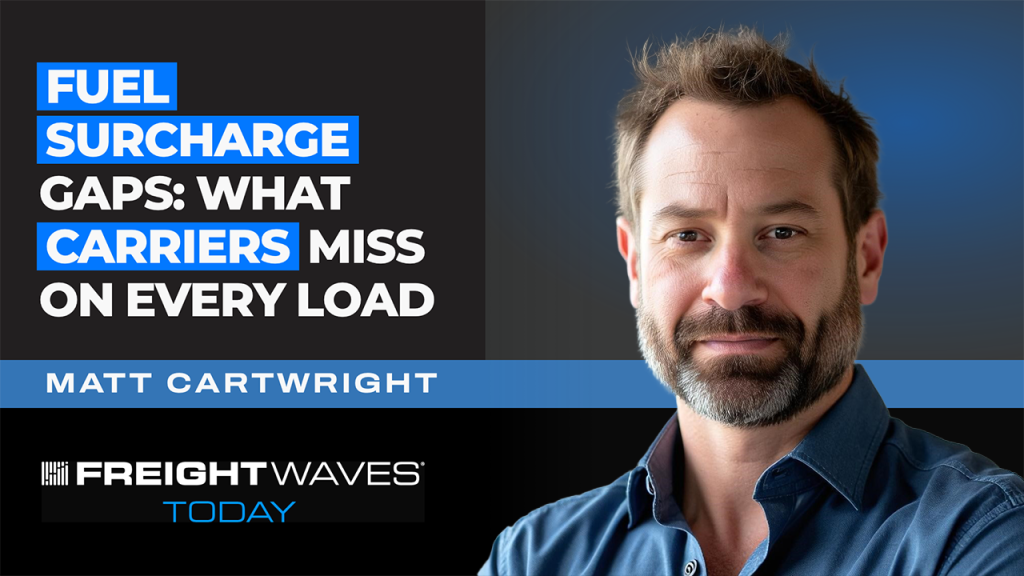
Fuel surcharge gaps are quietly killing carrier margins. Matt Cartwright of Magnus Technologies explains how fleets can measure true fuel cost by load, compare it to recovery, and spot where contracts and invoicing are leaving money behind.The conversation covers fuel indexes, actual consumption, idling, miles, invoicing and how a TMS can help carriers react faster when diesel moves. It also gets into Magnus' expansion beyond auto haulers and why smaller fleets need better tools to protect yield.#FuelSurcharge #TruckingTech #FleetManagement
Most trucking companies are not capturing the full fuel surcharge they are contractually entitled to collect — and the gap comes down to a lack of real-time visibility, according to the CEO of Magnus Technologies, an enterprise transportation management software provider. The company publishes a diesel fuel snapshot to help fleets benchmark their costs and close the gap between what fuel actually costs to deliver a load and what they recover through surcharge programs.
"A lot of times there's an education consideration for their customers where if you think about the point of fuel surcharge, it was to really neutralize for everybody so that we didn't, or the carriers didn't have to shoulder that burden alone," said Magnus Technologies CEO and founder Matt Cartwright. The company tracks published indexes, including the EIA, to set a benchmark carriers and shippers can use as a common reference point.
"We found a lot of folks don't have systems in place that can dynamically recalculate the fuel surcharge that should be charged based on how they're running the freight that's there," Cartwright said.
Magnus builds its fuel cost calculations from granular operational data — truck location, pickup and delivery points, miles driven, and idle time — then pulls in index prices or customer contracts to produce a load-level report showing the difference between actual fuel burned and what was recovered via surcharge. Cartwright said many fleets are sitting on contractual flexibility they have never acted on, simply because they lacked the software to act on it automatically.
The platform, which Cartwright describes as a quote-to-cash enterprise SaaS system, handles order management, EDI integrations, fuel card ingestion, and invoicing in a single environment. Magnus originated in the automotive transport sector — Cartwright traced the company's roots to United Road beginning in 2001 — and remains the largest software provider in vehicle freight. The company is now expanding into the for-hire dry van and general freight market, citing the roughly 90% of U.S. fleets that operate 10 trucks or fewer as an underserved segment that has historically lacked access to enterprise-grade tools.
Topics in this story
Gathered from external sources. Rights to this text belong to whoever originally published it.