Mamdani socialism and Trump socialism — reject them both
Neither the modern left nor the modern right believes in keeping the state from owning and directing businesses.
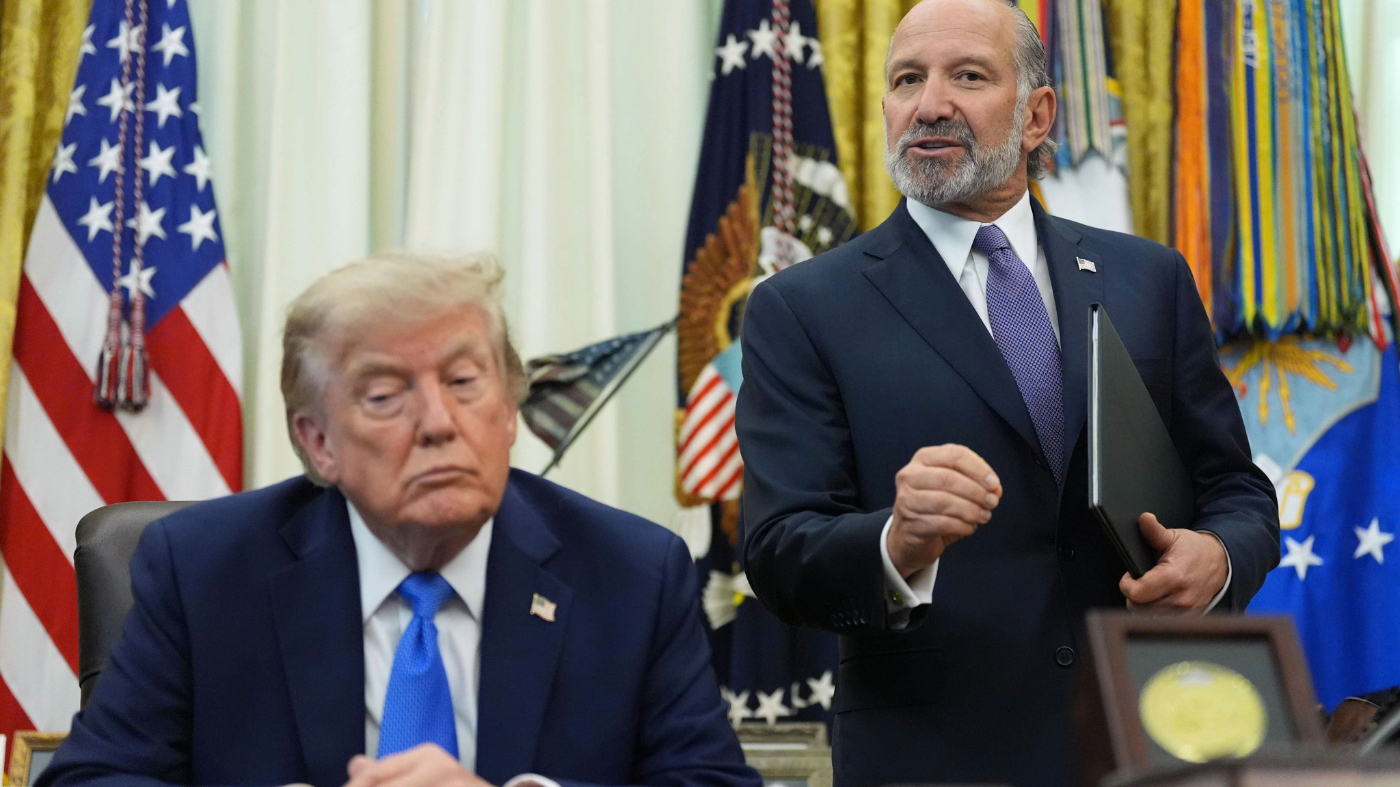
New York Mayor Zohran Mamdani announced this summer that he will open city-owned grocery stores in the coming years. Meanwhile, U.S. Commerce Secretary Howard Lutnick recently announced that the federal government will take a nearly $1 billion equity stake in seven semiconductor companies.
There is a common name for these policies: creeping socialism.
Mayor Mamdani announced that the city would open five grocery stores — one per borough — in rent-free city buildings, offering roughly 30 percent off a basket of staples like bread, cheese and meat. Socialism is not merely big government or high taxes. It entails literal government ownership of the means of production, which entails abolition of private property in businesses. Mamdani’s five grocery stores are a small step in that direction.
President Trump has told reporters , “We’ve got ourselves a Communist mayor in New York. And I don’t like Communist mayors.” Trump might be exaggerating, since Mamdani has says he is a democratic socialist and says that is different, but Trump is obviously no fan of Mamdani’s policies regardless of the label.
President Trump’s criticism of Mamdani is consistent with his pledge in his 2019 State of the Union address that “America will never be a socialist country.” But his own administration’s actions are even less consistent with that pledge than Mamdani’s grocery stores.
Last month, the Commerce Department signed letters of intent to take minority equity stakes in GlobalFoundries, Kepler, Multibeam Corporation, Extropic, Thintronics, OBSIDIA Semiconductors and Aeluma in exchange for $874 million for research and development from the semiconductor firms.
This is not the first time the Trump administration has made the government a partial owner of private companies. It already had acquired a roughly 10 percent equity stake in Intel, a 15 percent stake in rare earth producer MP Materials and 10 percent stakes in Lithium Americas and Trilogy Metals. It also took a “golden share” in U.S. Steel, which gives it veto rights over major decisions.
So, the same president calling a city grocery chain communism has, on a dollar basis, taken a bigger ownership position in American industry than Mamdani’s five bodegas will ever come close to. The vocabulary differs on the left and right. Mamdani talks about affordability and the Trump administration justifies itself in the name of national security . But the method of achieving their goals is the same: partial government ownership.
Hypocrisy abounds, whether it is Trump calling Mamdani a communist or progressives denouncing government-corporate collusion while celebrating a city government entering the grocery business. Neither the modern left nor the modern right believes in keeping the state from owning and directing businesses. This isn’t just a matter of partisan scorekeeping. It’s a troubling sign of where our country is headed.
Socialism was an economic failure and humanitarian disaster everywhere it was tried in the 20th century, and Venezuela demonstrated that this failure applies to democratic socialism in the 21st century. The academic research is overwhelming that more economically free countries — that is, capitalist countries — do better on virtually every developmental metric than less-free countries.
But most people will not read boring academic studies. Instead, team red rejects team blue’s socialism, and team blue rejects team red’s socialism. If the U.S. is going to remain prosperous, we need to reject socialism whether it comes from the left or the right.
Benjamin Powell, a senior fellow at the Independent Institute in Oakland, Calif., is director of the Free Market Institute and a professor of economics in the Rawls College of Business at Texas Tech University. He is the coauthor of “ Socialism Sucks: Two Economists Drink Their Way Through the Unfree World .”
Topics in this story
Gathered from external sources. Rights to this text belong to whoever originally published it.