SiMa.ai raises $150 mn to scale Physical AI in robotics, drones
SiMa.ai raises $150M at $1.4B valuation to scale Physical AI chips for robotics, drones and automotive; Gen 3 platform targets 1,000 TOPS at 80W.
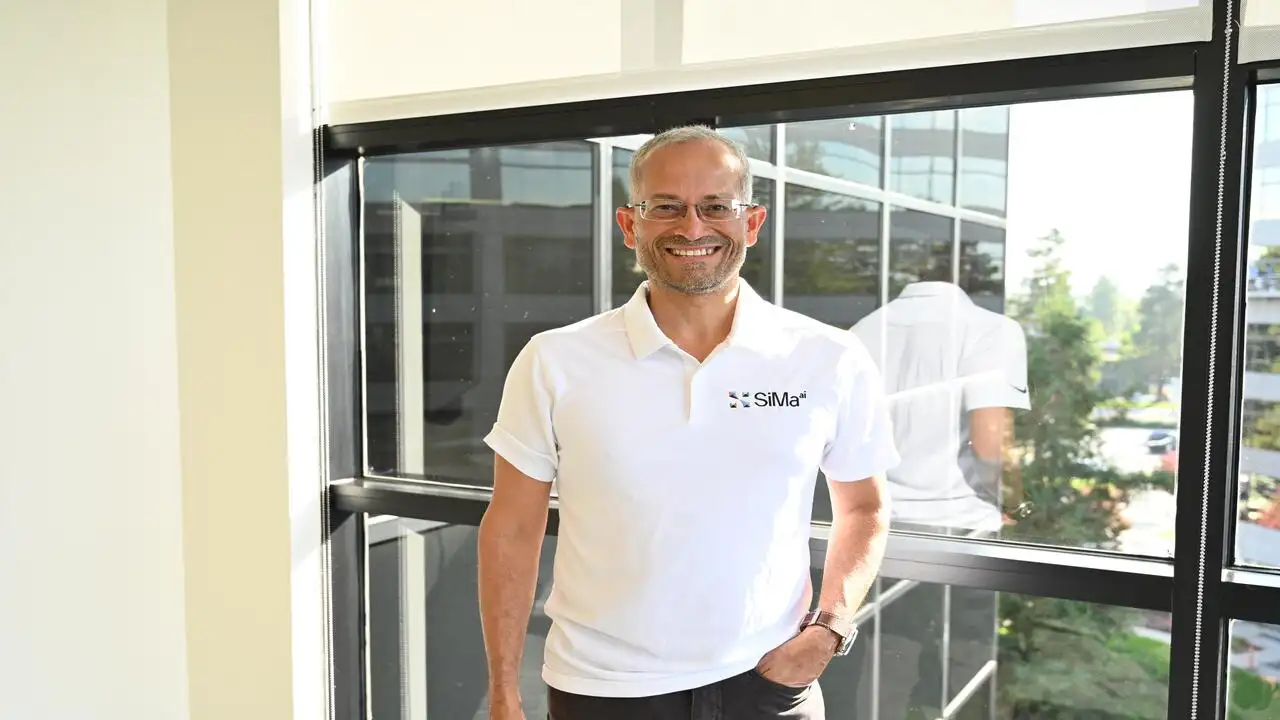
Bengaluru: SiMa.ai, a US-India AI platform company focused on Physical AI, has raised $150 million at a $1.4 billion valuation. The funding brings its total capital raised to $500 million as the company prepares to scale its next-generation AI silicon for robotics, drones and automotive applications.The round was co-led by Fidelity Management & Research Company and Amplify Partners, with participation from Alter Venture Partners, Dell Technologies Capital and StepStone Group. AllianceBernstein, Baron Capital and J.P. Morgan joined the round as new investors. The company said the entire round comprises primary capital.SiMa.ai will use the funds to develop its third-generation platform, including chips and chiplets, with its flagship offering targeted to deliver 1,000 tera operations per second (TOPS) of compute at 80 watts. Slated for the first half of 2028, the platform will include ML IP, chiplets and SoCs for drones, humanoid robots, automotive ADAS and AI-powered cockpits.“Our Gen Two platform, silicon software, is now globally available in volume production, and it’s technically leading the industry today,” founder and CEO Krishna Rangasayee told TOI. “What we’ll be using the $150 million is to really build our Gen 3 platform.”Unlike general-purpose GPUs, SiMa.ai is building purpose-built silicon and software for AI workloads running directly on physical devices. Rangasayee said power efficiency and faster application development are the company’s key differentiators.“For robotics, drones, and automotive, those are very, very sensitive to power. Robotics and drones are essentially battery operated. Every single watt matters,” he said.SiMa.ai claims its platform delivers about 10 times better performance per watt than Nvidia’s Jetson Orin platform. Its software platform, Palette Neat, is designed to reduce application development timelines from months to days or hours.“Customers really care about time to application bring up. They really absolutely care about performance per watt,” Rangasayee said.The company said 70% of its customers are now beginning to scale towards production, while 30% remain in the pilot stage. Robotics and drones currently account for the largest share of its business, while automotive is expected to become a major market over the next one to two years.Rangasayee said the company expects non-humanoid robotics to drive near-term volumes, even as interest in humanoids grows. “There is a lot of focus on humanoids, but the real volume is happening in non-humanoid form factors,” he said.SiMa.ai has about 200 employees globally, including around 170 engineers, with roughly half its workforce based in Bengaluru. Its India team spans hardware, software, development software and quality assurance, and contributes across the product development value chain.“We don’t distinguish between the work we do in North America versus in Bengaluru,” Rangasayee said. “The competency of our R&D team in India is spectacular.”The company said its revenue grew fourfold between 2024 and 2025 and that it is continuing to see strong momentum this year too.You use AI every day. Now get your AI Quotient. Take the AIQ test.
Topics in this story
Gathered from external sources. Rights to this text belong to whoever originally published it.