Big Tech's AI build-out ran to the Middle East. Then the Iran war hit.
The Iran war has forced Big Tech to confront physical security in ways it never has before.
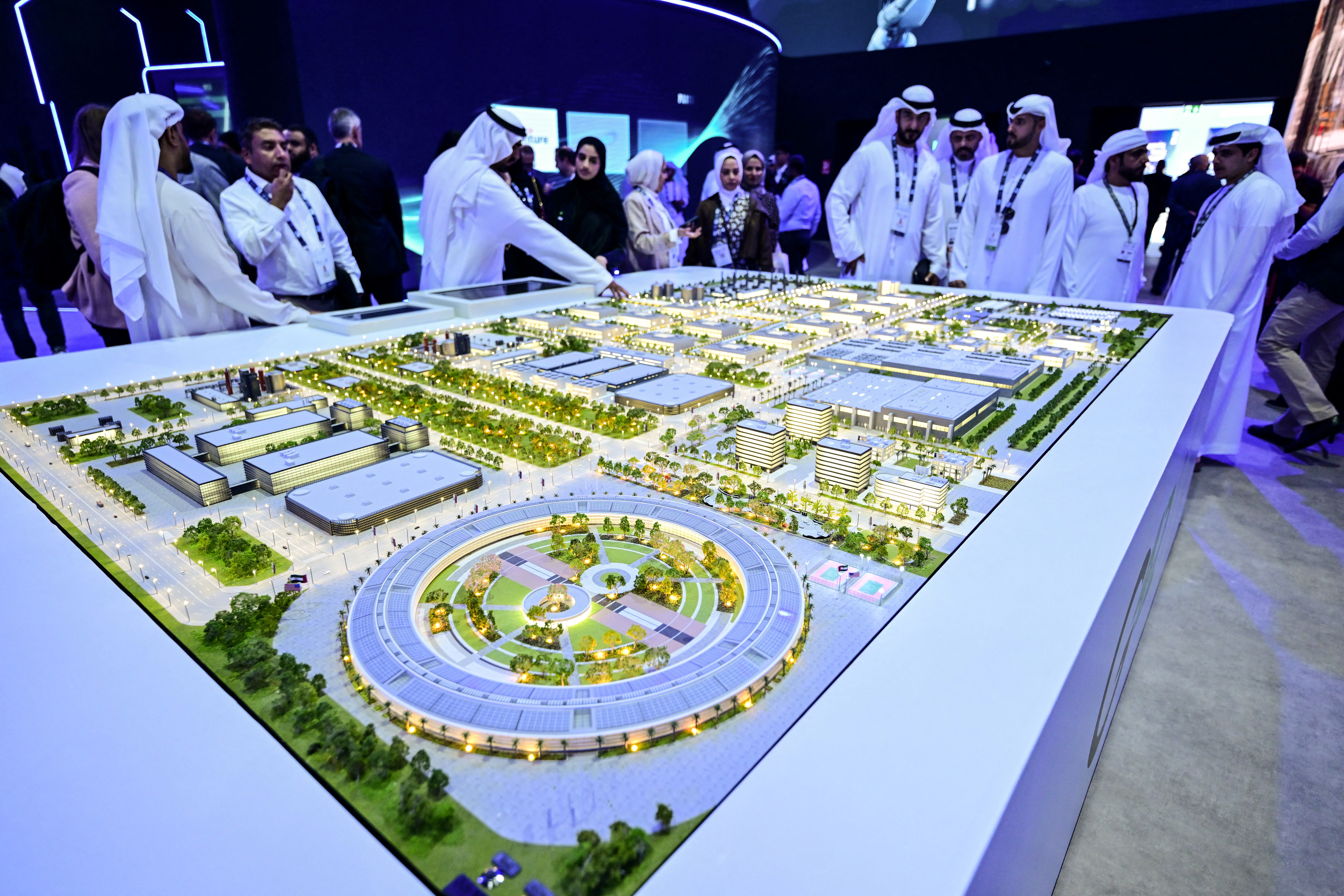
Companies leading the AI infrastructure build-out are scrambling to stand up data centers worldwide to meet crushing demand for computing capacity. But a key part of that plan — Middle East expansion — has hit a hurdle due to the war in Iran.
The Middle East offers benefits for the power-hungry data centers in spades: easy access to abundant energy, wide swaths of open land, government-backed development efforts, and perhaps most crucially, deep-pocketed sovereign wealth funds. US technology companies such as Amazon ( AMZN ), Google ( GOOG , GOOGL ), Microsoft ( MSFT ), and OpenAI ( OPAI.PVT ), meanwhile, have supplied the chips, cloud platforms, and AI models.
Yet the war in Iran has thrown Big Tech's plans into flux. Critical infrastructure sites have become live targets for the Iranian military as Tehran looks for leverage in its war with the US, forcing the predominantly American Big Tech industry — long accustomed to cyberattacks — to confront a new kind of threat it hasn't faced at home.
AWS data center complexes in Bahrain and the UAE have been struck by Iranian drones or damaged in nearby strikes, believed to be the first known instances of an American data center disrupted by military conflict. Iran's Revolutionary Guard Corps said it struck an Oracle-owned ( ORCL ) data center in Dubai. UAE officials said damage was caused by falling debris from the strike, not a direct hit.
"These companies have not been in a position where they've had to really deal with issues like this in any depth," said Martijn Rasser, vice president for tech leadership at the Special Competitive Studies Project (SCSP), a technology and security-focused research firm. "They are true geopolitical actors in a sense that they haven't been before."
The infrastructure underpinning the US tech industry has become increasingly global. Amazon, Microsoft, Google, and other major players have built data centers throughout Europe and Asia and, eventually, into the Middle East to meet demand following the cloud computing explosion of the 2010s.
The AI boom kicked that expansion into a new gear. The Middle East still represents a relatively small share of the world's installed data center footprint — roughly 3% of global live capacity in 2026, per the research firm Knight Frank. But that base is expanding rapidly as Gulf governments make enormous bets on AI infrastructure. Data center capacity in the region stood at 1.6 gigawatts in August , with 2.6 gigawatts under active development and 13.8 gigawatts in the planning pipeline, set to quadruple the region's capacity by 2030.
Topics in this story
Gathered from external sources. Rights to this text belong to whoever originally published it.