Oil nears $100 after Saudi Arabia energy infrastructure attacked
Brent, the international oil benchmark, touched $99 a barrel after Saudi Arabia reported an attack on energy assets that caused temporary pauses in operations.
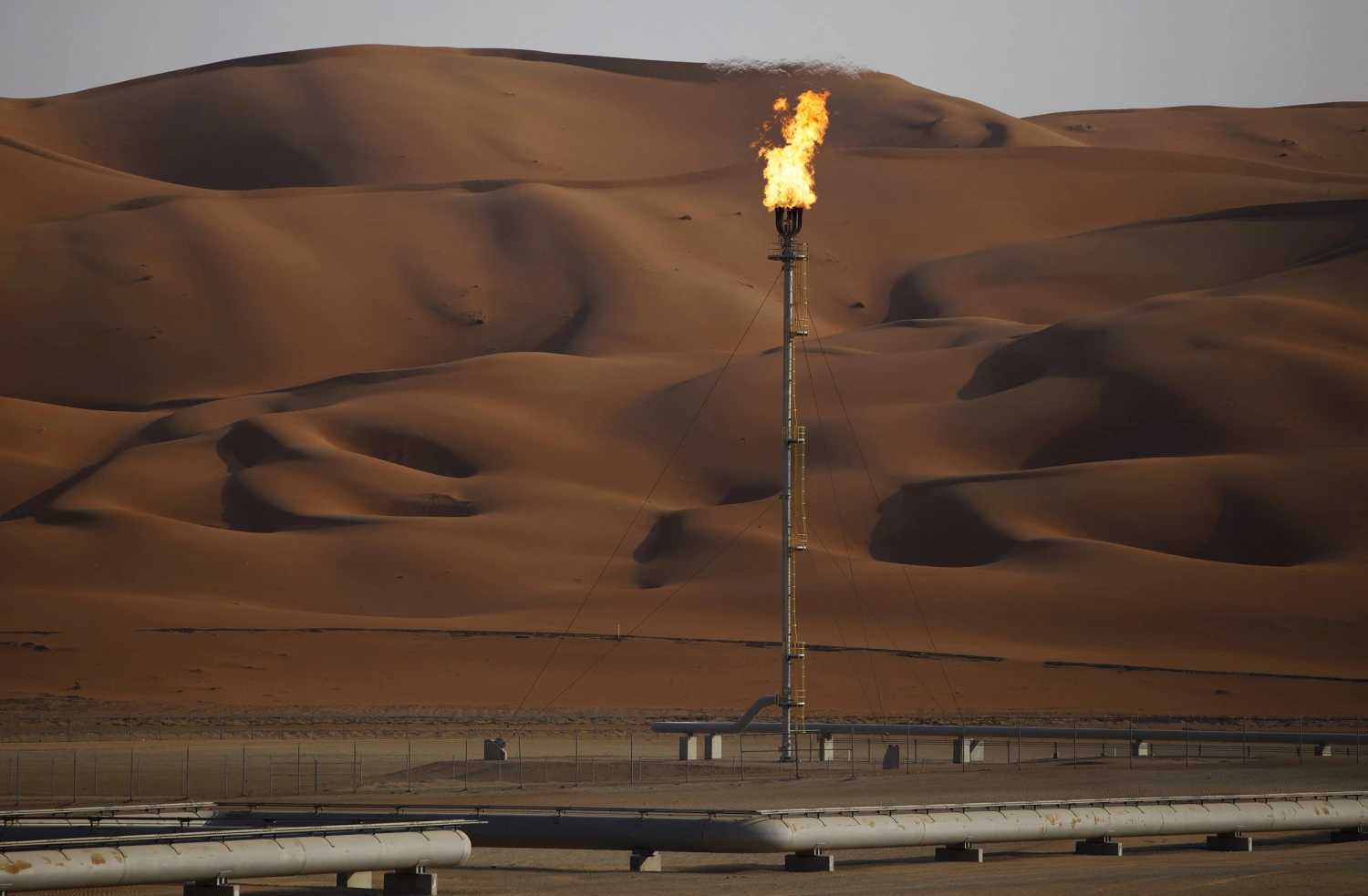
Brent, the international oil benchmark, touched $99 per barrel Tuesday after Saudi Arabia reported an attack on energy assets that caused temporary pauses in operations. By mid-morning, Brent was trading higher by more than 1% around $98.30 per barrel. U.S. crude oil also rose by more than 2% to about $93.50 per barrel. Wholesale gas prices rose more than 3%. The state-run Saudi Press Agency said the attacks were carried out by the “terrorist” Houthis. It also said that 73 civilians were injured following the attacks. The Saudis also condemned the Houthis’ attacks on commercial vessels in the Red Sea, which is to the west of Saudi Arabia, and their “threats to freedom of international maritime navigation.” Saudi Arabia is the world’s largest oil exporter. The latest escalation came after the U.S. on Sunday struck three Iranian oil tankers, sinking one of the vessels. The strikes came after Iran launched ballistic missiles toward U.S. Navy ships. The renewed hostilities have kept Strait of Hormuz traffic at a minimum, with just four ships passing through the waterway Saturday, followed by six passings Sunday. Before the war, the strait carried more than 20% of the world’s energy supply as that oil shipped to ports around the globe. Meanwhile, vessel traffic in the equally important Bab el Mandeb strait, located between the Arabian Peninsula and northeastern Africa, was slightly compressed from the previous week. According to figures from MarineTraffic, vessel transits fell 16% from the prior week, although overall traffic of more than 260 ships last week was still significantly higher than in the Strait of Hormuz. On Tuesday, the national average gas price was unchanged from Monday at $4.15 per gallon, however it has risen 6 cents from a week ago and 14 cents from a month ago. Since the war started, Brent has risen 36%, and motor club AAA’s national average gas price has risen 40%. Since the start of the year, the price of oil as measured by Brent is higher by more than 62%. On Friday, diesel fuel hit its highest price ever. On Saturday, it continued ticking higher to $5.90 per gallon, according to AAA data. It has remained at that level since the weekend. The price of oil remains a significant concern for the White House as the midterm elections near. On Monday, President Donald Trump asserted in a social media post that “oil prices will drop precipitously, like everything else is dropping (but more!), when we WIN the war with Iran.” He claimed that prices could fall to as low as “two dollars a gallon.” On Monday, Goldman Sachs commodities analysts said there could still be “significant” upside risk to prices. They forecast that if Persian Gulf oil flows remain low, “Brent might exceed $120.” “We view more intense shipping attacks in Hormuz and the Red Sea as the most likely driver of this lower-output, higher-price scenario,” they wrote in a note to their clients. HSBC’s analysts agreed. “If diplomacy fails and Hormuz flows stay near current levels, inventories could draw toward operational lows and Brent could rise” to around $120, they wrote Tuesday. Inventories, or global stockpiles of crude oil, have been drawn down at a rapid clip after governments around the world, in coordination with the International Energy Agency, in early March agreed to release 400 million barrels of oil in a bid to ease soaring prices. HSBC’s oil and gas analysts said that their current base case is for Brent to hover around $95 through the end of the year. However, they also warned that their forecast for Brent has been revised higher to $85 per barrel for 2027 and $75 per barrel “for 2028 and beyond.” Bank of America commodity strategist Francisco Blanch warned that the market “remains exposed to significant risks.” “If skirmishes curbing oil flows continue into year end,” he sees Brent trading between $95 and $120 per barrel, he wrote. Blanch also warned that a “broader conflict resulting in major energy infrastructure damage” could lead to oil prices as high as $150. Before the U.S. and Israel launched the war against Iran on Feb. 28, Brent traded around $70 per barrel. “Markets are increasingly pricing a prolonged Mideast conflict,” Goldman Sachs’ team added in their note. Higher oil prices have also translated into higher bond yields. On Tuesday, the benchmark 10-year yield neared 4.80%, its highest level since early last week. Stocks were less affected by oil prices in early trading than bonds. The S&P 500 dipped 0.3% while the Nasdaq Composite traded lower by about 0.4%.
Topics in this story
Gathered from external sources. Rights to this text belong to whoever originally published it.