US-Greenland Security Deal Opens Door to American Investment
The Arctic territory wants to see the US defense push helping diversify its fish-based economy
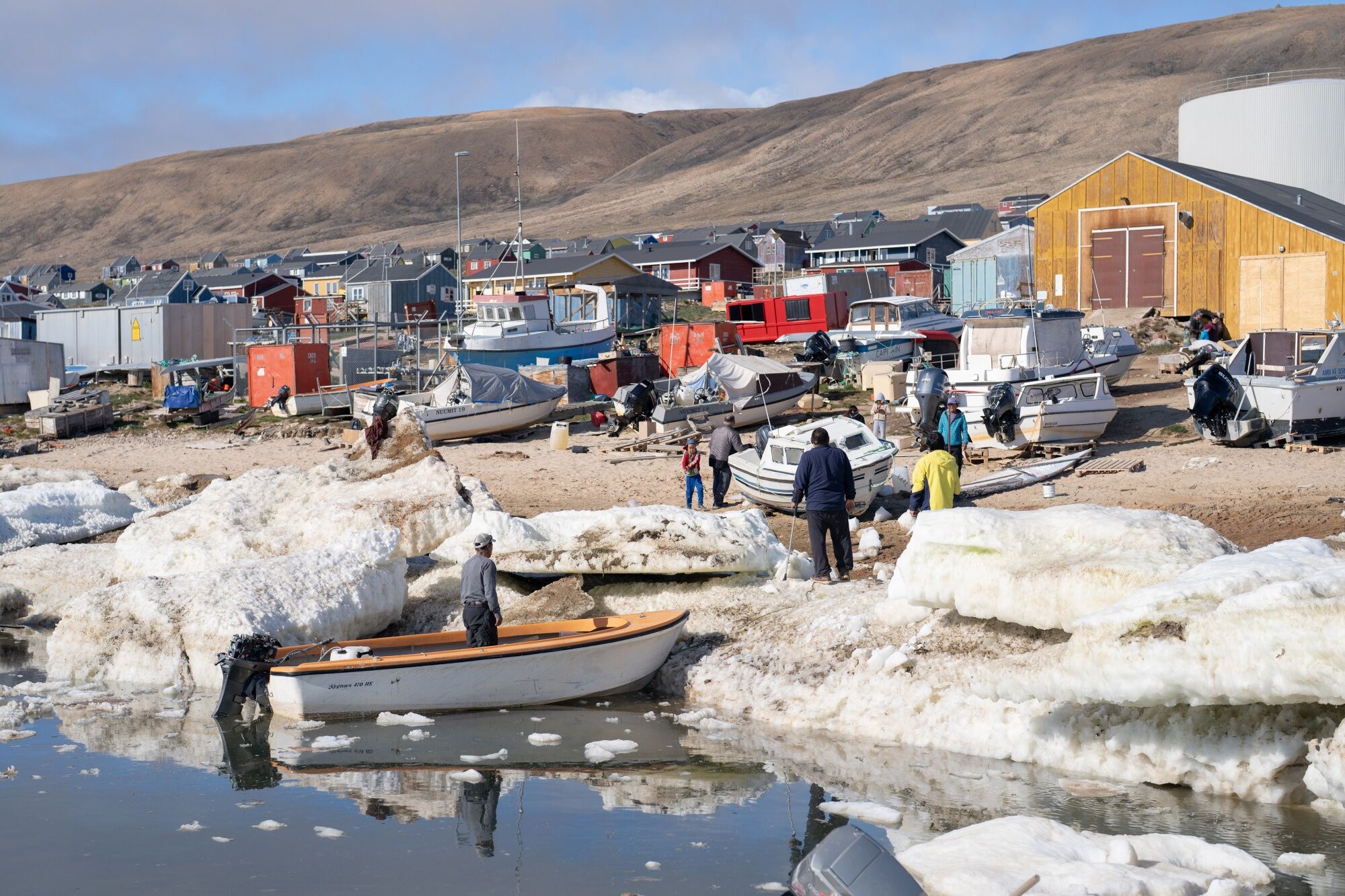
(Bloomberg) -- Greenland's new security deal with the US presents an opportunity to unlock American spending on the Arctic island, potentially boosting an economy still heavily dependent on subsidies and fish.
The accord signed in New York on Tuesday includes an agreement on two new US bases and states that contracts by the US should go to local businesses "to the maximum extent possible." That's raising hopes that spending on infrastructure and other activities could generate business for local companies and help establish defense as a new industry.
"We want it as a pillar of the economy," said Christian Keldsen, chief executive officer of the Greenland Business Association. "The beauty of defense activity is that there's an exchange: it's money coming into our society from the Danish or US government, while we provide something in return."
An additional benefit is that if local companies get contracts, "then we're creating Greenlandic jobs and building Greenlandic skills," Keldsen said.
The potential windfall comes as Greenland confronts a much bigger economic challenge. With gross domestic product of just $3.3 billion, the territory relies heavily on fishing and almost a billion dollars a year in subsidies from Denmark. Denmark's annual block grant alone accounts for roughly half of government revenue and a fifth of GDP.
That dependence has long complicated ambitions for greater economic independence on the island that's a semi-autonomous territory within the Kingdom of Denmark. In a report earlier this month, Greenland's Economic Council warned that an aging population, shrinking workforce and narrow economic base will put increasing pressure on the economy.
"What could make Greenland economically self-sustaining remains very unclear and is heavily influenced by everything happening geopolitically," said Torben M. Andersen, an economics professor who chairs the council. "There is still a way to go."
For now, the economy is picking up. After three years of growth below 1%, the council expects output to expand 1.3% in 2026 and 1.5% next year, helped by higher cod prices and catches that have offset declines in shrimp and Greenland halibut volumes. Cod catches have roughly doubled over the past five years, helping push seafood exports toward record levels.
Topics in this story
Gathered from external sources. Rights to this text belong to whoever originally published it.