Bond markets rattle economy, sparking controversial buyback
Welcome to The Hill’s Business & Economy newsletter {beacon} Business & Economy Business & Economy The Big Story Bond markets rattle economy, sparking controversial buyback The U.S. bond market is raising alarm bells for the economy, forcing the Trump administration to take emergency measures to ease the immediate impact on American pocketbooks. Yuki Iwamura,…
Bond markets rattle economy, sparking controversial buyback
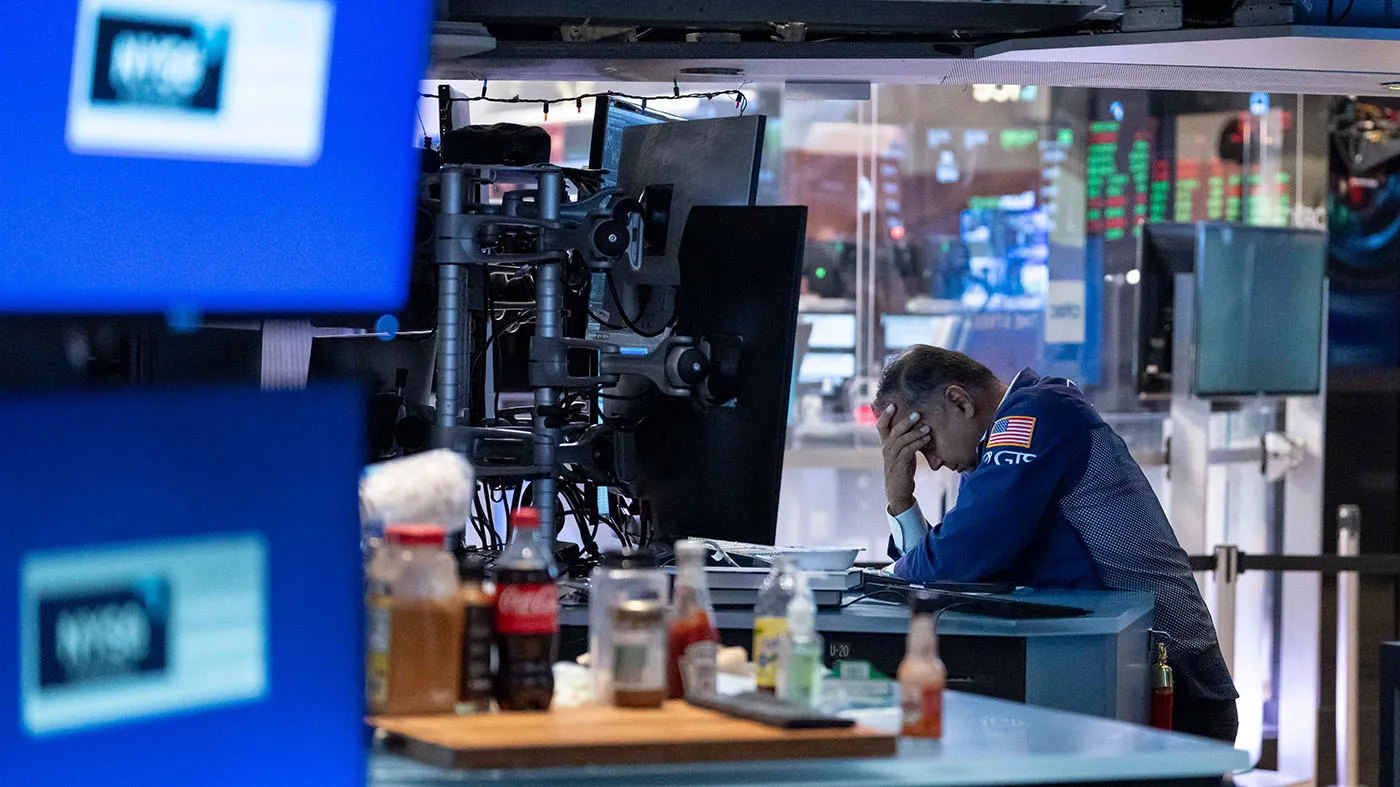
The U.S. bond market is raising alarm bells for the economy, forcing the Trump administration to take emergency measures to ease the immediate impact on American pocketbooks.
Long-term borrowing costs hit their highest levels across the world on Tuesday, with the cost for the U.S. government to borrow money reaching its highest rate in nearly two decades .
Experts say the unpredictability surrounding the Iran war, President Trump’s erratic trade policies, massive spending on artificial intelligence and the soaring national debt are all contributing to the choppy economic waters.
“One explanation is uncertainty,” said Benjamin Chabot, an adjunct associate professor at Northwestern University and a former senior policy adviser at the Federal Reserve.
“We have a new Fed Chair. We have an FOMC [Federal Open Market Committee] that looks legitimately divided about what the proper policy path is, and that’s largely driven by uncertainty about the economy,” he said.
The yield on the 30-year Treasury bond surpassed 5.3 percent on Tuesday, marking the highest yield since April 2007 — mere months before the start of a financial crisis that upended the global economy in the late 2000s.
The 30-year bond yield ticked down to 5.285 percent at the close of business on Tuesday and dipped to nearly 5.2 percent as of Wednesday afternoon. The yield on the 30-year bond has not closed at under 5 percent since July 6.
The decline in bond yields on Wednesday came after the Treasury Department said it will double the maximum amount of the country’s long-term debt it can buy back.
The increase, from $2 billion to $4 billion per operation, will be in effect from Sept. 9 through at least Nov. 4. The Treasury typically conducts so-called liquidity support buyback operations once or twice a week.
The Hill’s Julia Manchester and Max Rego have more here .
Welcome to The Hill’s Business & Economy newsletter , I’m Julia Shapero— bringing you the latest on the intersection of Wall Street and Pennsylvania Avenue.
Did someone forward you this newsletter? Subscribe here.
Key business and economic news with implications this week and beyond:
CFTC chair vows to ‘move swiftly’ on crypto rules if Congress fails to pass legislation
The head of the Commodity Futures Trading Commission (CFTC) vowed Thursday to “move swiftly” on establishing rules for the cryptocurrency market if Congress fails to pass legislation on the matter this year.
Democrats press Warsh to release reported conversations with Trump
A group of Democrats called for Federal Reserve Chair Kevin Warsh to publicly disclose his communications with President Trump, citing recent reporting they said raises “sincere doubts” about the central bank’s independence from the White House under his leadership.
Bessent: US can ‘grow our way’ out of $40 trillion debt
Treasury Secretary Scott Bessent on Thursday said the U.S. can “grow” its way out of the $40 trillion national debt, a milestone reached Wednesday.
US unemployment claims dropped to 206,000 last week with layoffs still sparse
Fewer people applied for U.S. unemployment benefits last week, another sign that layoffs remain low and that most Americans enjoy job security.
Branch out with more stories from the day:
Federal Reserve officials hint rate increase may be necessary
Multiple Federal Reserve officials indicated the central bank may need to raise interest rates later this year, according to newly released minutes of the Fed’s July meeting.
Business and economic news we’ve flagged from other outlets:
Anthropic expects to match SpaceX’s record IPO size or top it ( Bloomberg )
U.S. workers are paying more for healthcare , and next year will be worse ( Wall Street Journal )
Ossoff: ‘Amazing to watch this White House melt down’ over Harp remark
Sen. Jon Ossoff (D-Ga.) doubled down Wednesday on his criticism of President Trump’s relationship with longtime White House aide Natalie Harp, brushing off a wave of attacks from the president’s inner circle over his remarks. Read more
Texas, Iowa Senate races shift to toss-ups: Cook Political Report
The nonpartisan election handicapper Cook Political Report shifted its ratings for both the Texas and Iowa Senate races to toss-ups Thursday as Republicans grapple with a scandal-ridden candidate in the Lone Star State and a shifting political environment that could favor Democrats in Iowa. Read more
Opinions related to business and economic issues submitted to The Hill:
Check out The Hill’s Business page for the latest coverage.
Like this newsletter? Take a moment to view our other topical products here 📩
Privacy Policy | Manage Subscriptions | Unsubscribe
400 N Capitol Street NW Suite 650, Washington, DC 20001
If you believe this has been sent to you in error, please safely unsubscribe .
Topics in this story
Gathered from external sources. Rights to this text belong to whoever originally published it.