Banking on good kharif progress, India sets 374 million tonne foodgrain target for 2026-27; target is only marginally lower than the previous year's output
NEW DELHI: India, as of Tuesday, the penultimate day of the monsoon season, reported a huge rainfall deficit of 12% but the country still made good
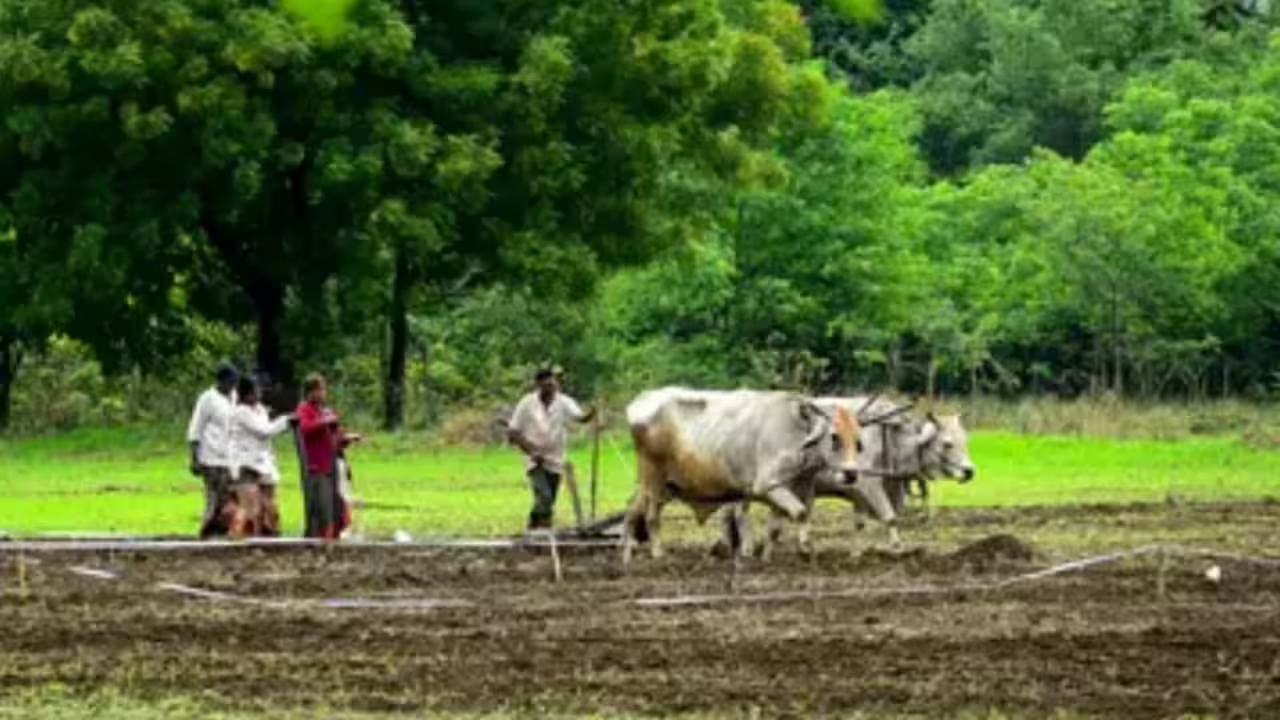
NEW DELHI: India, as of Tuesday, the penultimate day of the monsoon season, reported a huge rainfall deficit of 12% but the country still made good progress on acreage of kharif (summer-sown) crops, resulting in setting up quite an optimistic food-grain production target of nearly 374 million tonnes in 2026-27 by govt. This target is only marginally lower (less than 1%) than the estimated output of around 377 million tonnes in 2025-26.The progress made during kharif season despite deficit rainfall in the country will now be used as a template during the upcoming Rabi (winter sowing) season, beginning in Oct, to minimise the impact of loss of soil moisture and less water availability in certain rain-fed areas.Though the overall kharif acreage this year declined by around 1% compared with last year, the sowing season still ended up recording higher than the ‘normal’ (average of the last five years) acreage in a situation where five states — Karnataka, Maharashtra, parts of Andhra Pradesh, Telangana and Rajasthan — are reeling under drought conditions.Progress on kharif acreage could be possible due to prior preparedness, based on IMD’s forecast of ‘below normal’ rainfall in the country due to El Nino, a climatic phenomenon of warming of ocean surface temperatures in the central and eastern equatorial Pacific. The El Nino condition is invariably associated with a weak monsoon.Multiple steps including district-wise contingency measures, constant crop monitoring, focus on sowing less water-intensive crops such as pulses, oilseeds and coarse cereals, timely dissemination of weather warning, and making available short-duration and drought-resistant varieties of seeds were taken. They helped farmers make progress during the kharif season despite a huge deficit of monsoon rainfall.These measures were discussed here during the two-day conference, chaired by Union agriculture minister Shivraj Singh Chouhan, on preparedness for the Rabi sowing season amid an apprehension of challenges during the winter sowing operations. The overall food-grain output target of 374 million tonnes for 2026-27 includes a Rabi production target of nearly 178 million tonnes, which is higher than the actual output of 174 million tonnes in 2025-26.Chouhan said the target was set by factoring in water availability and soil moisture, and by holding state-wise consultations to adjust cropping patterns in the face of adverse conditions. “We aim to avoid water-intensive crops in areas that have received low rainfall and where reservoir levels and soil moisture are low. We have decided to opt for less water-consuming pulses and oilseeds in those regions,” he said.Rabi crops are normally sown in a total area of about 638 lakh hectares, out of which wheat generally covers 50% of it with the remaining 50% being covered by pulses, oilseeds and coarse cereals.During the conference, Chouhan assured full availability of adequate fertiliser, certified seeds and necessary financial resources for Rabi sowing in the country and informed states about sanctioning of more than Rs 1,200 crore under a central scheme to help 10 states take adequate measures on the ground to support farmers.Sanction letters were distributed to 10 states, including Rs 290 crore for West Bengal, Rs 198 crore for Haryana, Rs 181 crore for Chhattisgarh, Rs 154 crore for Arunachal Pradesh, Rs 114 crore for Bihar, Rs 104 crore for Karnataka, Rs 75 crore for Mizoram, Rs 64 crore for Himachal Pradesh, Rs 58 crore for Jharkhand and Rs 43 crore for Punjab.You use AI every day. Now get your AI Quotient. Take the AIQ test.
Topics in this story
Gathered from external sources. Rights to this text belong to whoever originally published it.