Bull or bear market? AI spurs rethink of traditional market measures
By Johann M Cherian and Niket Nishant Sept 2 (Reuters) - Everyone knows Wall Street calls a 20% drop in a major index a bear market.
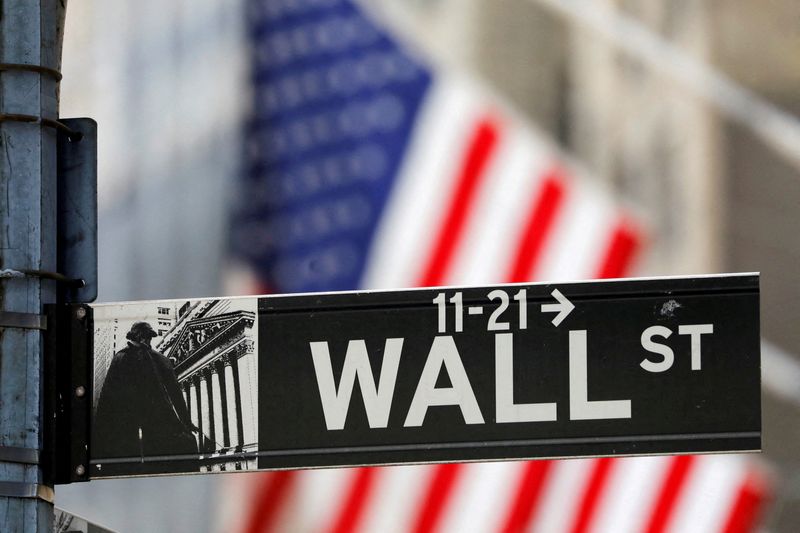
Sept 2 (Reuters) - Everyone knows Wall Street calls a 20% drop in a major index a bear market. But what do you call it when the index posts big gains and losses practically every day and is still way up for the year?
That question is testing the limits of the market's most familiar vocabulary and prompting some to question whether a term like bear market really applies when tech indexes are red hot and constantly gyrating.
"It's kind of lazy nomenclature to be using on things that are that volatile," said Art Hogan, chief market strategist at B. Riley Wealth.
The Philadelphia SE Semiconductor Index, a benchmark for chip stocks, and South Korea's tech-heavy KOSPI both entered bear markets in July, based on the traditional measure. But even at their troughs, the indexes were still up 46% and 25%, respectively, for the year, thanks to triple-digit percentage gains over the past year.
If that's a bear, it's not a particularly unfriendly one at the very least.
"These labels that people use probably make some sense for broad markets, but not for indexes such as SOX and KOSPI, which have had crazy parabolic runs," said Steve Sosnick, chief strategist at Interactive Brokers.
While the debate may seem academic to some, the labels shape how investors perceive the severity of selloffs, and in the past have served as important markers to distinguish between routine pullbacks and a long-term shift in fundamentals.
A bear market can last for months. Since 1928, bear markets in the S&P 500 have on average lasted 289 days, or about 9.6 months, according to data from Hartford Funds.
The debate on what constitutes a bear market is hardly new. In a 2008 blog post, Barry Ritholtz, co-founder and chief investment officer of Ritholtz Wealth Management, urged investors to ignore the "squishy terminology."
But what seems like a semantic distinction can carry real investment consequences.
Given the potential boost from the AI boom, investors risk missing out on gains if traditional labels give them a false signal to sell. Indeed, the SOX and KOSPI have rebounded since their trip into old-fashioned bear territory, meaning investors who sold at the bottom would have missed out on recent gains.
Earnings for the S&P 500 semiconductors and equipment industry group are estimated to grow at least 114.7% this year, LSEG-compiled data showed.
There is no consensus on what should replace the traditional definition of bear markets. But among more than a dozen analysts Reuters interviewed, some argue that any new measure should account for the length of the decline, the underlying volatility, the broader direction of the economy and other factors.
Topics in this story
Gathered from external sources. Rights to this text belong to whoever originally published it.