Fed's $2.5 billion renovation broke no laws, but watchdog blasts cost overruns
A new report from the Federal Reserve's watchdog found that the Fed board failed to effectively manage renovations to its headquarters, but no laws were brok...
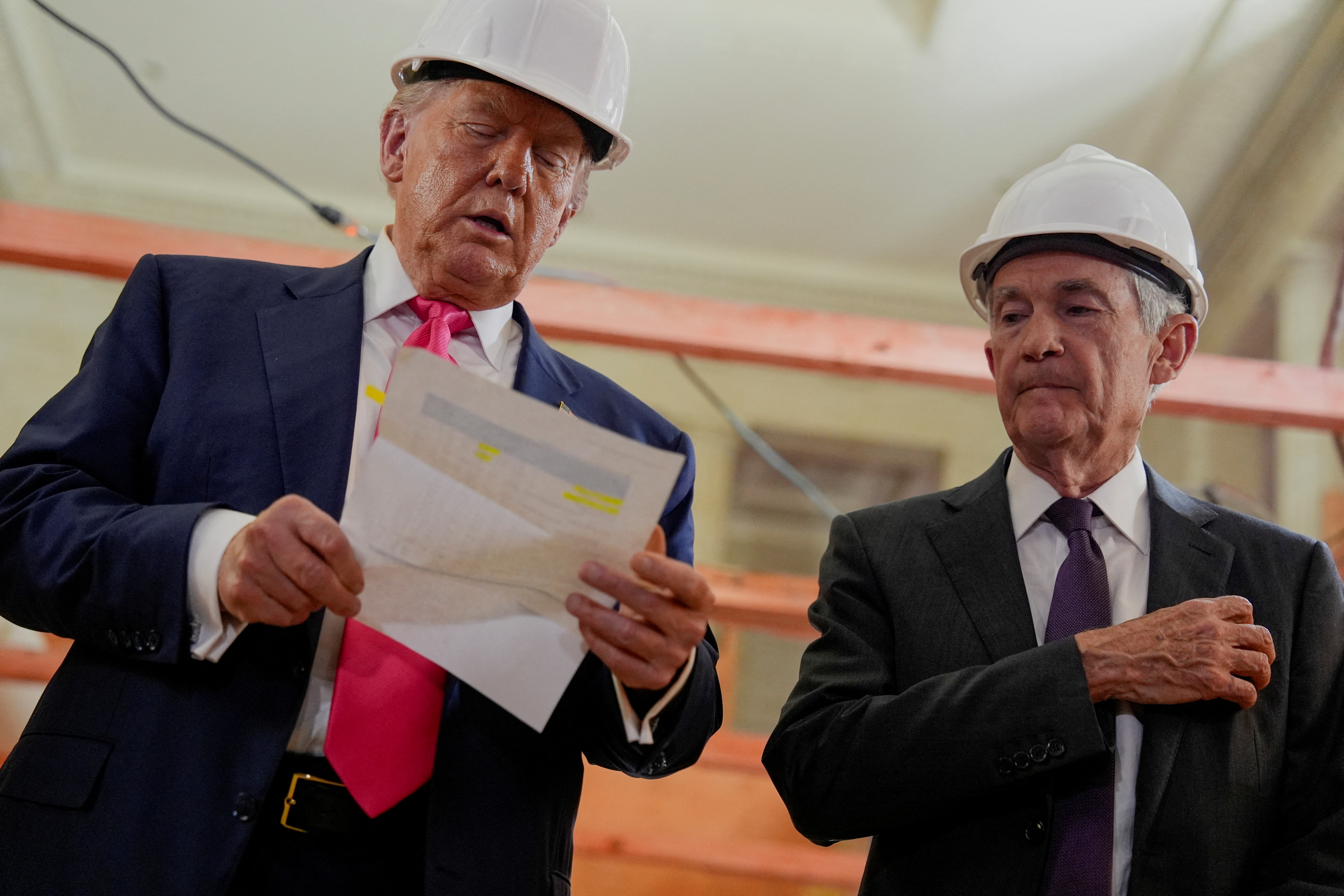
A new report from the Federal Reserve's watchdog found that the Fed's Board of Governors failed to effectively manage renovations to its headquarters, repeatedly ignoring cost-control safeguards and repeating the same project management failures that plagued its past building renovations.
But the missteps fell short of a violation of law, the Federal Reserve's inspector general found.
The report is the culmination of a saga that began more than a year ago and saw President Trump and former Fed Chair Jerome Powell don hard hats to tour the renovations. It also prompted a criminal investigation of Powell, which was ultimately dropped.
In January, the Justice Department opened a criminal probe into testimony Powell gave last summer about cost overruns on renovations to the central bank's Eccles building. Powell pushed back publicly with a video statement , asserting that the Trump administration was pursuing the investigation because it disagreed with the central bank's handling of interest rates.
In March, a federal judge threw out two subpoenas the Justice Department had issued to the Federal Reserve, all but branding the criminal probe invalid. And by April, the US Attorney's Office announced that it had closed the criminal probe as the inspector general undertook its own inquiry at Powell's request.
"At no point during our evaluation did we find reasonable grounds to believe that a violation of federal criminal law had occurred requiring a referral to the U.S. Attorney General in accordance with the Inspector General Act," the IG's report read.
"Further, while our report outlines deficiencies in the management of the renovation project, resulting in our recommended corrective actions in accordance with the Inspector General Act, we did not identify administrative misconduct during our evaluation."
Still, according to the findings, the Fed board deviated from key cost-management provisions within its "construction manager at risk" (CMAR) contract — a specific delivery method chosen precisely to avoid past mistakes. The CMAR framework was adopted following budget overruns and timeline delays during the prior renovation of the board's other building, the Martin building.
However, investigators discovered that despite attempting to apply "lessons learned," the Fed board repeated the same missteps, failing to implement numerous available cost-control measures that could have mitigated the significant spikes in construction costs.
The investigation also determined that the board's internal project governance was fundamentally insufficient to oversee a project of such magnitude and structural complexity.
Topics in this story
Gathered from external sources. Rights to this text belong to whoever originally published it.