Democrats, angered by Huang’s return to Nvidia, vow investigations, legislation
Lawmakers in both parties are clamoring for answers after Nvidia’s stunning move to reinstate Jensen Huang at the top of the company, voicing concerns that he poses a national security risk in America’s race with China for global AI dominance. “Though the NVIDIA Board of Directors may be convinced that reinstating Mr. Huang ‘poses no…
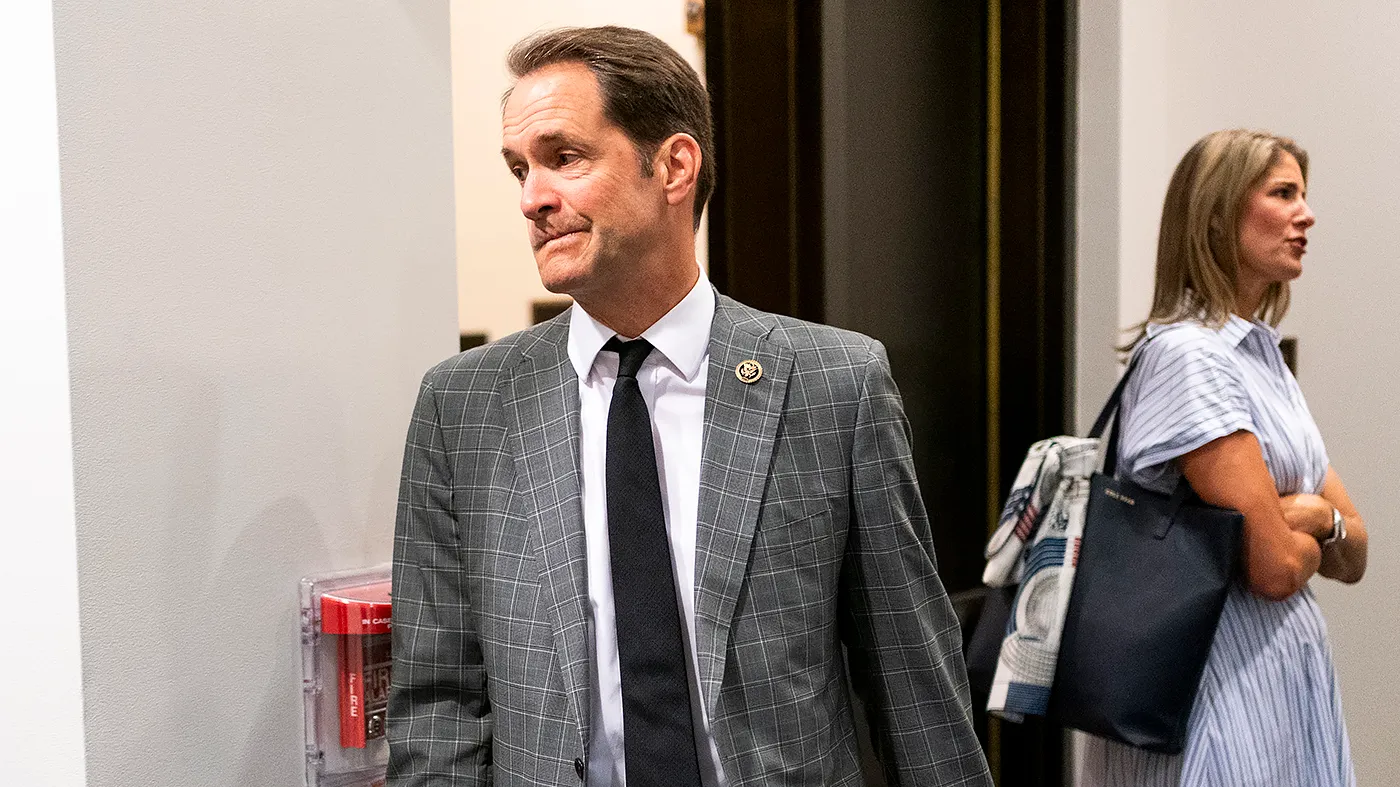
Lawmakers in both parties are clamoring for answers after Nvidia’s stunning move to reinstate Jensen Huang at the top of the company, voicing concerns that he poses a national security risk in America’s race with China for global AI dominance.
“Though the NVIDIA Board of Directors may be convinced that reinstating Mr. Huang ‘poses no national security risk,’ the Congress still has questions that require answers,” said Rep. Jim Himes (Conn.), the senior Democrat on the House Intelligence Committee, Monday in a statement.
“His reinstatement does not change the fact that we expect to see him on Capitol Hill next week.”
Huang is scheduled to testify on Capitol Hill before the House Foreign Affairs Committee, the House Intelligence Committee and the House Select Committee on China on Dec. 1. The Senate Banking Committee has scheduled Huang’s testimony for Dec. 3.
Other top Democrats said Huang’s return to Nvidia creates new urgency for Congress to act, not only to investigate Huang’s ties to China, but also to move legislation to tighten U.S. export controls designed to prevent Beijing from accessing America’s most state-of-the-art computer chips.
Senate Minority Leader Chuck Schumer (D-N.Y.) argued that the Trump administration’s “push” to reinstate Huang “underscores the need for Congress to act.”
“Trump is putting his own financial interests and the needs of his billionaire buddies before our national security, emphasizing that he’s learned nothing from his resounding election defeat. Democrats will wield their full power to investigate any wrongdoing by the Trump Administration, Jensen Huang, other NVIDIA executives, and anyone selling out our national security for financial gain,” Schumer said. “We’ll also work on a bipartisan basis to continue advancing policies that stop the flow of our most powerful technology to the Chinese military and other adversaries.”
House Minority Leader Hakeem Jeffries (D-N.Y.) said in a statement that Congress “will not be deterred from conducting a swift, thorough and wide-ranging investigation into business malfeasance by NVIDIA and corrupt abuse of power by Howard Lutnick and the Department of Commerce.”
Lawmakers across the aisle have introduced legislation to tighten restrictions on chip exports, but it remains unclear whether there is appetite to take up the proposals in the lame-duck session. A bipartisan group of lawmakers is hoping to include chip export controls in the National Defense Authorization Act.
“We will not allow America’s national security to be sold out by the Trump Administration for personal financial gain. The National Defense Authorization Act must include ironclad export control legislation to prevent powerful AI technology from being exploited by the Chinese Communist Party and other adversaries. It’s time for traditional Republicans in Congress to join us in reining in this corruption,” Jeffries said in a statement.
Huang, a co-founder of Nvidia, the chip-making behemoth, resigned as CEO on Nov. 12 following revelations of extramarital affairs with a company executive and a Chinese tech executive suspected of spying for Beijing.
The decision by Nvidia’s board to return Huang to power came amid heavy pressure from President Trump to do just that. Afterward, Trump wasted no time taking credit.
“I spoke to them, let me put it that way. And I convinced them,” Trump told CNBC . “I made the deal.”
Trump also said he gave Nvidia’s board “assurances” that Huang poses no national security threat, and warned that not returning Huang as CEO might push him to work for China directly.
“People say, is it a threat to have him?” Trump told CNBC. “No, it’s a threat to lose him.”
The China hawks on Capitol Hill have decidedly different views. They’re worried that Huang, who has long pushed to sell Nvidia chips to China, is undermining America’s advantage in the AI race.
“Jensen Huang was compromised and exploited by a Chinese spy. Nvidia should have moved on without Huang and ignored the Administration’s inexplicable desire to save Huang. Congress needs to get to the bottom of who approved high end computer chips sales to China,” Rep. Don Bacon (R-Neb.) said. “We cannot say we want to win the AI race and then give China our best technology. We need sunlight on who is responsible.”
“Ummm… she was, and is, a spy,” Rep. Bill Huizenga (R-Mich.) wrote on the social platform X. “How about we get serious about making sure China doesn’t steal US company technology? Or get serious about not selling it directly and indirectly?”
Sen. Ruben Gallego (D-Ariz.) wrote on X that, “The President is selling out our national security to keep the stock market high and probably for some f‑‑‑ing donation to his ballroom.”
Himes suggested Monday that his previously scheduled meetings with congressional panels are still on.
And other top Democrats said they want to expand the investigation to include Trump officials, including Commerce Secretary Howard Lutnick, who reportedly took a softer tone on Nvidia over the company’s AI chip sales to China and failed to put the Singaporean firm Megaspeed on the trade entity blacklist. They’re vowing to do just that when they take control of the gavels in the next Congress.
“Why are Trump and Lutnick putting China’s interests first? Is it just the tens and hundreds of millions of dollars they’re making out in the open or does Huang have even more damning information on them?” said Rep. Jamie Raskin (D-Md.), who’s in line to chair the House Judiciary Committee next year, in a statement.
Democrats are hardly alone in their misgivings about Huang and his return to the top of Nvidia. Rep. Randy Fine (R-Fla.), who sits on the House Foreign Affairs Committee, told The Hill he wants more answers around Huang’s alleged relationship with the Chinese spy.
“Did he know she was a spy?” Fine said. “I assume the answer to that’s going to be no. What did he tell her? You know, he may say, ‘Well, I didn’t tell her anything.’ You know … I’ll ask that, and that’s the first set of information I want to know.”
“And then the second set is about the risk with China. We are in an AI arms race with China, and China is winning some parts of it, and we’re winning some parts of it. And China is at war with us right now over it … we don’t want to sell China the chips because it’s a four-tiered war. It’s software that we’re winning, chips that we’re winning, energy infrastructure that we’re losing, and data centers, which right now is unclear,” Fine added, noting that whoever wins this “war” will determine who wins the 21st century.
Julia Shapero and Miranda Nazzaro contributed.
Topics in this story
Gathered from external sources. Rights to this text belong to whoever originally published it.