YardFlow lands over 200-site yard automation deal
YardFlow has processed nearly 2 million shipments across 26 facilities. Its largest customer now wants the system in every one of its over 200 sites, includi...
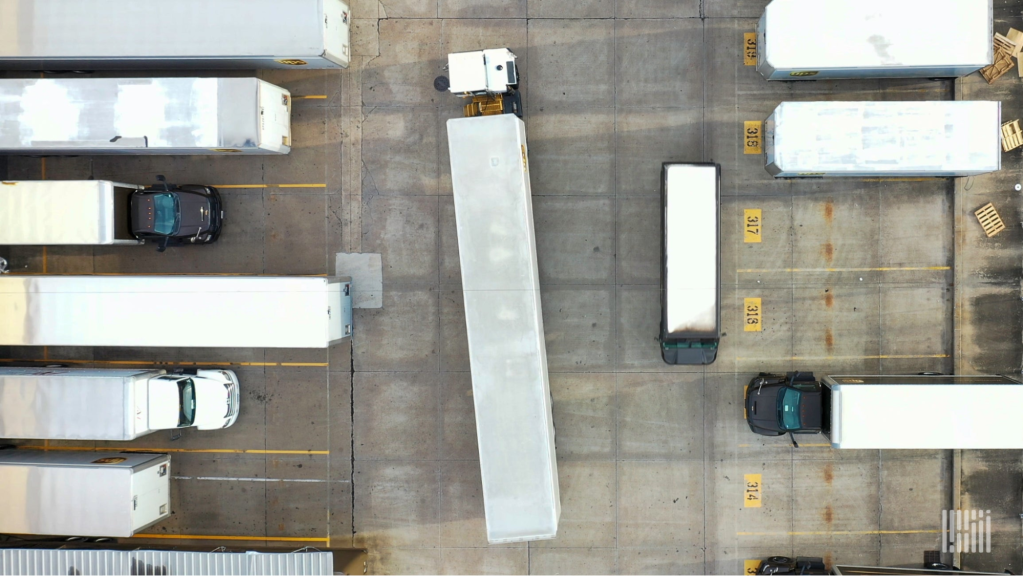
The most challenging areas in freight are not the highways but the yards and docks across multitudes of shippers and receivers. The battle against utilization entropy is fought on the loading and unloading docks. It mostly happens inside a warehouse fence line, where a driver sits in a line of 10 trucks waiting to talk to one person behind a pane of glass.
YardFlow is expanding its yard automation software to all 200+ facilities of a beverage giant after a 26-site deployment. The shipper moved nearly 5% more freight with the same headcount according to a YardFlow analysis.
"That's tens of millions of dollars of incremental profit," Jake Koppinger, founder of YardFlow, told FreightWaves.
The customer is expanding the rollout from its largest facilities down to its smallest. "They're pushing us into all of their 200+ facilities, including their smallest, so biggest to smallest, because they want to see that standardization," Koppinger said.
YardFlow has processed close to 2 million shipments across the 26 sites. The system runs at three-nines or 99.9% uptime.
The problem YardFlow originally tackled began with paper. Specifically, the bill of lading handoff that still runs through a printer, a stapler and a slot in a window at thousands of U.S. distribution centers.
Koppinger walked through the analog process with a hypothetical example. A dock coordinator prints three copies, collates them, passes them through the glass, takes back a signature, then files the shipper's copy.
"They build up this big pile of paper, rubber band it, put a date on it, and put the pile in the box," he said. Once the box fills, it goes into storage for seven years to satisfy the statute of limitations.
That box becomes a cash problem roughly 60 days later. If a shipper invoices a retailer for 24 pallets and the retailer says it received 23, the dispute surfaces inside a lump-sum payment.
"You have like 50 invoices that get paid at once and it comes back in a lump sum of like $1.2 million. Well, I was expecting through those invoices $1.3 million. Now I've got to figure out why a hundred thousand's missing," Koppinger said. "So now there's a cash attribution issue."
Resolving it sends a dock coordinator into the warehouse to find the right box and dig out a two-month-old signature. That coordinator is the same person orchestrating forklift drivers, assigning yard spotters, dealing with truck drivers and replacing printer ink.
"What I like to equate that process to is like the old airport check-in process," Koppinger said. Drivers waiting in that line are accruing detention and risking on-time, in-full penalties on the delivery ahead.
Gathered from external sources. Rights to this text belong to whoever originally published it.