Paying stay-at-home parents isn’t a neutral way to subsidize childcare
The Trump administration is considering a rule to expand Child Care and Development Fund eligibility to include some married couples with one working parent.
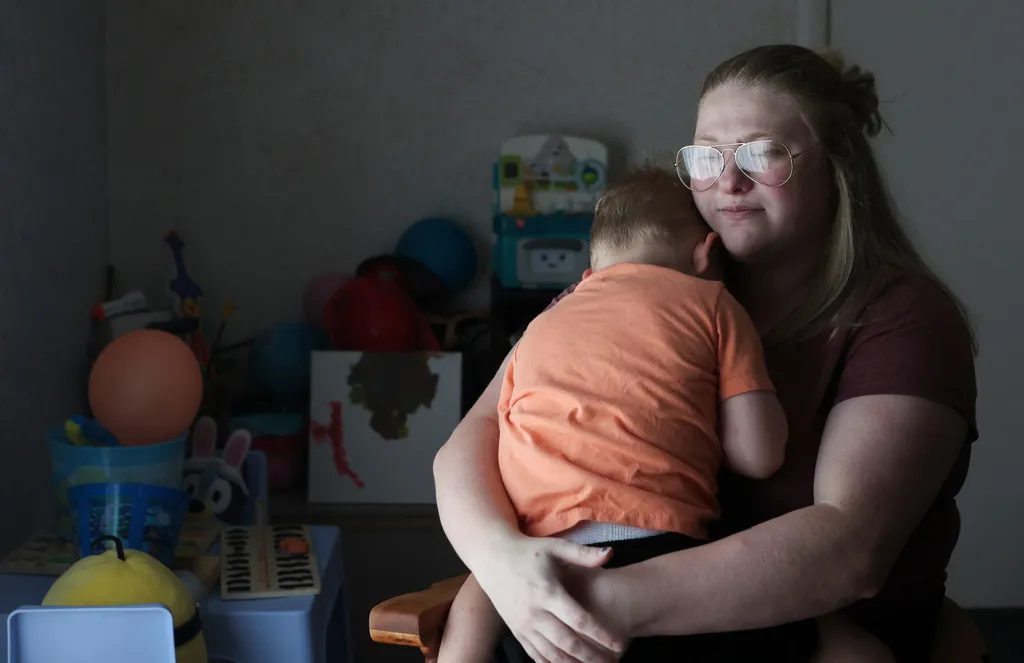
The Trump administration is considering a rule that would expand eligibility for the Child Care and Development Fund, according to a leak to The New York Times . Under the proposed expansion, some married couples with only one working parent could qualify for childcare assistance. Such families, if they earn less than 85 percent of the median income in their state, could receive about $9,000 per child each year to help pay for care provided by a stay-at-home parent. The working parent would also need to work at least 35 hours a week.
Some proponents of the proposed eligibility expansion argue that it offers greater neutrality toward other childcare arrangements. After all, the program already allows funds to go to non-parent family members, such as a child’s grandparent or aunt, for childcare (although in practice, only about 5 percent of children in the program are cared for by a relative). Why not also allow mothers or fathers to receive those funds?
It is certainly a worthwhile goal for policymakers to respect parents’ choices, neither discouraging paid work nor penalizing parents who choose to stay home. After all, in one 2026 survey , families with young children appear almost evenly split in their preference for parent-provided care versus other setups.
Unfortunately, the proposed expansion would not achieve neutrality overall between working for pay and caring for children at home. In fact, it would not even achieve neutrality within the program itself. It merely introduces new distortions into an already complex system of government meddling in families’ childcare choices.
Consider the tax incentives: In dual-income households, second earners generally pay taxes on their wages. In contrast, a parent who stays home provides childcare without creating taxable income. That creates a pre-existing bias against market work by a potential second earner — a bias that is only partially corrected by a few different credits benefiting parents working outside the home and using formal childcare, which are also not neutral. Paying stay-at-home parents for childcare only makes this asymmetry worse.
In other words, expanding the program in this way would make the overall tax-and-transfer system even less neutral between outside childcare and parental care.
Moreover, the proposal to pay stay-at-home parents would offer new benefits to certain married, single-earner families while continuing to exclude other families, thus rewarding and punishing different arrangements. It would, for example, create a taxpayer-funded incentive for parents who would otherwise prefer to work part-time jobs to stay home instead with the children full-time.
Originally created as part of the 1996 welfare reforms, the Child Care and Development Fund consolidated federal childcare funding to help low-income parents work as welfare programs began imposing new work requirements. Currently, the program funds childcare for working parents earning below 85 percent of their state’s median income (or 60 percent in some states), and roughly 80 percent of its 870,000 or so current recipient families are single-parent households, mostly single mothers.
With the federal deficit now totaling $2 trillion in the first 11 months of fiscal 2026, expanding entitlements is a questionable priority. If increased funding comes with the eligibility expansion, that would not only further strain taxpayers but could also be credibly interpreted as an attempt at social engineering.
Some conservatives have expressed support for encouraging more mothers to stay home with their children and might be tempted to substantially increase the eligibility-expanded program’s funding to subsidize this household arrangement.
Expanding eligibility withoutincreasing funding, meanwhile, would mean more families competing for the same limited pool of money. The program is a federal block grant administered by states and currently provides about $9,000 per child per year in assistance, varying by state and by family. Only about one in seven eligible families received Child Care and Development Fund assistance in 2023; expanding eligibility without more funding spreads an already cash-strapped program even thinner.
Neutrality toward private family decisions is a worthy aim, but the fund cannot be made neutral merely by adding another favored household arrangement. At best, the proposal exchanges a subsidy conditioned on paid work for a broader set of subsidies conditioned on work, marriage, and how families decide to divide up their labor. Even eliminating the Child Care and Development Fund altogether would not make federal childcare policy neutral, since numerous other distortions (such as the Child and Dependent Care Tax Credit, dependent-care exclusion, and Child Tax Credit) remain.
So the proposed expansion is not a neutral way to subsidize childcare, which is one more reason the government should not do it — for working parents and stay-at-home parents alike.
Chelsea Follett is a research fellow at the Cato Institute’s Center for Global Liberty and Prosperity, working with HumanProgress.org.
Topics in this story
Gathered from external sources. Rights to this text belong to whoever originally published it.