Tim Cook's biggest hits and misses as Apple CEO
Tim Cook is stepping down as Apple's CEO. He's had a number of major hits, and some misses.
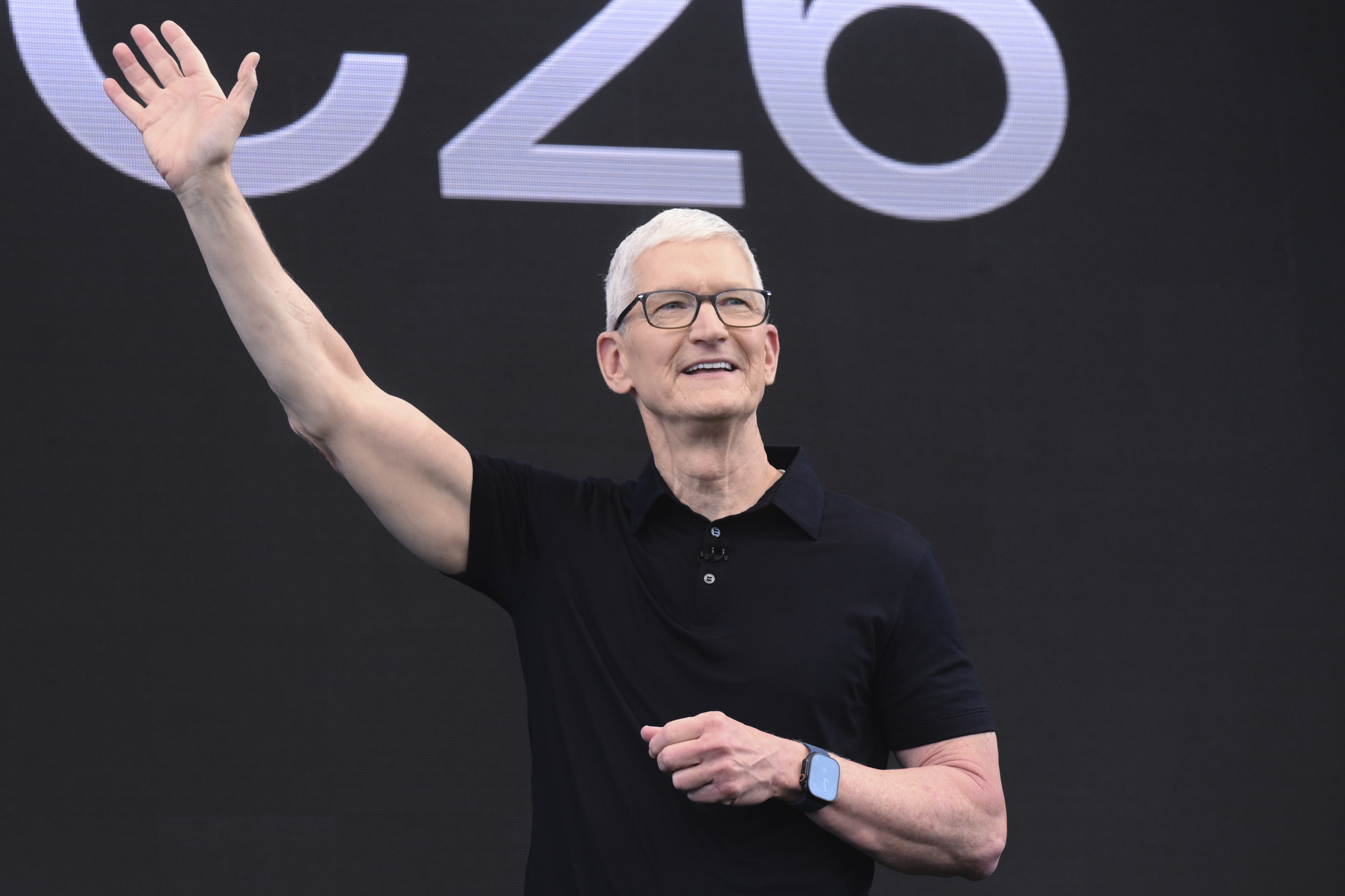
Monday, Aug. 31, is Tim Cook's last day as chief executive of Apple ( AAPL ), a position he's held since taking over the role in 2011 following the death of Steve Jobs.
Cook has overseen a dramatic expansion of Apple's market capitalization from about $350 billion to more than $4 trillion. It briefly eclipsed the $5 trillion mark in July.
It would be an understatement to say that Cook's tenure as Apple CEO has been a success.
"By any traditional metric, Tim performed extraordinarily well," Harvard Business School professor and former Intel board member David Yoffie told Yahoo Finance.
"He was taking over from a legendary CEO, which in and of itself is generally terrifying," Yoffie said. "He produced about a 10x improvement in shareholder value. The market cap went from about $350 billion to between $4 and $5 trillion, which puts him among the most successful CEOs at driving shareholder value among anybody in the world in the last 15 years."
What to know as John Ternus steps into the CEO role
$32 million: The number incoming Apple CEO John Ternus has to beat
What Apple's CEO change tells us about the future of the company
Apple's John Ternus 'must define Apple's future,' experts say
Cook wasn't the CEO when Apple initially launched the iPhone in 2007 — that was Jobs — but he has transformed the business segment nonetheless, making it the engine that has powered Apple's continued growth over the years.
"He took the iPhone, which was already a successful product by the time he [became] CEO, and [turned] it into the most successful product in world history," Yoffie said.
The iPhone accounted for $209.5 billion of Apple's $416.1 billion in total sales in 2025. That's roughly 50% of the company's revenue from a single business segment. To do that, he dramatically expanded the iPhone lineup, adding phones with bigger screens and more powerful processors and cameras to appeal to premium consumers.
"He broadened the iPhone franchise quite significantly," BofA Global Research analyst Wamsi Mohan explained.
"I mean, many more skews up and down, different price points. I think … just managing the complexity around the supply chain associated with that … that's all Tim Cook," Mohan added.
Part of the iPhone's success comes down to Cook's dramatic expansion into the Chinese market. While the Americas remain Apple's largest market, with $178.3 billion in sales in 2025, China is a critical part of the company's business, with $64.3 billion in sales.
Cook also created a broad ecosystem of products and services tied to the iPhone, including Apple Music+, Apple TV+, Apple Fitness+, the Apple Watch, and AirPods.
Services is now Apple's second-largest business, with $109.1 billion in revenue last year. Wearables, the company's third-largest segment, brought in $35.6 billion.
Topics in this story
Gathered from external sources. Rights to this text belong to whoever originally published it.