Oil executives declared a fuel crisis, and diesel agrees
Crude oil stockpiles look almost normal. The fuel that hauls your groceries is telling a very different story.
Money trouble usually starts with a number you weren't watching.
For most of 2026, the number everyone watched was crude oil. It spiked after the U.S. and Israel went to war with Iran on Feb. 28.
Then it slid back toward $70 in July and has since climbed back to roughly $100 a barrel.
Gasoline rode the same roller coaster. Regular averaged $4.48 a gallon on Monday, Sept. 21, according to AAA, which stings but still sits below the all-time high of $5.01 set in June 2022.
If that were the whole picture, you could file 2026 under "bad year at the pump" and move on.
The trouble is the other price on the sign, the one most drivers skip. It rarely makes the evening news, and it matters more to your household budget than the gasoline number does.
The fuel that hauls your groceries, harvests your food, and heats homes across the Northeast just broke its own record again.
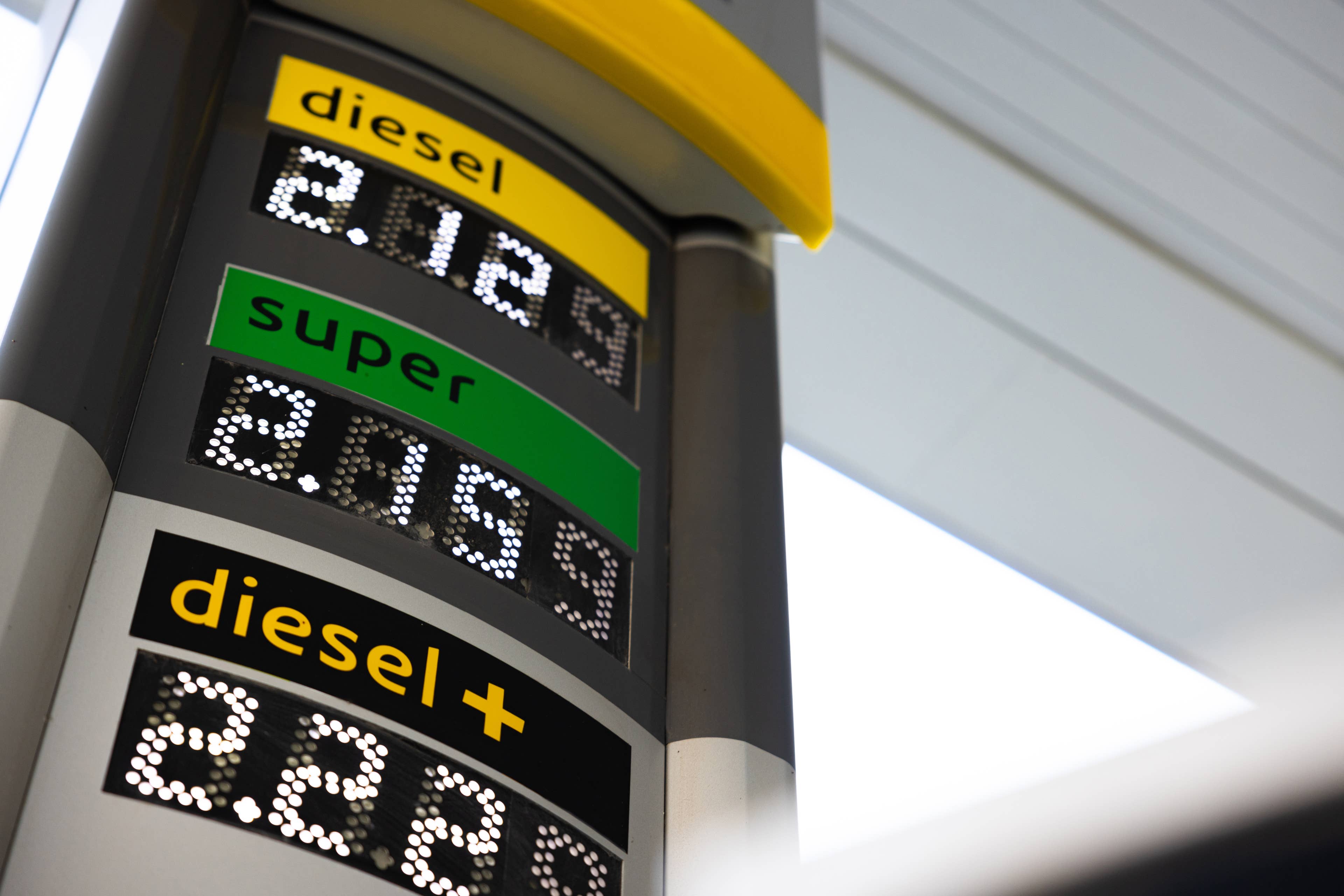
Diesel averaged a record $6.51 a gallon on Sept. 21, according to AAA data reported by NPR , roughly 76% more than a year ago. The people who run America's biggest oil companies say this is exactly what a fuel crisis looks like.
Why crude oil stockpiles look normal while diesel sets records
What struck me when I pulled the latest weekly numbers from the Energy Information Administration (EIA) is how calm crude looks. Commercial crude inventories sat one percent above the five-year average for the week ending Sept. 11, according to the Energy Information Administration (EIA) .
Distillate inventories, the category that includes diesel and heating oil, were 13% below that same average in the same report. That gap tells you where the real shortage is.
Diesel supply from the Middle East, Russia, and China has dropped sharply, and U.S. refiners have been shipping more overseas to fill the hole. Distillate stocks fell below their normal five-year range in April and should stay below the five-year low through the end of 2026 and most of 2027, according to the EIA's Short-Term Energy Outlook .
Russia is a big part of that math. Ukrainian drone strikes on its refineries have knocked out diesel that used to flow to Europe, pulling more American barrels across the Atlantic.
What oil executives mean when they say the fuel crisis is here
American oil executives spent months warning that a long closure of the Strait of Hormuz would eventually turn into a fuel crisis, and now they say it has arrived, reported the Wall Street Journal .
Topics in this story
Gathered from external sources. Rights to this text belong to whoever originally published it.