Bond markets rattle economy, forcing controversial buyback ‘Band-Aid’
The U.S. bond market is raising alarm bells for the economy, forcing the Trump administration to take emergency measures to ease the immediate impact on American pocketbooks. Long-term borrowing costs hit their highest levels across the world on Tuesday, with the cost for the U.S. government to borrow money reaching its highest rate in nearly…
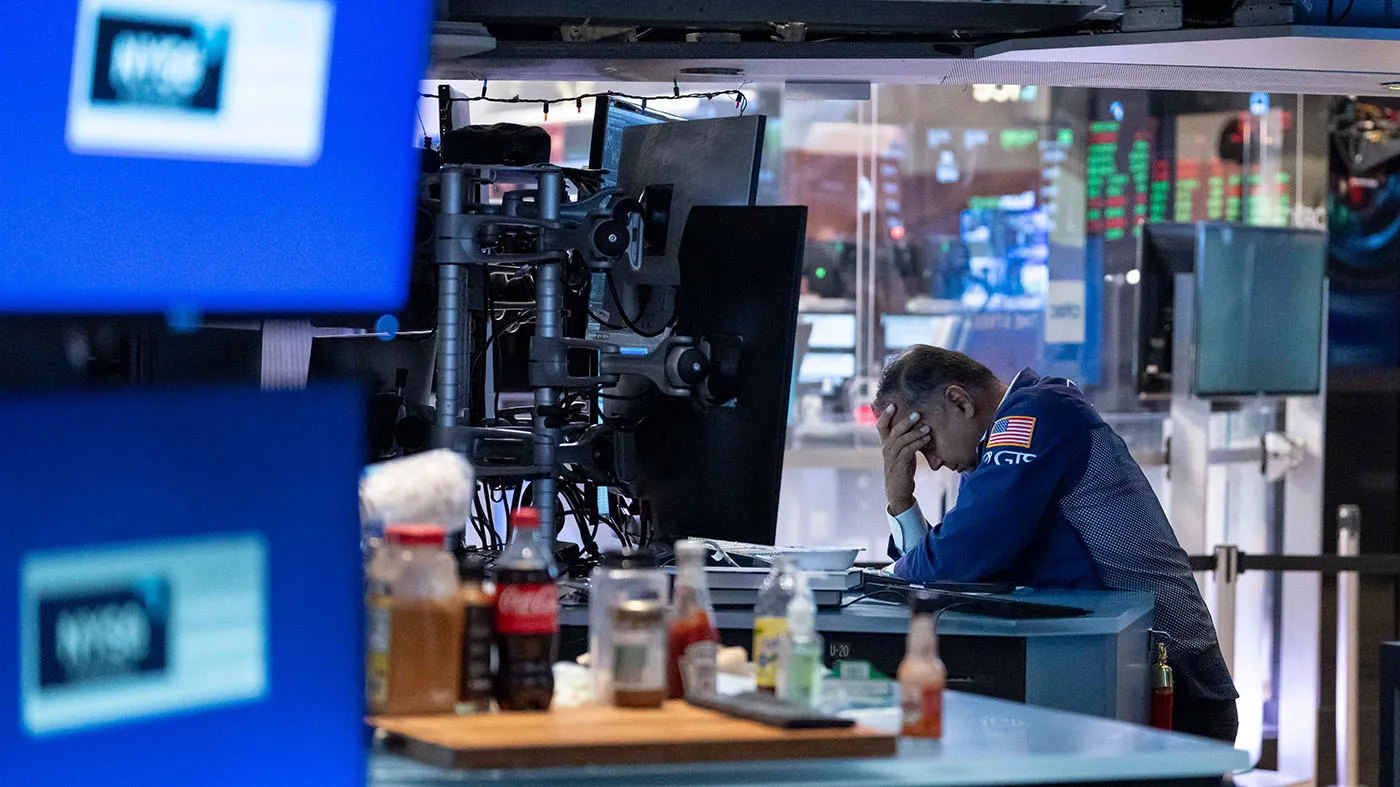
The U.S. bond market is raising alarm bells for the economy, forcing the Trump administration to take emergency measures to ease the immediate impact on American pocketbooks.
Long-term borrowing costs hit their highest levels across the world on Tuesday, with the cost for the U.S. government to borrow money reaching its highest rate in nearly two decades.
Experts say the unpredictability surrounding the Iran war, President Trump’s erratic trade policies, massive spending on artificial intelligence and the soaring national debt are all contributing to the choppy economic waters.
“One explanation is uncertainty,” said Benjamin Chabot, an adjunct associate professor at Northwestern University and a former senior policy adviser at the Federal Reserve.
“We have a new Fed Chair. We have an FOMC [Federal Open Market Committee] that looks legitimately divided about what the proper policy path is, and that’s largely driven by uncertainty about the economy,” he said.
The yield on the 30-year Treasury bond surpassed 5.3 percent on Tuesday, marking the highest yield since April 2007 — mere months before the start of a financial crisis that upended the global economy in the late 2000s.
The 30-year bond yield ticked down to 5.285 percent at the close of business on Tuesday and has since dipped to nearly 5.2 percent as of Wednesday afternoon. The yield on the 30-year bond has not closed at under 5 percent since July 6.
The decline in bond yields on Wednesday came after the Treasury Department said it will double the maximum amount of the country’s long-term debt it can buy back. The increase, from $2 billion to $4 billion per operation, will be in effect from Sept. 9 through at least Nov. 4. The Treasury typically conducts so-called liquidity support buyback operations once or twice a week.
“The bond reaction to me signals that they are finally paying attention,” said John Deal, managing director in the capital markets advisory practice at investment bank Post Oak Group.
The Treasury Department is “finally saying ‘OK, this is something that does indeed have stiff consequences if we get it wrong and it needs to be responded to,’” he continued.
Markets rallied in response to the move, seeing bond yields plunge and the prices of gold and silver rise.
However, Joel Griffith, a senior fellow at former Vice President Mike Pence’s think tank Advancing American Freedom, warned the move by the Treasury is “worse than a Band-Aid.”
“We’re artificially manipulating those lower interest rates. We can temporarily get a reprieve in the lower rates by doing what the Treasury is doing — borrowing short-term debt and using the proceeds to buy back the long-term debt. But all that does in reality is just pump up asset prices,” Griffith told The Hill.
“This does nothing to help typical families. It does nothing to help small businesses that are going to continue to bear the consequences of what is driving that long-term rate. They are addressing the symptom rather than the problem,” he continued.
David Kass, a finance professor at the University of Maryland, equated the Treasury’s move to quantitative easing: the practice of the Federal Reserve buying assets to inject more money into the economy and eventually boost demand.
The move, deployed during the Obama administration, is intended to make the business environment “a little more attractive” for investors, Kass told The Hill.
“The effect of doing this would be to lower the 10-year Treasury yield, which would have, in this case, a small but positive impact on lowering costs,” he said, noting that it “should lower the cost of a 30-year mortgage or other consumer loans.”
Griffith argued the market rates should be allowed to reflect “the reality that Democrats and Republicans are not addressing the problems.”
“The hope would be that at some point this would actually push political leaders into making the hard decisions,” he said. “It’s far better for us to deal with some economic pain now in hopes that we can address these long-term problems rather than continue to kick the can down the road, which is basically what the Treasury is doing this morning.”
One contributing factor to increasing bond yields, experts have noted, is the rise in U.S. government spending since the start of the COVID-19 pandemic. The national debt surpassed $40 trillion on Monday, roughly $16.5 trillion higher than where it stood on March 2, 2020.
The Iran war has only further ballooned the debt. Analysts at the Center for Strategic and International Studies estimated in June that the Middle Eastern conflict had cost the federal government between $35.2 billion and $42.5 billion, and the administration has sought tens of billions in additional funding from Congress.
“The asset markets tend to look forward. … There’s a lot of uncertainty with what’s going on in Iran. That situation could linger or continue for some time,” Kass remarked, noting the impact the war dragging on would have on oil prices , which will further squeeze Americans’ finances.
Trump downplayed concerns over the bond market and called for the Federal Reserve to lower interest rates during a meeting with cryptocurrency executives at the White House on Wednesday.
“No, I don’t think so,” Trump said when asked if Americans should be concerned about the volatility in the bond market .
“Our country is doing so well despite interest rates,” he continued, calling interest rates “artificially high.”
“They raise them for no reason, and you can’t go out to the market when you have a Fed that’s raising interest rates. You can’t say I want to pay three points less than what the Fed says you’re supposed to be paying,” the president said.
Some economic officials don’t appear to be on the same page with the president.
Multiple Federal Reserve officials appeared to hint at increasing interest rates last month during a meeting between the FOMC and the Fed’s Board of Governors, with attendees arguing that “policy tightening would likely be necessary” if inflation did not decline.
“A few of the participants who favored raising the target range for the federal funds rate at this meeting judged that doing so would likely help forestall the need for a steeper and potentially more costly sequence of tightening moves at a later stage,” the meeting’s minutes said.
Annual inflation was 3.4 percent in July , as measured by the consumer price index, well above the Fed’s 2 percent target rate. The central bank, though, relies on the personal consumption expenditures index, which the Bureau of Economic Analysis will release for July next Wednesday.
“They should allow interest rates to go down. When you announce good numbers, you shouldn’t drive them up,” Trump said on Wednesday, referring to the FOMC. “They keep thinking that will drive them up to stop inflation because success in growth does not cause inflation. Other things cause inflation.”
Topics in this story
Gathered from external sources. Rights to this text belong to whoever originally published it.