Burger chain cancels breakfast at hundreds of restaurants
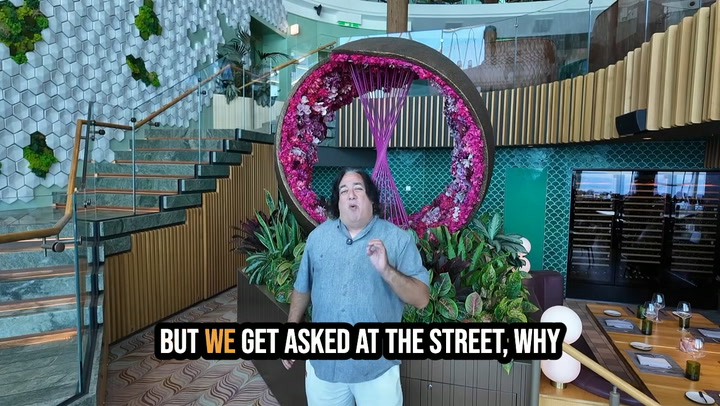
Transcript: Daniel Kline: Hey, it's Dan Kline, co-editor-in-chief of The Street. I am standing in Eden, a restaurant on Celebrity Beyond. Cruise ship restaurants don't go out of business. They get replaced. Uh, they get upgraded. But we get asked at The Street, why are there so many stories about restaurants going out of business? Is this just something you guys cover every one or are the numbers going up? No, there's actually an increase. Why is there an increase? Well, really, it's kind of a whole bunch of bad news coming together at once. Labor prices are up. Food prices are up. People's incomes might not be down, but they feel like they're down, because all the prices are up. People are worried about losing their jobs. So if I'm worried about losing my job, I'm not going to go to the steakhouse. Maybe I'm going to trade down and go to Wendy's or go to, go to Chili's. So you're seeing a lot of restaurants, but restaurants operate on pretty razor-thin margins. So, if you're, say, like, a Red Robin, which has closed a bunch of restaurants recently, and the price of beef go- goes up, and the price of beef has gone sky-high, and they're a burger chain, well, all of a sudden they were making X amount, and that gets tight, and if they have debt they're paying off, of which many restaurant chains do because of the pandemic, all of a sudden, even though they're making a profit, they don't have enough money to cover what they owe. They don't have enough money to hold onto their workers. So one other thing. I am on a GLP-1 drug. I've lost some weight. That is a good thing. But when I go to a restaurant now on a Friday night or Saturday night, I normally would've had an appetizer, an entree, maybe a dessert. Now, I'm having an entree, and I'm bringing some of it home. So that's one more meal I'm not eating out or not buying from a grocery store. So take all those things together, and it's not some strange wave of restaurant closures. It's a bunch of pressures all on restaurants all at the same time, forcing them out. It might not get better anytime soon, because if people don't feel like they're secure in their job, they're going to cut back on restaurants. I am Dan Kline, co-editor-in-chief of The Street.
When you operate a business, it costs you money to not be open. You still pay rent and utilities, even when you're closed.
Because of that, back in my days as a toy store general manager, I tried very hard to keep the store open profitably as much as possible. That meant not just opening the doors more, but also finding an audience for those dayparts.
On Friday nights, for example, we kept part of the store open for people to play Magic: The Gathering. That meant paying someone to officiate the games and having a cashier to sell candy and snacks.
We easily sold enough food and drinks to make the time profitable, offsetting the added employee and utility costs.
During Christmas season, we opened two hours earlier most days, and on Easter, I opened by myself, selling a few thousand dollars worth of items, mostly to older customers with nowhere to go.
And although it would make no sense for us to be open late at night or early in the morning, I tried hard to maximize our hours while balancing costs.
That same basic calculation helps explain why breakfast can be attractive to a restaurant chain. Wendy's began offering breakfast nationally in May 2020, giving its restaurants a way to generate sales during hours when many locations had previously been closed.
Those efforts initially showed promise, but the numbers have fallen, and now the company has quietly dropped breakfast at a number of restaurants, cutting back hours at others.
A recent franchisee Chapter 11 bankruptcy has led to another 120 Wendy's locations dropping, or limiting the times when they sell the morning meal.
Breakfast was supposed to help Wendy's catch up to McDonald's.
Instead, the chain has fallen behind Burger King and is once again the third-largest U.S. fast-food burger chain, CNBC reported. That's not directly related to breakfast sales, but those are one of the chain's problems.
Wendy's, which has closed hundreds of underperforming stores , has seen its sales slow.
"Global systemwide sales declined 6.5% on a constant currency basis, primarily driven by U.S. same-restaurant sales, which declined 7.0% and the impact of 289 U.S. restaurant closures in the first half of the year," CFO Steven Cirulis said during the chain's second-quarter earnings call .
A drop in breakfast sales was part of that.
"The decline in U.S. same-restaurant sales was driven by a 12.5% decrease in traffic, which included the impact of less discounting and reducing or eliminating breakfast operating hours at certain locations, partially offset by a 5.6% increase in average check," he added.
Topics in this story
Gathered from external sources. Rights to this text belong to whoever originally published it.