Government moves to set up mineral exchange, 5 commodities to be traded initially
NEW DELHI: Government has moved a step closer to setting up the country’s first mineral exchange to facilitate transparent trading of bulk industrial
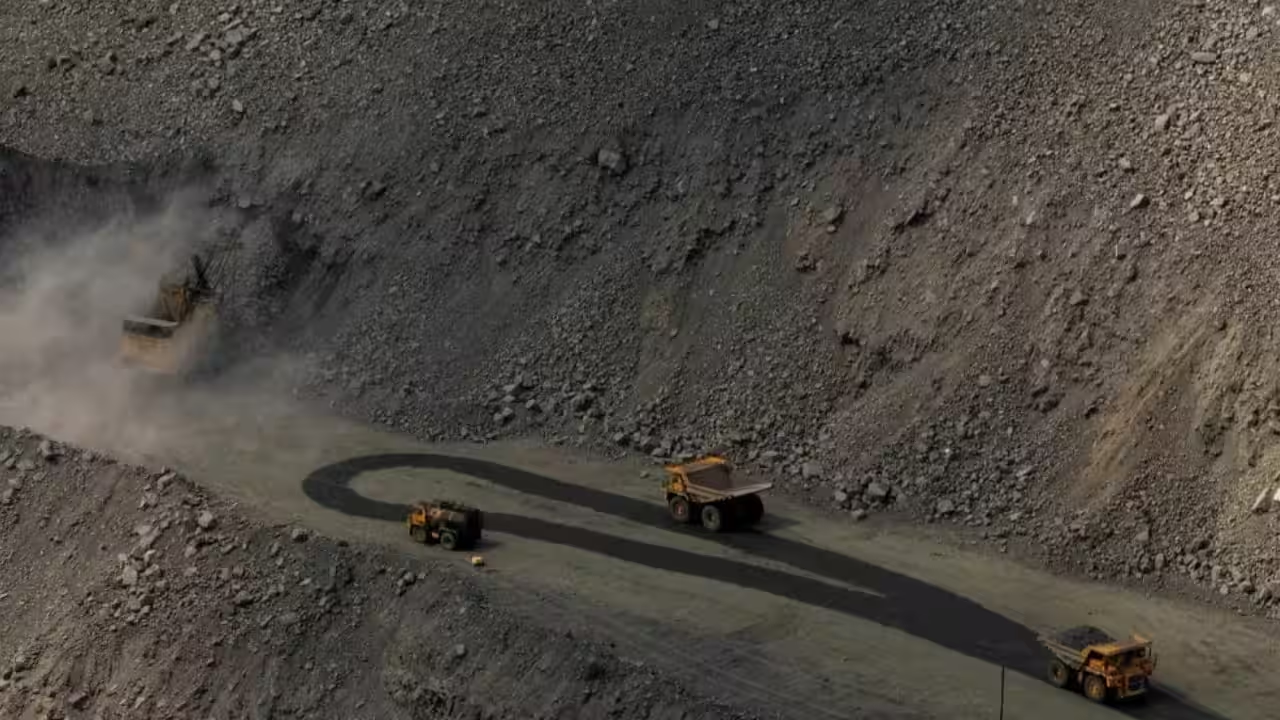
NEW DELHI: Government has moved a step closer to setting up the country’s first mineral exchange to facilitate transparent trading of bulk industrial commodities, with the mines ministry initiating the process to select an entity to establish and operate the platform.The exchange aims at bringing greater transparency to mineral trading by ensuring a “fair, transparent, neutral, efficient and robust price discovery” mechanism. Officials said it would initially cover five minerals - iron ore, chromite, bauxite, limestone and manganese - and may later include other minerals - except coal, lignite and atomic minerals - with regulatory approval.These five minerals are crucial raw materials for heavy industries, particularly steelmaking, aluminium production and cement, and have established domestic mining and industrial supply chains. The mineral exchange is likely to become functional by the next financial year.“The exchange will operate through a centralised electronic platform and facilitate physical delivery-based contracts, providing a transparent and competitive mechanism for pricing and mineral supplies. It is expected to improve market access and reduce disputes over quality, pricing and contract terms,” an official said, adding that companies have been asked to submit applications for setting up the exchange.Currently, mineral sales take place through direct transactions between producers and consumers, as well as electronic auctions. India has separate exchanges for electricity and natural gas, while the process to set up the country’s first coal exchange is on.The ministry of mines has notified the rules, while the Indian Bureau of Mines has been appointed as the nodal agency and regulator.You use AI every day. Now get your AI Quotient. Take the AIQ test.
Topics in this story
Gathered from external sources. Rights to this text belong to whoever originally published it.