Instant house-help race heats up as losses mount
Instant house-help race heats up: Urban Company Q2 loss Rs 182.5 crore; Snabbit Ebitda loss Rs 145 crore as both spend to scale InstaHelp demand.
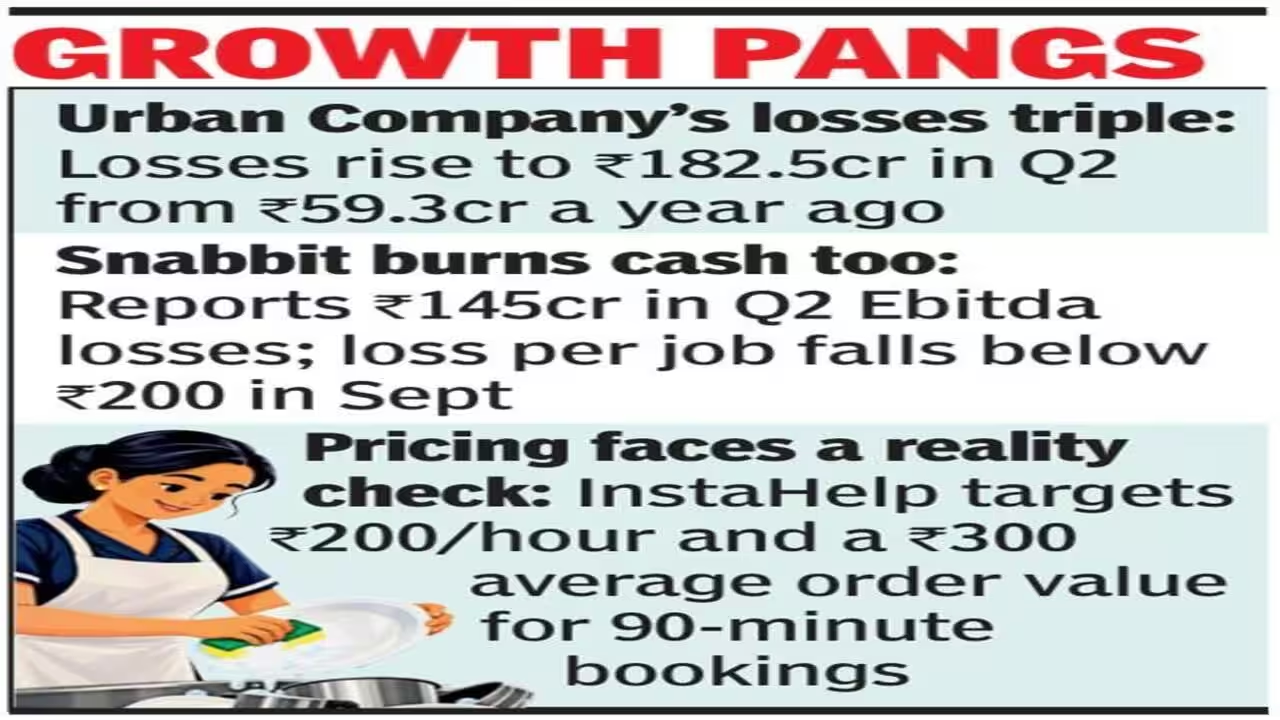
Bengaluru: Urban Company is losing more money, and its chief executive Abhiraj Singh Bhal said it is choosing to do so. The company is spending heavily to become the app households turn to when their regular help takes a day off. Rival Snabbit is pursuing the same customers, with steep losses of its own. “The losses are high because we are choosing to keep them high and we are choosing to invest from a position of strength,” Bhal told analysts on Friday.Urban Company’s losses more than tripled to Rs 182.5 crore in the September quarter from Rs 59.3 crore a year earlier. Total income rose 40% to Rs 578.5 crore.Snabbit reported an Ebitda loss of Rs 145 crore for the Sept quarter in figures shared by founder Aayush Agarwal. Snabbit completed 64.5 lakh jobs, with a net transaction value of Rs 73 crore. Ebitda is earnings before interest, tax, depreciation and amortisation. The last two spread asset costs over time. Net loss is the final figure after all income, expenses and taxes are accounted for.Snabbit’s FY26 accounts also showed a loss of Rs 167.8 crore against Rs 5.7 crore a year earlier. Total income was Rs 27 crore, more than half coming from other income, mainly interest on bank deposits, according to regulatory filings sourced via Tofler.Agarwal offered a similar defence of spending on customer adoption, training, technology and expansion. “We made those investments deliberately, and we’d make them again,” he said. He said Snabbit’s loss per job had fallen below Rs 200 in September from about Rs 1,500 at the beginning of FY26.At InstaHelp, orders grew 63% sequentially to 62.3 lakh. Adjusted Ebitda loss widened to Rs 174 crore from Rs 132 crore in the June quarter, although loss per order fell to Rs 279 from Rs 346. Net order value declined to Rs 114 from Rs 138 amid competition and introductory offers. Urban Company’s adjusted Ebitda also excludes items such as share-based employee costs.Higher prices could test how much demand lasts. Bhal said InstaHelp would need pricing of roughly Rs 200 an hour and an average order value of Rs 300 for bookings lasting about 90 minutes. That assumes worker payouts of about Rs 150 an hour.“Once pricing fully corrects, we will see a downward correction in the orders,” he said.Urban Company’s board has approved raising up to Rs 2,500 crore through routes that could include qualified institutional placements (QIPs), subject to shareholder approval. It held Rs 1,901 crore in cash and treasury investments at September-end.“The incremental capital allows us to be more aggressive,” Bhal said. The money would support growth and potential acquisitions, although he described an acquisition in InstaHelp as “highly unlikely”.The board also approved exploring residential air conditioners under Native, its water purifier and smart lock brand. Bhal said the first one or two years would focus on learning, largely through its app.You use AI every day. Now get your AI Quotient. Take the AIQ test.
Topics in this story
Gathered from external sources. Rights to this text belong to whoever originally published it.