Why Venezuela probably won’t solve America’s emergency oil problem
President Donald Trump’s unusual Venezuela oil deal is coming into fuller view, but his plan to use the proceeds to replenish America’s diminished emergency energy supplies remains a head-scratcher.
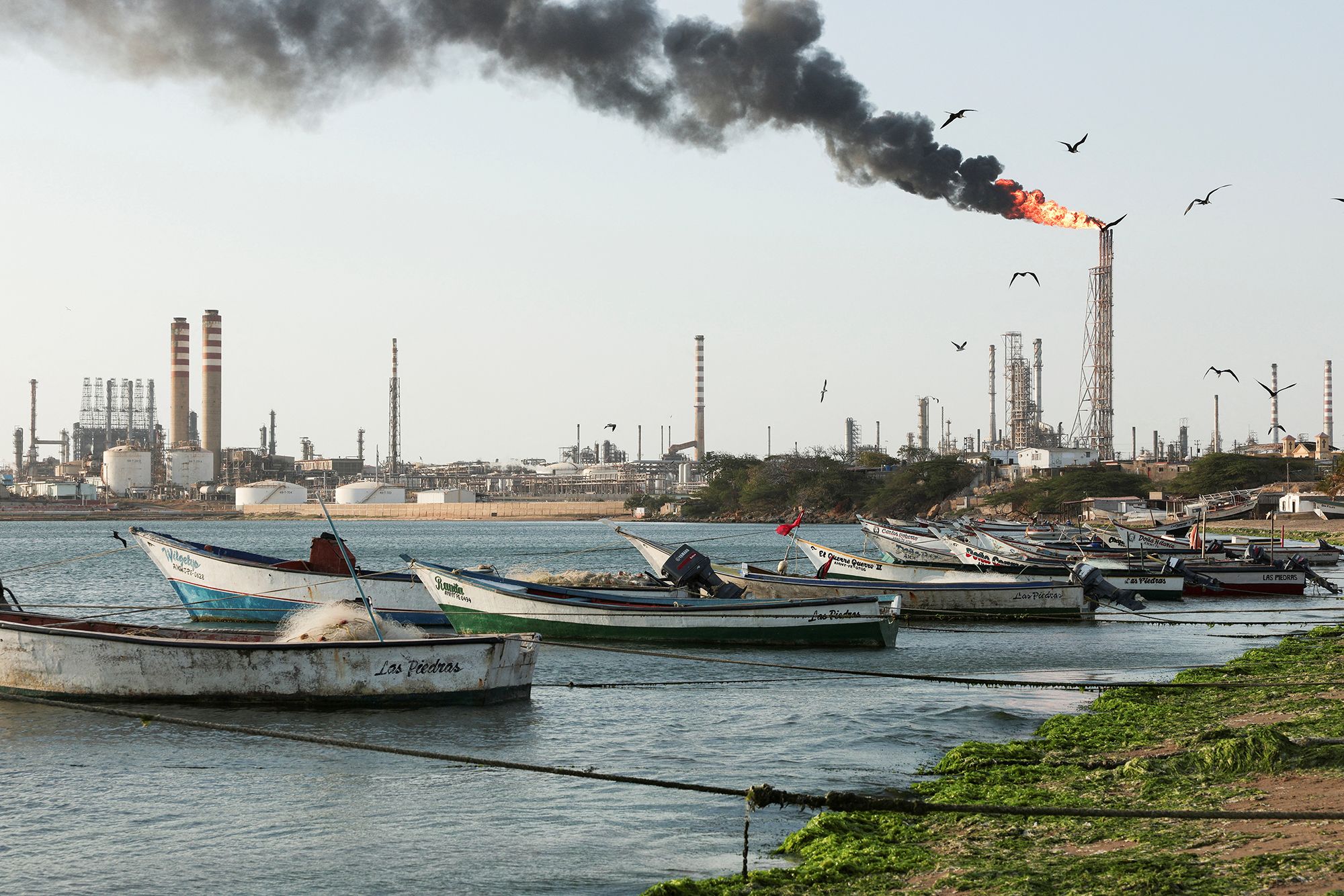
President Donald Trump’s unusual Venezuela oil deal is coming into fuller view, but his plan to use the proceeds to replenish America’s diminished emergency energy supplies remains a head-scratcher. Trump over the past few days said America’s new majority ownership stake in 17 Venezuelan oil fields gives the United States access to 65 billion barrels of proven oil reserves – more than double America’s own reserves. Among the initiative’s objectives is “topping out” the US Strategic Petroleum Reserve, which is at its lowest level since November 1982, when Ronald Reagan was president. The Venezuelan oil that the new public-private joint venture produces will be used to fill up the SPR, Trump claimed, after the United States released 130 million of the 172 million authorized barrels to shore up supply during the Iran war. The plan faces several problems: The Trump administration could conceivably work around those issues. But using Venezuelan oil to fill the SPR to the top is probably not a near-term solution to the problem. The deal In an agreement that the White House on Monday called the “biggest oil deal in world history,” the Pentagon’s little-known Office of Strategic Capital will acquire up to a 35% equity stake in a company that owns North American Blue Energy Partners, the second-largest private oil producer in Venezuela. NABEP plans to invest $100 billion in new infrastructure to produce oil from its fields, according to the White House. The company is controlled by the family of Alejandro Betancourt López, a controversial international businessman based in the UK. Betancourt has been investigated – but not yet charged – in Spain on fraud and money laundering charges, and a similar investigation closed in Switzerland without charges. A spokesperson for NABEP did not respond to a request for comment. The White House said NABEP will be subject to US laws, and the US government will be able to veto any board member appointment. In addition to the equity stake, the US State Department has the right to purchase 20% of the Venezuelan oil produced by NABEP at the cost of production. The State Department also has the right of first refusal to buy the rest of the proceeds. In all, the Trump administration says the plan gives it a 55% stake in the new joint venture. The problem In the long term, the public-private partnership could help Gulf-based energy companies secure access to more Venezuelan crude, for which their refineries are purpose-built. The United States needs the kind of heavy oil that Venezuela produces in order to make asphalt, factory oils and efficiently make diesel and jet fuel. That’s why Venezuela is the second-largest source of imported oil to the United States, behind Canada. But that heavy crude doesn’t help with America’s dwindling emergency oil reserves problem. Venezuelan oil falls outside the scope of the Energy Department’s storage requirements for the SPR. That’s because the cost of hardening the materials to store Venezuelan oil in the SPR’s underground caverns would outweigh the benefits and could create considerable operational difficulties, so the Energy Department determined that costs would outweigh the benefits of heavy oil storage, according to a 2016 long-term strategic review of the SPR. The current mix of light sour and light sweet oil is sufficient for a response to a crisis, the Energy Department found. Even if blended with lighter oil, it would still cause problems in the years ahead, noted Matt Smith, director of commodity research at Kpler. Beyond the storage problem, it’s not clear that Venezuela has much more oil that it can readily produce. The country has increased its exports to 1.2 million barrels a day, about 150,000 barrels per day more than at the start of the year, according to Luisa Palacios, former Citgo chair and current managing director of Columbia University’s Center on Global Energy Policy. Although that’s significantly less than the 3.5 million barrels per day that the country produced before the socialist takeover in the late 1990s, Palacios noted that the country’s dilapidated infrastructure requires significant repairs and investment over the course of many years before it could approach its peak production levels. Venezuela has 303 billion barrels of proven oil reserves, the largest in the world. But oil reserves are not the same as oil production, and that production won’t come online overnight, even with the US deal. “This is not a near-term fix for the Iran-driven SPR depletion,” said Helima Croft, head of global commodity strategy at RBC Capital Markets. By Trump’s own admission, the deal will take time to come to fruition. In the Oval Office Monday, Trump acknowledged that the partnership would not produce enough oil to lower gas prices ahead of November’s midterm elections. “They say two years, three years,” he said. “But if it was two years, that’s a short period of time.” It’s also not clear that Trump can act unilaterally to refill the SPR with Venezuelan oil. Congress needs to approve oil purchases to refill the SPR. The White House did not immediately respond to a request for comment. That’s why, during this year’s historic release, the Energy Department sold the oil in the form of exchanges. The government agreed to deliver the oil during the war in exchange for an eventual return of the same amount of oil from the recipient, bypassing the need for congressional approval. The potential workaround Oil industry analysts believe a possible plan to refill the SPR with Venezuelan oil could be done in the form of similar exchanges. The new US-private partnership could sell its Venezuelan oil to Gulf-area refiners that crave it, and in exchange, oil companies could give the United States light oil to refill the SPR. “That’s how the government would get the ‘Venezuelan oil’ into the SPR,” said Andy Lipow, president of Lipow Oil Associates. “It’s barrels, not the actual oil.” Researchers at Clearview Energy Partners suggested a similar workaround: The White House could sell the Venezuelan crude on the open market and use the proceeds to buy light crude produced in the Permian or elsewhere in the United States to refill the SPR. That plan could get around some of the hurdles: It would store oil that can be used in the SPR, and if the Trump administration isn’t buying the oil, technically, it wouldn’t need Congress to act, noted Lipow. Still, it’s not a quick solution. And with oil levels gradually approaching operational minimums in the SPR, the United States may be in need of a faster plan, especially if it faces a hurricane or another crisis.
Topics in this story
Gathered from external sources. Rights to this text belong to whoever originally published it.