Where the Richest 1% Grab the Biggest Share of Income, State by State
In most states, the top 1% of tax filers now collectively out-earn the entire bottom half.
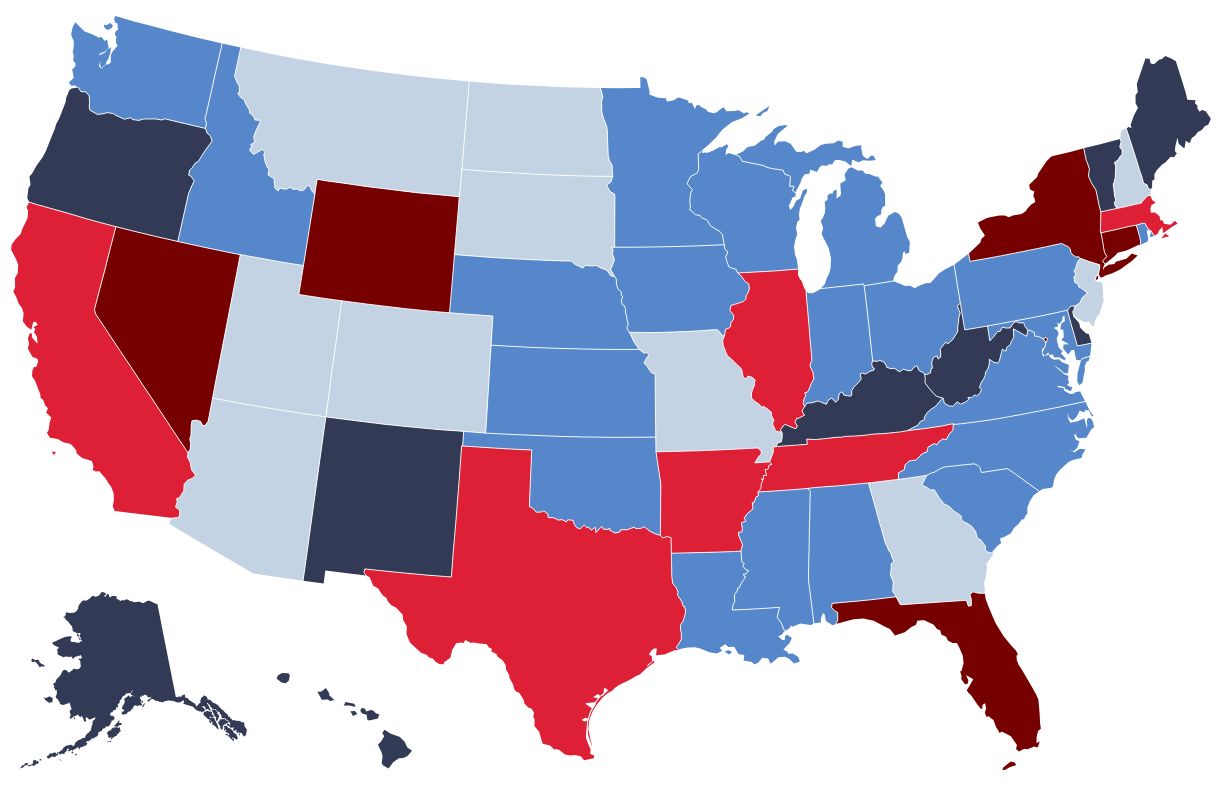
Wyoming has the largest income gap, with tax filers in the top 1% reporting 32% of all income reported statewide.
Several factors shape a state's income gap, including its mix of rural and urban areas and migration patterns.
In most states, the top 1% of tax filers now collectively out-earn the entire bottom half.
The widest gaps aren't in New York, home to Wall Street, or California, which has Hollywood and Silicon Valley, but in Wyoming. There, reported nearly one-third of all earnings statewide. That's more than double the top 1%'s share in West Virginia, according to Investopedia 's analysis of recently released IRS data.
The data covers tax year 2023 and reflects the reported adjusted gross income on individual returns, not households, and excludes those who don't file.
Several states with the widest gaps, including Wyoming, Florida and Nevada, levy no personal income tax , and their gaps could reflect wealthier people moving domiciles to take advantage. Where the rich choose to file increasingly results from policy choices, not just where the highest-paying industries are.
In 37 states and the District of Columbia, the top 1% of filers together reported more income than the bottom half. Nationwide, the top 1% reported about 20% of all income, while the bottom 50% reported about 13%.
Wyoming has the highest share of income going to the top 1%. The top 1% averaged $4.2 million in adjusted gross income and collectively reported $11 billion in income, about 32% of the state's $35 billion total.
In Florida and Nevada, the top 1% averaged $3.3 million and $3.0 million in adjusted gross income and claimed 29% and 27%, respectively, of all income reported. In Wyoming and Florida, the top 1% out-earned the bottom half by about 2.5-to-1.
In contrast, filers in the top 1% in West Virginia averaged about $977,000 and reported about 12% of the state's income. Next lowest were Alaska and Hawaii, where the top percentile of earners reported about 13% and 14%, respectively, of income on tax filings.
A state's income gap reflects its mix of rural and urban areas and who moves in and out, policy analysts said. Analysts say Wyoming has become a tax haven that attracts people looking to cut their tax bills.
"There's a lot of secrecy around sharing financial information of people who are banked there, and also they don't have that other states have," said Sarah Austin, senior analyst at the Institute on Taxation and Economic Policy, a nonpartisan think tank. Wealthier people may settle there "to take advantage of those tax rules," she said.
Topics in this story
Gathered from external sources. Rights to this text belong to whoever originally published it.