Robert Price was sitting on a $1 trillion frozen goldmine. Then Dr. Phil got involved
The Texas wildcatter recorded a podcast with Dr. Phil about gaining exclusive drilling rights in Greenland. The locals were furious.
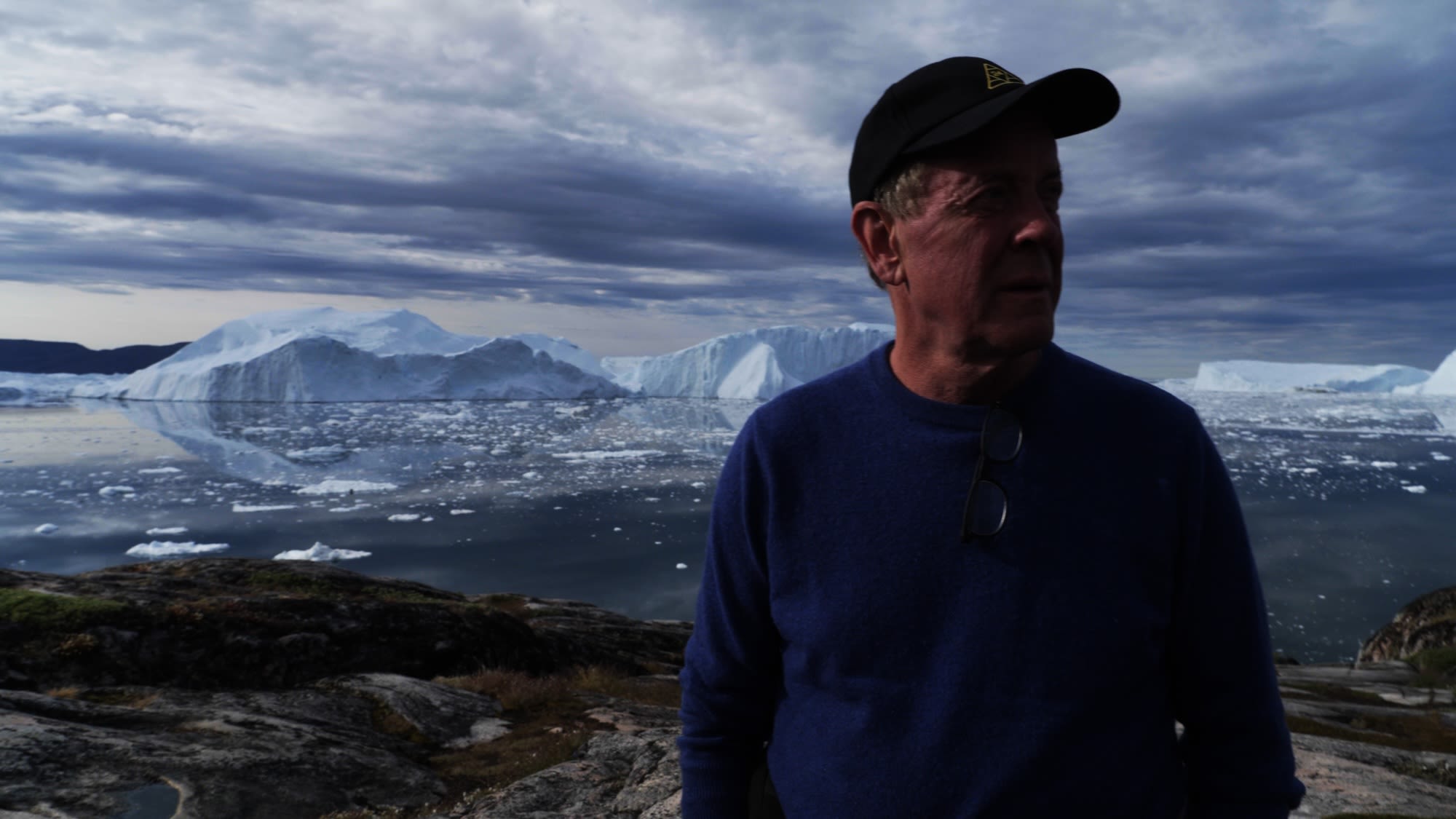
Robert Price hadn’t noticed the 10-foot-tall wartime photo of his dad behind him. “That’s him, yeah. He was stationed…” The Texas wildcatter stopped, his eyes welling up with tears. He gave a cautious laugh and looked back up at the photo. “Um,” Price started again, his voice wavering. “He was stationed in Greenland for three years at a weather station.” Price was sitting in the middle of a decked-out studio, recording a podcast hosted by Phil McGraw, aka Dr. Phil, the frequent “Oprah Winfrey Show” guest turned TV host turned vocal surrogate for President Donald Trump. The veteran oilman had gained exclusive drilling rights in Jameson Land, a remote part of Greenland right at the Arctic Circle – and what he believes is the world’s last frontier oil project. As many as 13 billion barrels of crude, worth more than $1 trillion at today’s prices, were frozen deep within the very same stretch of frozen land that Price’s weatherman father was deployed to monitor during World War II. It was oil that the world desperately needed, with war raging in the Middle East and global crude stockpiles plunging by 2 billion barrels to reach critical lows over the past seven months. Price wanted to tell the world all about it, and Dr. Phil was going to help him do it. “My dad would be really proud,” he said on the podcast. The emotional interview may have undone Price’s dream. Greenlanders, already on edge about Trump’s ambition to control Greenland, were furious. Local regulators withdrew their backing for the project. Price cut ties with Dr. Phil and is trying to make peace. In an interview with CNN, he said politics aren’t at play here. This is about helping Greenland benefit from its natural riches. “This is about bringing capital to Greenland. It has nothing to do with the Trump administration,” Price told CNN. “Politics will come and go, but our project will be there for a long period of time.” Price hopes he can salvage the massive and expensive project by doing some serious damage control. His company, Greenland Energy, said in a recent press release it would take no shortcuts, and it would continue the painstaking regulatory process “one day and one step at a time.” Another misstep could keep all that potential oil locked under the frozen surface forever. Promise of riches Price has oil in his blood. His grandfather died in an oil rig fire. His father was raised in Cushing, Oklahoma, the pipeline crossroads of the world. And Price spent his decades-long career getting land for oil majors to drill. But he had never seen an opportunity like this. Price knows it sounds nutty. His wells are hidden miles under an ice sheet in a remote part of Greenland with no way in or out, all winter long. Price remembers his father telling him stories about dogsleds, skiing, fishing, eating seal, hunting and the like. He still has 50 letters that his father wrote home to Price’s grandmother from his remote station in the arctic. But he says the gamble is worth it: This isn’t a complicated extraction project like the tar sands of Canada, Brazilian pre-salt oil or even Texas Permian Basin horizontal fracking. It’s old-fashioned, drill-straight-down-until-you-strike-oil stuff, which means if he strikes oil (Price says “when” he strikes oil), he can drill considerably more profitably than those projects. “Greenland is a beautiful, extraordinary place,” Price told CNN. “And to tell the story, not only of Greenland, but of the Greenlandic people and what our potential discovery might be, is important to me.” Price argues that Greenland’s potential oil riches would become a boon for its inhabitants. But convincing Greenlanders – who endured threats this year by President Donald Trump to annex or buy their land – of the wisdom of allowing an American oil company to profit from their natural resources may be difficult. So when an opportunity arose more than 10 years ago to get a license to drill there, Price jumped at the chance. Arco, a company that had surveyed the basin starting in the 1970s, put its Greenland drilling licenses and seismic surveys up for auction. The company had spent three decades and $250 million preparing to exploit the oil in two gigantic wells below Jameson Land, a remote part of Greenland right at the Arctic Circle. Arco built an airstrip nearby. But the economics never made sense for Arco, and in 1990, the company gave up on the project. It never drilled there. Now, the economics have changed entirely: Oil is around $100 a barrel, and drilling technology has vastly improved over the past several decades. Price sniffed an opportunity. Except a British company, 80 Mile, beat him to the punch. So Price reached out with an offer: 80 Mile would work with the Greenland government to nail down the drilling rights, and Price would bring in all the financing, drilling equipment and workers. Price would enter a joint venture with 80 Mile and take up to a 70% interest in the wells. That meant Price got an opportunity to follow in his father’s footsteps and go to Greenland – a dream he says he had long held since hearing those stories of how his father secretively helped deliver critical weather information to the Allied Forces in their fight against the Nazis. Price set up the financing, getting some big-named backers, including mega hedge fund Citadel and its CEO Ken Griffin. Greenland Energy went public in March through a SPAC. As recently as this past spring, it seemed all systems go: 80 Mile had completed its permitting paperwork in May 2025. The Greenland government asked the company to drill in the winter to reduce the potential environmental impact and to drill only one of its wells. An Albertan rig was ready to set sail from Montreal to Nuuk. And then Dr. Phil shared the news about his Greenland Energy documentary. The Dr. Phil Podcast To tell his story, Price chose Dr. Phil. Throughout the 44-minute episode, McGraw interviewed Price about the project and previewed future episodes of the adventure, which he titled “Frozen Gold: Oil’s Final Frontier.” The news of any US company exploiting the region’s resources would necessarily be politically charged, after Trump announced in his inaugural address and repeatedly throughout his second term that the United States would control the territory – suggesting at times that the United States could even take the land by force without Greenlanders’ consent. Trump’s “less-than-sensitive language” wasn’t helpful to Greenland Energy’s specific project, but his comments shone a light on Greenland’s importance to the Western world, to the United States and to NATO, said Greenland Energy Chair Larry Swets. That helped increase investor awareness and, with it, capital, he told CNN. Still, Greenlanders got riled up over Greenland Energy’s connection to Griffin (a well-heeled Trump supporter), Carol Craig (who runs a company working on Trump’s Golden Dome missile defense project that Trump wants stationed in Greenland), and the splashy adventure documentary from McGraw. The Greenland government, which had been working closely with 80 Mile for years, slammed the brakes. The government said Greenland Energy had attempted to set sail under an expired permit. The company decided to air-lift equipment instead, which really got Greenland authorities upset – they viewed the gambit as an effort to bypass regulations. Last month, Greenland Energy announced it would delay its operations until October. A week later, the company said it was suspending all drilling until 2027. The company also paused its relationship with McGraw. Representatives for McGraw did not respond to a request for comment. Choosing Dr. Phil may have been a mistake. But Price doesn’t see it that way. “Regardless of what his political affiliations are, he is a compelling storyteller,” Price said. The whole premise of the documentary was that “there is an amazing story to tell,” added Swets. “Not just about energy and oil, but about the geopolitics and the people that are in the middle of that,” he told CNN. “It’s regrettable that maybe we didn’t take enough time to have Greenlanders come alongside (the documentary), rather than feel like it was pushed on them.” Why Greenland matters Drilling in the Arctic Circle is not for the faint-hearted. Between 40 and 50 workers would need to be helicoptered in for the winter with an on-staff nurse, a blood bank and two chefs – because once temperatures plummet and the ice sheet moves in, there’s no easy way out. Every onsite worker will be required to carry a gun to protect themselves from polar bears. Those are the risks that wildcatters like Price are willing to take on. “This is about shoring up a potential supply of oil on into the future,” Price said. The war in Iran made clear that the world needs alternative energy sources – including renewable energy but also easily drillable oil projects outside the Middle East. The shale revolution has made the United States the world’s largest energy producer, but some oil industry analysts fear Texas’ Permian Basin is close to exhausting its supply of tier 1 oil – the most easily accessible and profitably extracted crude. No one knows exactly when that might happen; many think the Permian has another few years or even a decade of tier 1 oil left. But oil majors aren’t waiting. ExxonMobil’s massive oil well discovery off the coast of Guyana is already nearing 1 million barrels of production a day. Chevron and the United States are placing massive bets on Venezuela. Price’s expectation of achieving profitability at around $20 means there’s enormous potential reward in Greenland. Even though Arco confirmed the presence of the massive subterranean wells decades ago, drilling doesn’t always yield anything. “There’s clearly risk in doing exploration,” acknowledged Swets. “We know the oil is there, but we don’t know if we can get it out… The only way to get new information is to drill a well.” Greenland has a long history of failed attempts to extract its oil, including from big companies like BP and Shell and many smaller companies who weren’t able to get much of anything out of the ground. In 2021, Greenland stopped offering drilling licenses – only allowing grandfathered licenses, such as Greenland Energy’s, to exploit the resources. If they’re available. “After we get the first well drilled, then we can decide how to move forward after that,” Price said. He’ll have to wait until next year to find out. At least.
Topics in this story
Gathered from external sources. Rights to this text belong to whoever originally published it.