Saudi Arabia wants to send 10 million barrels of oil a day around Hormuz. A former Treasury official says it may barely move prices
Aramco CEO Amin Nasser says the East-West pipeline will grow by 3 million barrels a day, but the expansion will take two to three years, and the line has bee...
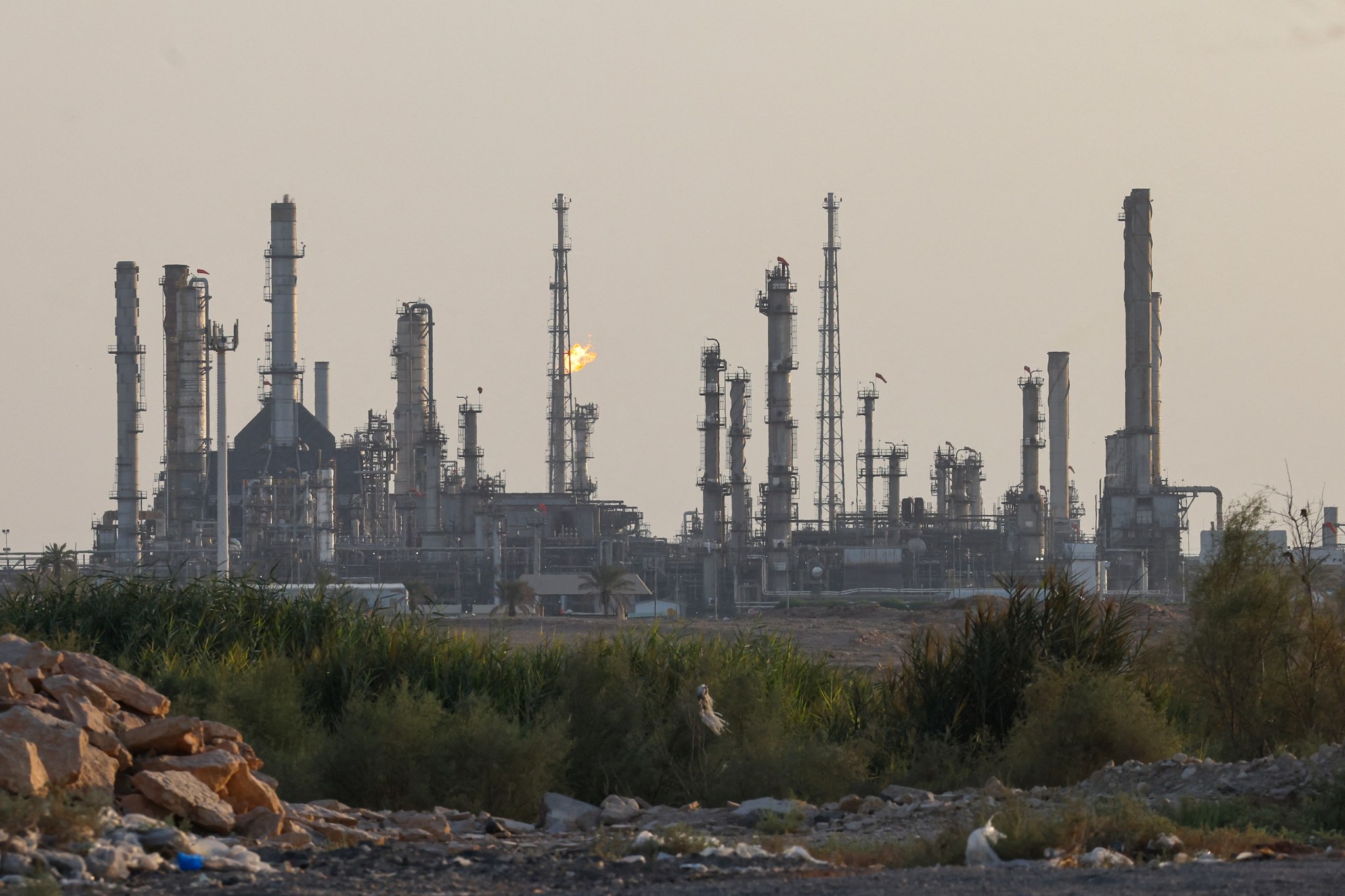
Saudi oil giant Aramco , officially the Saudi Arabian Oil Company, is racing to build a bigger back door around the Strait of Hormuz.
Aramco CEO Amin Nasser said this week that the company is working to raise the capacity of its East-West Crude Oil Pipeline, also known as the Petroline, to 10 million barrels a day from about 7 million today, while running engineering studies on additional export routes. Nasser made the comments to Al Arabiya Business in his first interview since the war began . The plan echoes an announcement earlier this month from Saudi Energy Minister Prince Abdulaziz bin Salman, who told the WPC Energy Congress in Riyadh that the expansion would take two to three years .
The goal is to reduce the kingdom's reliance on the Strait of Hormuz, which has been largely choked off since the U.S. and Israel launched a joint military attack on Iran on Feb. 28. Saudi crude production fell below 7 million barrels a day for much of the war's first six months, down from more than 10 million before the conflict, and recovered to about 8 million in September, according to the International Energy Agency .
The Petroline spans Saudi Arabia, running roughly 750 miles from the Abqaiq processing hub near the Persian Gulf to the port of Yanbu on the Red Sea . Before the war, it typically carried around 2 million barrels a day. Aramco ramped it up within weeks, and the line hit its full 7 million-barrel capacity by late March, with about 2 million of those barrels feeding Saudi refineries rather than export markets. The pipeline helped Aramco post a 25% jump in first-quarter profit . Adding another 3 million barrels a day would be a major undertaking.
But it may have little tangible impact on world fuel prices, according to Gilbert Metcalf , a visiting professor at the MIT Sloan School of Management and a former deputy assistant secretary for environment and energy at the U.S. Treasury Department.
"If—and this is a big if—the Saudis can increase pipeline flow to 10 million barrels per day, it will put about 2% more oil into the global marketplace," Metcalf tells Fortune . "That could lower prices a bit, but there's a lot of uncertainty here. The pipeline is vulnerable to drone and missile attacks, as is much of the Saudi petroleum infrastructure. And it's not entirely clear that there is available refinery capacity to process the oil."
That vulnerability isn't hypothetical. The Petroline was first hit in May 2019, when Houthi drones struck a pumping station . This year it has been attacked repeatedly. An April 9 strike on a pumping station cut throughput by about 700,000 barrels a day before Saudi Arabia restored full capacity days later. On Sept. 10, drones struck the line in the Riyadh and Medina regions; Saudi officials said they were launched from Iraq . The attack forced a precautionary shutdown that lasted until Sept. 22, according to Kpler . And a Saudi energy-sector source told AFP that an Oct. 4 attack on a pumping station in Khurais halted flows again , though Bloomberg reported that oil continued to move.
Topics in this story
Gathered from external sources. Rights to this text belong to whoever originally published it.