Trump calls data center opponents ‘backwards and poor’ as the industry props up the economy—but his own party wants nothing to do with it
Data centers are fueling US growth, but bipartisan backlash is forcing candidates to run from them before the midterms.
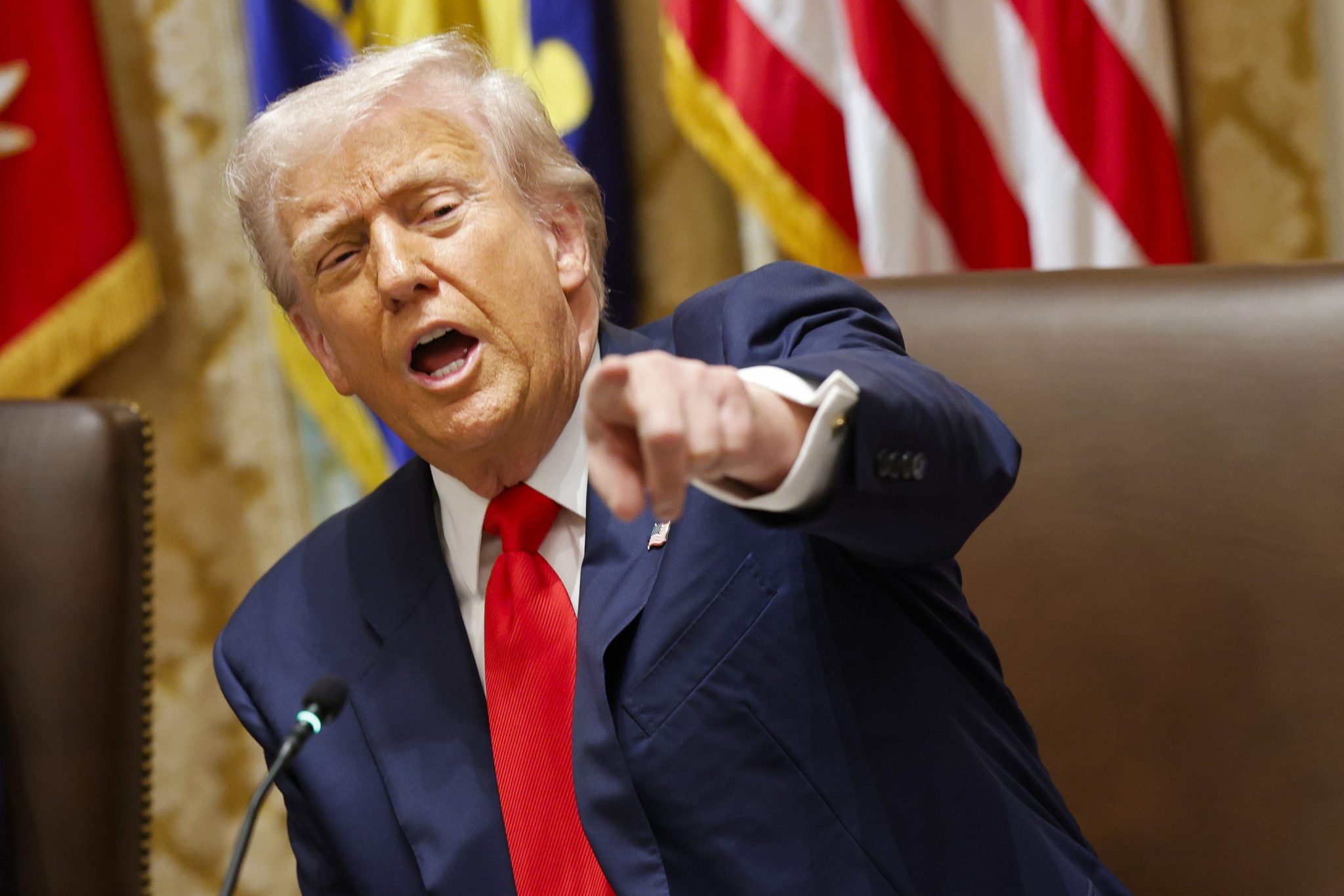
President Trump took to Truth Social this week to warn any town still weighing whether to fight a data center. Communities that turn them away, he wrote, are choosing to be "backwards and poor." The ones that welcome them will get lower taxes and jobs "all over the place." He called the industry the "Golden Goose," said plenty of other places would happily take the investment instead, and warned that China "could not be happier" watching American towns turn it down.
He's not wrong: Data center spending has become one of the single largest forces holding up U.S. economic growth this year. That's normally the kind of growth that a president looking to maintain party control of both chambers would want to campaign on. But instead, it's become one of the few issues in American politics that Republicans and Democrats can agree on, and what they agree on is that they simply don't want it near them. With just four months before the midterms, no candidate wants to touch the issue with a 10-foot pole, and if they do, they're spending millions in campaign funds to get the issue "right."
Few issues cut across party lines the way data centers do, because what makes them valuable nationally is what makes them hated locally. One facility can draw as much power as a mid-size city and remake a town's tax base within months, and neighboring households bear the costs. Conservatives who normally favor deregulation are showing up at town meetings over property rights and distrust of distant tech billionaires. Progressives who favor the technology's economic promise are objecting on environmental grounds. A CNN analysis found the backlash is bipartisan because the fight is so local, meaning it skips past national ideology.
It also comes with an economic argument. In the first quarter of 2026, AI-related computing infrastructure investment hit roughly 1.4% of U.S. GDP, up from 0.7% a year earlier. It's now the largest driver of growth in U.S. private investment, according to Epoch AI . The St. Louis Fed found information-processing equipment made up 39% of total GDP growth through the third quarter of 2025, a bigger share than during the dot-com boom. Data centers' dollar contribution to GDP growth had passed consumer spending for the first time ever, which is remarkable given consumer spending typically makes up about two-thirds of GDP.
Construction is real and large: a $10 billion campus in Lebanon, Indiana employs more than 4,000 workers at the height of the build. But once the servers are running, that project keeps around 300 permanent employees—13 construction jobs for every one that lasts. A typical data center supports fewer than 200 local jobs long-term, Fortune reported , citing the U.S. Chamber of Commerce. Research from Virginia, the country's biggest data center market, found projects there create one permanent job for every $54 million invested, according to a MinnPost fact-check ; across the broader economy, $1 million in investment supports 17 jobs on average. Data center construction rarely produces a lasting rise in local employment, Fortune has noted , which helps explain why the tax breaks used to attract these projects have drawn bipartisan scrutiny: at least 10 states are losing more than $100 million a year in revenue from data center tax incentives alone.
Gathered from external sources. Rights to this text belong to whoever originally published it.