Trump is losing his grip on the media — and other key midterm lessons
Last week’s midterm elections were chock full of lessons for both the right and left. And there were many takeaways about the media industry, too.
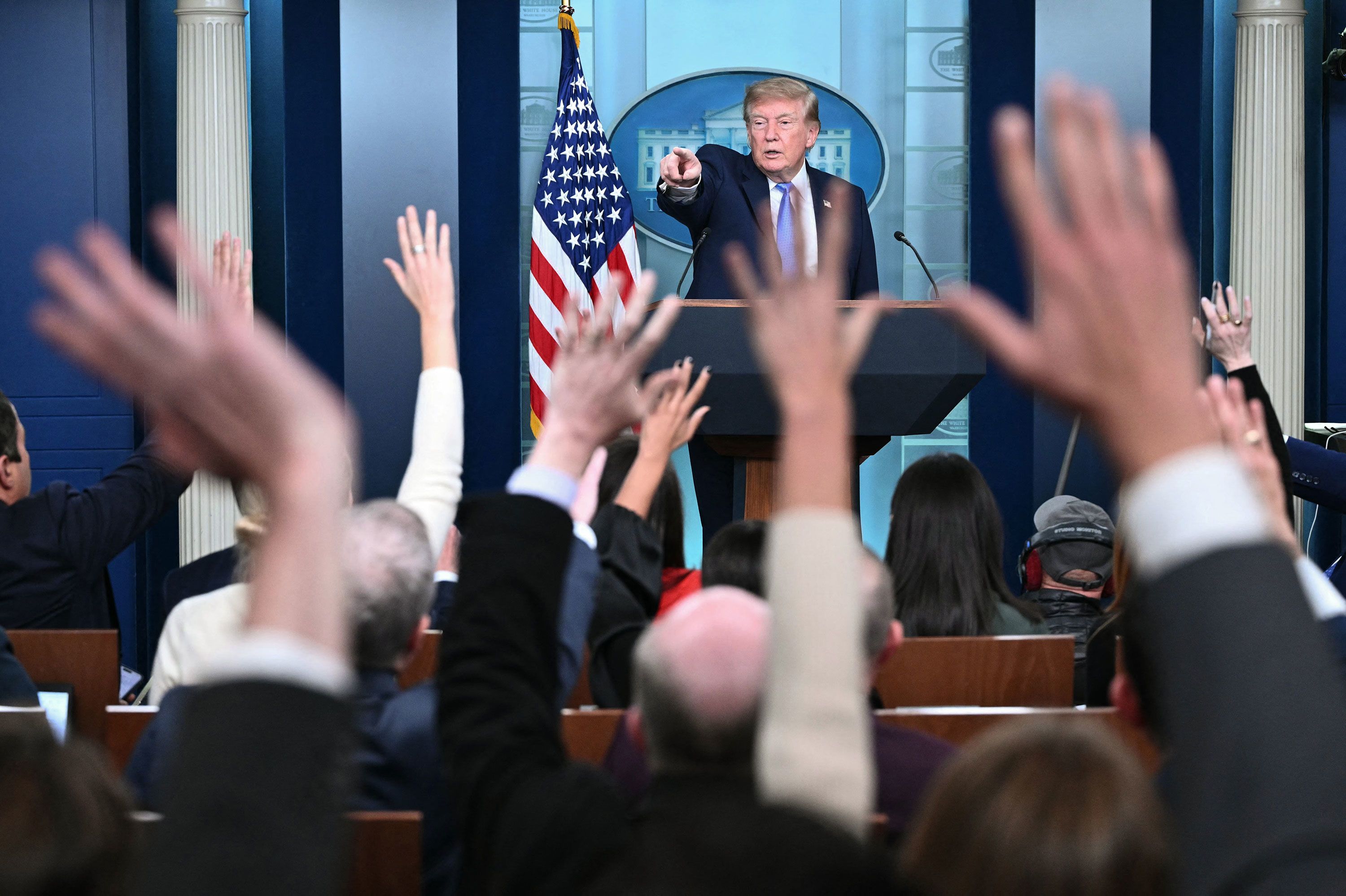
Last week’s midterm elections were chock full of lessons for both the right and left. And there were many takeaways about the media industry, too. To name a few: The TV ad spending advantage held by Republicans wasn’t enough to hold back a “blue wave.” The pre-election Fox News ratings decline really was a foreshock, signaling that GOP voters were feeling discouraged about their party. And the election season showed that Democrats have figured out how to compete with President Donald Trump in what are sometimes dubbed the “attention wars.” Now that a week has passed, and the results have sunk in, here are some of the other findings about the political media ecosystem: Trump’s time as master media manipulator might be up Remember his made-for-TV GOP midterm convention? Probably not. It failed to move the needle. Fox even stopped carrying many of his rallies live. And his attention-grabbing stunts — like an election-eve speech at the Reflecting Pool — made him look out of touch. Now, a president who prided himself on commanding the media’s attention seems to be losing his grip on it. Right-leaning media critic Jeffrey McCall wrote in a recent op-ed, “With Trump’s influence on the wane, it’s time for a different approach to journalism, one that doesn’t put Trump at the center of every story.” Democrats learned new-media tricks Successful candidates communicated in new ways and produced lots and lots of vertical videos. Substack pointed out that “all seven Democrats who flipped Republican-held Senate seats… ran a Substack publication during the race.” Democratic strategist Joshua Karp, who advised Annie Andrews’ campaign in South Carolina, said winning campaigns understood the “information bubbles” that voters, donors and reporters inhabit. “The concept of information bubbles isn’t a particularly new one, but 2026 was a breakout cycle for campaigns that treated them seriously, from Jon Ossoff’s clipping strategy to Abdul [El-Sayed]’s choreographed TikTok dances,” he said, crediting a younger generation of candidates who are “native to the grammar of the modern information ecosystem.” Many pre-election polls were wrong “The polls were wildly inaccurate,” outgoing House Speaker Mike Johnson said Monday. That’s true, insofar as many — not all — polls wildly underestimated Democrats’ leads ahead of election day. But there’s been relatively little hullabaloo since the polls were directionally correct, capturing the public mood and showing Democrats ahead. “Unpredictable electorates can lead to overcorrecting after presidential elections,” the Financial Times explained. “After a decade of underrating Donald Trump’s support, pollsters finally underestimated Democrats,” The Atlantic concluded. The approval rating polls were right “The midterms weren’t a surprise or an aberration; they were an expression of how the electorate has always felt about Trump and his movement, albeit a particularly emphatic one,” liberal columnist Paul Waldman commented Monday in Public Notice. Trump “is uniquely unpopular,” Waldman went on, and it’s worth considering whether the newsrooms that have worked hard to recognize and report on Trump’s MAGA base appeal have also worked hard enough to reflect the public’s prevailing anti-Trump sentiment. Reality reasserted itself For years, Trump’s lies “never seemed to catch up with him, no matter how much they were fact-checked,” New York Times columnist Lydia Polgreen wrote. However, “Americans know their own wallets” and “they know that, Trump’s dismissal notwithstanding, the affordability crisis is no hoax.” The Trumpian reality distortion field is long gone.” Investigative reporting had an impact Writing from Maine, media historian Michael Socolow asserted that aggressive media coverage was a key factor in Sen. Susan Collins’ loss to Troy Jackson: “Corruption was a major theme in this campaign, and its resonance with recent independent, critical and accurate reporting in the Maine media undoubtedly damaged Collins,” he wrote on his Substack. Last-minute dramas didn’t matter much at all Remember the Haley Stevens endorsement-switching fiasco that consumed insiders in the final days of the Michigan Senate race? Evidently, it didn’t matter to many voters. El-Sayed still won easily. “Recency bias is a powerful drug,” Bill Grueskin wrote for Columbia Journalism Review. “Our political press ought to read the warning label before delivering their hot takes.” The major TV networks still mattered most on election night Even in a media environment with infinite ways to watch the results, the 100-year-old NBC still attracted the most eyeballs on election night. Audiences gravitated to experts like Steve Kornacki on NBC, John King on CNN and Ali Velshi on MS NOW. According to Nielsen, more than 30 million people tuned in for prime time coverage of the midterms across about a dozen channels. Yes, audiences want to watch on their phones as well as big TVs, but they still seek out authoritative anchors even when countless other options exist. And about those… Political live streams are for super-fans Some opinionated live-streamers like Hasan Piker attracted big audiences on election night, but for the most part, live-streaming is narrow while TV is broad. “Piker drew a peak of 241,783 concurrent viewers to his election-night stream on Twitch,” according to this Reuters story. For comparison, MS NOW peaked with 4 million concurrent viewers. Now, this is not a knock on live streamers. They have a lot of influence! And they get clipped and remixed and reshared in all sorts of ways. But “views” are very different than “viewers.” Many live-streamers accumulated millions of views but only had thousands of viewers at any given moment. Here’s the key stat from YouTube’s election night report: “Globally, over 40 million viewers watched livestreams related to the U.S. midterm elections, with viewership peaking at over 3 million concurrent viewers at 10:19 p.m. ET.” At that same time, CNN averaged 4.4 million viewers, Fox News averaged 4.1 million, and so on. Trump is in a ‘digital bunker’ now And it’s called Truth Social. As New York magazine’s John Herrman wrote, the president’s retreat to his increasingly deserted social platform may preview his political future: “An endless series of posts seen by fewer and fewer people, many of whom aren’t sure why they need to listen to them anymore.”
Topics in this story
Gathered from external sources. Rights to this text belong to whoever originally published it.