Could the ‘blue tsunami’ jolt the US job market back to life?
The US labor market has been amazingly resilient in the face of a barrage of economic shocks.
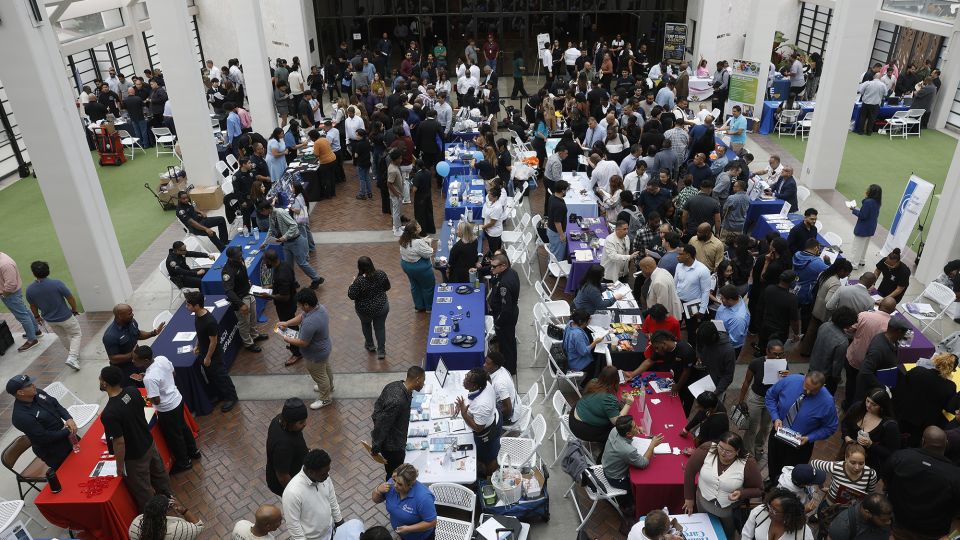
The US labor market has been amazingly resilient in the face of a barrage of economic shocks.
The unemployment rate has been at or under 4.5% for a record-setting five years and Friday's stronger-than-expected jobs report for October showed that employers are hiring at one of the fastest clips in the past three years.
But the monthly snapshot also revealed some troubling trends: Americans' average stint on unemployment is the longest it's been in nearly five years; the bulk of the job gains remain relatively concentrated to few industries; and workers' wages continue to fall further behind inflation.
So, while the labor market may be stable, it has not been running on all cylinders: Its gears have been gummed up for quite some time.
Economists have questioned how long the stasis could last, and what could cause it to break in one direction or the other.
The "blue tsunami" has now entered the chat.
What that means for the labor market's trajectory remains to be seen – it's still very early innings, and there are plenty of weightier factors already at play. But here are some of the areas economists are watching closely amid a reshaping of the political landscape:
First things first, change takes time and policies have limitations.
"Elections can shift the policy outlook, but they rarely change the labor market overnight," said Cory Stahle, senior economist at online job marketplace Indeed. "The forces shaping hiring right now, from an aging workforce to AI adoption, were in place before the election and will still be there next year."
The labor market is undergoing some structural shifts . The labor force is shrinking because of an aging population, increased retirements from Baby Boomers, and a reduction in net immigration . Technological innovations, notably artificial intelligence, are transforming jobs , industries and the economy.
To address the concerns of businesses wrestling with labor supply constraints, policies can be implemented to increase immigration or encourage more people to have children, but the effects of those don't happen overnight, he said.
If Americans are wanting to see quicker changes that impact their personal economies, that's much more likely to come at the state level than at the national level, said Tyler Schipper, associate professor of economics at St. Thomas University in St. Paul, Minnesota.
At the national level, Congress can only do so much by itself, and President Donald Trump still has veto power, Schipper said.
Topics in this story
Gathered from external sources. Rights to this text belong to whoever originally published it.