The hidden cost of losing your community bank: disruptive innovation
If policymakers are serious about sustaining American innovation, they should consider what happens downstream of bank mergers.
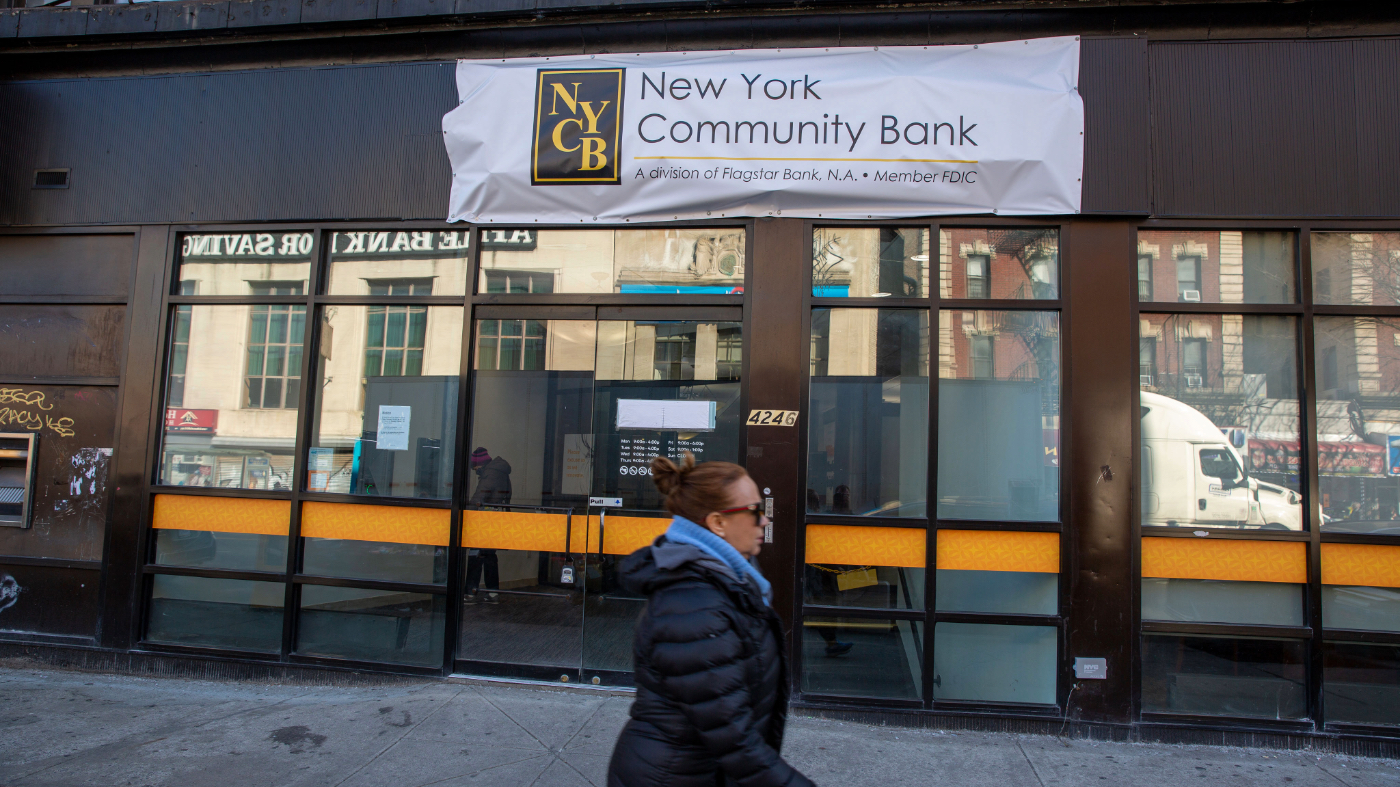
In July, the 21st Century ROAD to Housing Act became law, carrying a provision that drew almost no attention. It directs federal banking regulators to run a two-year pilot that makes it easier to charter new community banks — with particular attention to rural areas — and gives banks chartered between 2026 and 2028 a phase-in period to meet capital requirements. Congress has decided the country needs more small banks.
Bank regulators are moving the other way. Bank mergers hit a four-year high in 2025 , and both the Office of the Comptroller of the Currency and Federal Deposit Insurance Corp. have rolled back merger review rules that slowed the process. Washington is now trying to seed community banks with one hand while clearing the path to absorb them with the other.
Whether that tradeoff is worth making depends on a question that the banking consolidation debate has mostly skipped. The debate has focused almost entirely on competition and consumer prices. It has largely ignored something harder to measure and easier to lose: innovation.
Our recent research examined the relationship between banking consolidation and innovation across all 50 states from 1994 to 2020. We found that the issue is not simply whether a banking market is concentrated. What matters is whether a handful of very large banks dominate it.
In those markets, something specific happens: the kind of innovation that gets funded changes. Regions where mega-banks hold large market shares produce more incremental patents that improve existing products and fewer disruptive ones that create entirely new industries.
The distinction matters. Disruptive innovation is what produces the next breakthrough technology, the next category-defining company. It is also the hardest to finance. Studies of patents and scientific papers show that truly disruptive ideas have declined sharply across many sectors in recent decades. Our findings suggest that the structure of the banking system is one reason.
Typically, large banks standardize lending criteria such as credit scores, collateral and cash flow. These may work in your typical businesses with established reputation and assets, but a young company might struggle to pass an algorithm-driven loan review, no matter how promising.
Community banks operate differently from their counterparts. While they also care about traditional lending metrics, they fill a gap in their market by using their local knowledge to evaluate borrowers that large banks typically ignore. Someone who knows the community can make decisions based on local context, not just credit scores. This type of lending is a crucial source of funding that has historically backed startups driving major innovations. But recently, there has been a shift in the lending market.
That financing channel is shrinking fast. The number of banking institutions in the United States decreased from approximately 13,000 in 1994 to about 7,000 by 2020 . Currently, there are only 4,336 FDIC-insured institutions remaining , representing a 35 percent decline since 2005. Since the financial crisis, fewer than 90 new banks have been established nationwide. As a result, over 12 million Americans now live in banking deserts , which are communities that lack any physical bank branches.
Venture capital has not filled the gap. It is highly concentrated geographically and focused on a narrow set of industries. Rural communities across the Great Plains, Appalachia and the Deep South receive less than 1 percent of all venture capital funding. The sectors that sustain rural and small-town economies, agriculture, manufacturing, energy and local services, are largely invisible to venture investors.
Banking consolidation isn’t always a bad thing. Our research shows that when concentration levels are moderate, it can actually spur innovation. The problem is when a handful of large institutions dominate the market. In those markets, lending tends to favor safer, more conventional investments.
If policymakers are serious about sustaining American innovation, they should consider what happens downstream of bank mergers. The cost of losing a community bank is not just one fewer name on a Main Street sign. It is one fewer institution willing to take a chance on the ideas that could define the next generation of the American economy.
Oudom Hean is an associate professor and Sean Schiefelbein is his research assistant at North Dakota State University. They are co-authors of the new working paper “Banking Consolidation and Innovation in the United States .”
Topics in this story
Gathered from external sources. Rights to this text belong to whoever originally published it.