Merck Drug Boosts Survival From Hard-to-Treat Uterine Cancer
An experimental drug from Merck & Co. helped women with advanced endometrial cancer live significantly longer than those receiving chemotherapy, bolstering t...
(Bloomberg) -- An experimental drug from Merck & Co. helped women with advanced endometrial cancer live significantly longer than those receiving chemotherapy, bolstering the company's ambitions for the novel treatment it is studying in a wide range of tumors.
Patients receiving sacituzumab tirumotecan, known as sac-TMT, lived a median of 19 months, compared with 12.1 months for those given chemotherapy, according to results from a late-stage study presented at the European Society for Medical Oncology congress on Monday. The treatment also came with significant side effects, including anemia and debilitating mouth sores.
Merck previously said the trial met its goals, without providing details. The full results show the extent of the benefit for patients, who typically die within a year if their disease progresses after chemotherapy. About 68,000 US women are expected to be diagnosed with uterine cancer in 2026, according to the American Cancer Society.
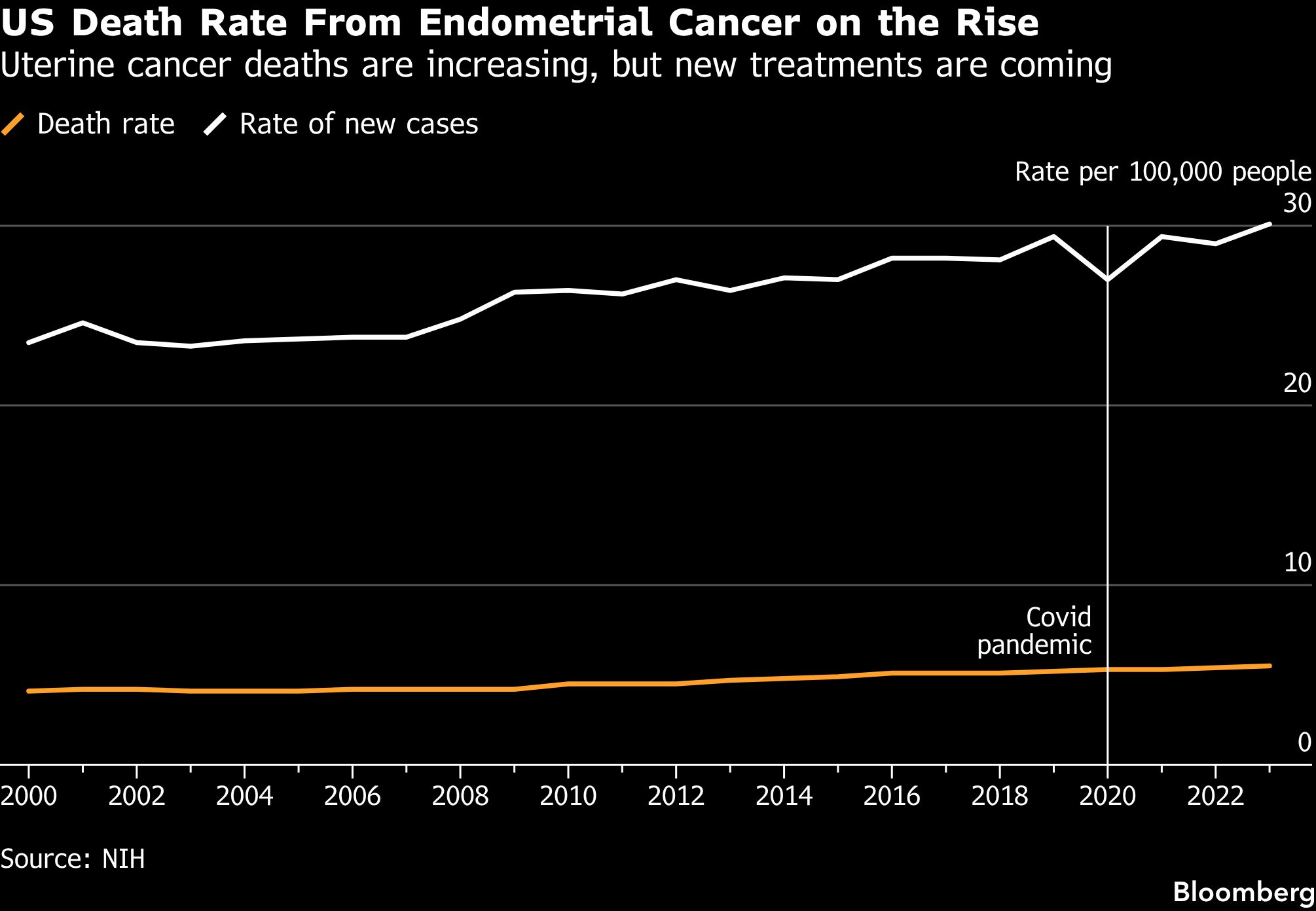
"It is one of the only cancers with an increasing rate of mortality," Dean Li, president of Merck Research Laboratories, said in an interview before the data were released. "What we're trying to do is shift that."
The findings could pave the way for sac-TMT's first US approval, an important milestone for the drug being tested in 17 late-stage studies across numerous types of cancer. Merck acquired rights to the treatment outside China through a deal with Sichuan Kelun-Biotech Biopharmaceutical Co., betting it could become a major addition to its oncology business as its blockbuster drug Keytruda faces looming competition from cheaper copies.
But the bigger prize remains ahead. Merck is pursuing sac-TMT in lung cancer and other common tumors, where successful trials could open up substantially larger commercial opportunities. Analysts at HSBC estimate that sac-TMT and its combinations could be a $12 billion to $15 billion opportunity.
Much of that enthusiasm has centered on non-small cell lung cancer. Lung cancer is the most common tumor type in the world, and non-small cell is by far the most prevalent type.
Over the weekend, Merck shared results from a study in China, where sac-TMT combined with Keytruda reduced the risk of disease progression or death by 51% compared with standard treatment. The results, published in the New England Journal of Medicine, exceeded Wall Street's expectations and bolstered confidence in the drug's potential, analysts from RBC Capital Markets said in a note.
Topics in this story
Gathered from external sources. Rights to this text belong to whoever originally published it.