How The Diplomat Season 4 Turns an Assassination Attempt and Marital Drama Into the Best Political Thriller Currently on Television
Netflix's The Diplomat Season 4 has standout performances from Keri Russell and Allison Janney that elevate the series into the best political thriller on TV.
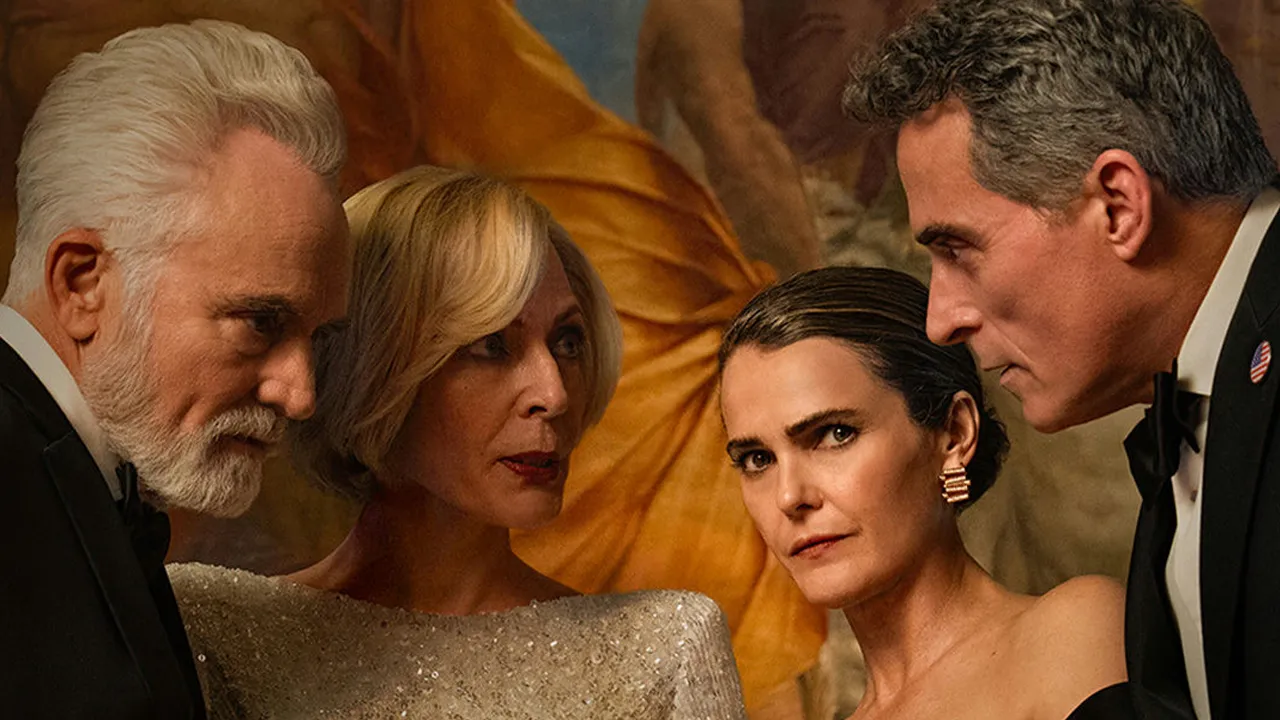
Spoilers below for Season 4 of Netflix’s The Diplomat . All episodes are streaming now.
At its core, Season 4 of The Diplomat is a series of one-on-one conversations in which the fate of the world hangs in the balance. The president and vice president, first gentleman and chief of staff, prime ministers, ambassadors, and domestic workers all engage in rich, dramatic dialogue that immediately sucks you in and doesn’t loosen its grip until the season cuts to black. Tight closeups, thick tension, and carefully constructed language imbued with double, triple, and sometimes quadruple meanings unfurl in scene after scene, creating a tapestry of geopolitical and domestic conflict that’s hard to turn away from.
The Netflix series follows American Ambassador to the United Kingdom Kate Wyler (Keri Russell) as she walks the tightrope of managing a simmering international conflict while attempting to save her marriage to her husband, Hal (Rufus Sewell). In Season 4, The Diplomat continues to be a crackling, pulpy thriller with superb writing, gorgeous cinematography, and top-tier performances.
With a new batch of episodes, the show brings what was an already fraught series of storylines to a furious boil. In the aftermath of discovering that President Grace Penn (Allison Janney) colluded with Hal (promoted to vice president in Season 3 ) to steal an “apocalypse weapon” from a Russian submarine, Kate launches into a campaign of dealmaking and double-crossing to try to get the situation under control. As the season begins, we’re led to believe that the conspiracy will be the central conflict for the foreseeable future. But all of that is quickly scuttled by a harrowing assasination attempt on the president.
The scene, which closes out the premiere episode, is one of the most realistic acts of fictional political violence ever filmed. There’s no music, no building tension; just two quick pops and a shirt suddenly soaked with blood. It's indicative of what The Diplomat does best: presenting the extraordinary as subtle and restrained while still underscoring the global stakes.
This ethos is especially apparent in the still beautifully dysfunctional relationship between Kate and Hal. As the world burns and nuclear conflict is only an itchy trigger finger away, Kate and Hal’s marriage is the spine on which everything else in The Diplomat rests. They’re at once warm with each other yet blisteringly cold, trusting and incredibly suspicious, totally in love but always on the verge of mutually assured destruction. Sewell and Russell continue to be dynamite, layering their scenes together with half-truths, knowing glances, and winking humor. Their on-screen chemistry bursting with intelligence and desire, Hal and Kate often can’t stand each other but would wither away without the other’s counsel.
While Seasons 1-3 of The Diplomat focused mostly on Kate and Hal’s relationship, Season 4 ups Janney’s President Grace Penn and Bradley Whitford’s hilarious but secretly ruthless first gentleman Todd to near co-lead status. Their relationship seethes with a familiarity colored by a brutal imbalance of power. Whitford, in particular, takes full advantage of the show’s darkly comedic writing, imbuing his character with an “aw shucks” brand of humor that belies a knack for cunningly eviscerating anyone who stands between him and his wife. A post-assassination attempt conversation early in the season in which Todd dresses down White House Chief of Staff Billie Appiah (Nana Mensah) is one of those two-handers that highlights the show’s tour de force storytelling and brilliant acting.
As the president, Janney has never been better. Intricately drawn and perfectly performed, Grace Penn is a revelation of a character. Her steeliness and win-at-all-costs attitude of Seasons 2–3 is still intact, but these traits are now forged with a twinge of uncertainty and a whole lot of post-shooting PTSD. As Penn, Janney is at once flighty and megalomaniacal, grounded and borderline mad, caring and absolutely unforgiving. The character knows the consequences of her actions, yet still hasn’t found a line she will not cross. Grace Penn is the most complex, well-drawn president ever put on screen and Janney hits a grand slam in every scene she’s in.
While the four core characters drive much of the show’s drama, The Diplomat features a stacked cast of supporting players who fill out the show’s beautifully crafted world. Ali Ahn and Ato Essandoh shine as Kate’s embassy colleagues Eidra and Stuart. Their budding romance is a twisted mirror of the show’s two other central couples, showing what happens when a relationship heats up after you’re already colleagues instead of vice versa. Rory Kinnear once again chews the scenery to bits as Prime Minister Nicol Trowbridge, especially in a mid-season episode where he’s given a series of fantasy sequences leading up to his blackmail-induced resignation. Doctor Who’s Jodie Whittaker appears late in the season as the new PM, calmly igniting a whole new set of problems for the U.S. government.
Four seasons into The Diplomat, the show’s writing is still obscenely good. Showrunner Debora Cahn and her team of writers synthesize conflicts both personal and global, sprinkle them with a bit of realistic humor, and continually paint the mythological figures at the center of the show as real people.
A scene in the premiere episode shows Kate following the president of the United States into a ladies’ room to press her on an important issue. A storyline, in which Todd (who finagles his way into a London-based job) suspects Kate of being pregnant, unfolds in a way unique to virtually any fictional half-baked pregnancy scenario you can imagine. An international cover-up hinges on whether a team of bureaucrats can convince another team of bureaucrats that they are bad at math. A climactic scene between Grace, Todd, Kate, and Hal that's straight out of Who’s Afraid of Virginia Woolf? is interrupted by an overeager chef. Cahn’s roots in The West Wing are on full display here. But whereas that show hinged on optimism, The Diplomat subverts that feel-good mentality for realism that’s far more brutal but no less entertaining.
The rest of The Diplomat fires on all cylinders throughout Season 4. Characters walk-and-talk through castle after gorgeous castle. The scenery and cinematography are moody and rich. A late season sojourn to Italy for the G7 summit allows the crew to pull off a series of unbroken long takes that would make David Fincher proud. All of this blends into a spellbinding series of episodes that are pulpy, hilarious, heartbreaking, and downright shocking.
Some of the plot machinations in The Diplomat still can be a bit far-fetched; the show still strains to invent reasons why American government officials need to constantly travel to the UK and some realism is forsaken for the sake of jaw-dropping drama. A few plotlines are even ripped right from the lesser seasons of House of Cards. And yet, it’s still a whip-smart commentary on international politics as they are now. The show forces its audience to reckon with the undeniable truth that the people who run the world are human beings prone to pettiness, stubbornness, and loneliness, and that those qualities often spill over into life-altering decisions for everyone else.
The Diplomat is truly a show for our times, showing how intense, messy relationships — often no more profound than two people talking in a room — can upend lives, transform the mundane into the extraordinary, and have serious consequences for the world at large.
Topics in this story
Gathered from external sources. Rights to this text belong to whoever originally published it.