Ghost of Yotei's DLC, Echoes of Sekigahara and Most Wanted, Are Worthy Additions for the PS5 Exclusive
The Echoes of Sekigahara story expansion and the new Most Wanted run-based mode deliver more of what made Ghost of Yotei great to begin
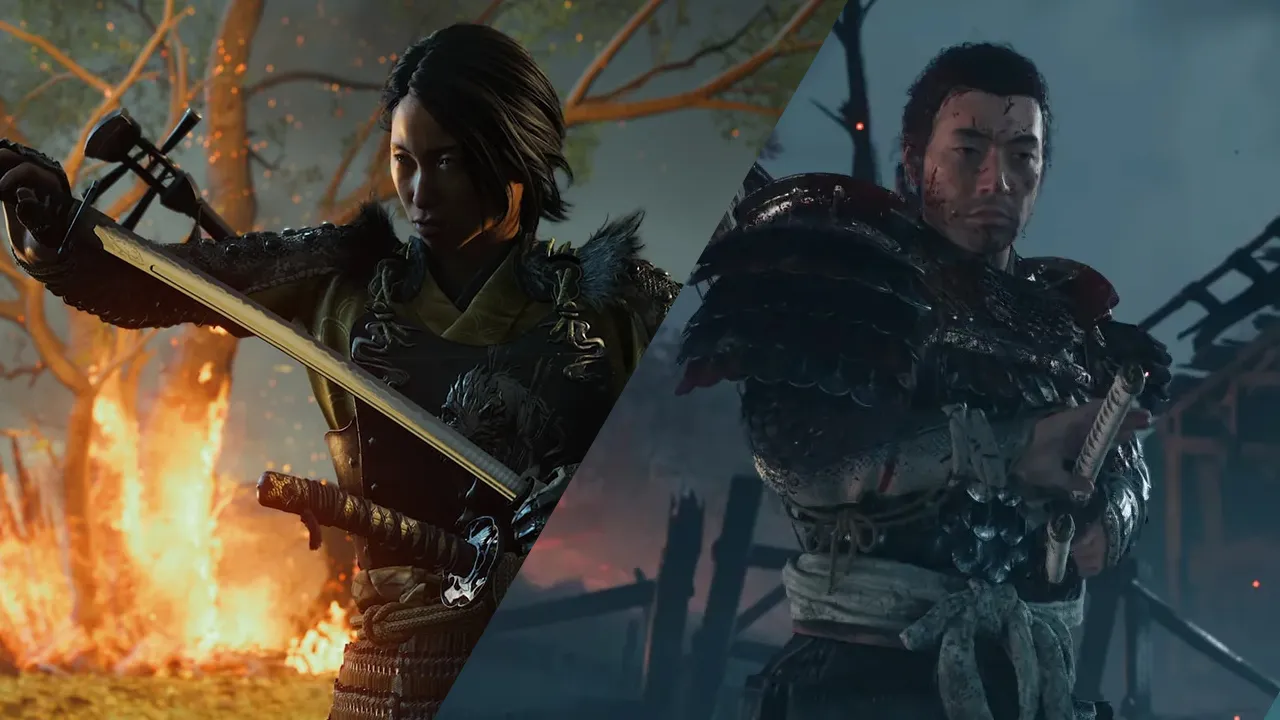
Looking to the past to expand on a current game is a pretty common avenue for post-launch content, and developer Sucker Punch does this in more ways than one for Ghost of Yotei. Echoes of Sekigahara weaves in flashbacks from lead character Atsu's life for a brief yet effective questline woven into the middle of the base game. Alongside that is the new Most Wanted mode, which introduces grueling run-based combat challenges – a major highlight of which is that Ghost of Tsushima's Jin Sakai is a playable character, with all of his original mechanics intact. Together, these additions deliver more of what the series is so good at: lethal, precise ronin combat and beautiful landscapes for its violent drama. They're not breaking any new ground, but they distill what made Ghost of Yotei great to begin with.
First thing you need to know is that both Echoes of Sekigahara and Most Wanted are packaged together in the newly minted Ghost of Yotei: Complete Edition, and if you already own the base game, it's a $15 upgrade through the PlayStation store. You'll need to have progressed roughly 10 hours into the original story (where you've taken down a handful of the Yotei Six) in order to initiate a bounty called "Nagato, the Handsome" and access Echoes of Sekigahara, while Most Wanted is available from the main menu right off the bat. They're two very distinct things, so I'll be looking at them separately, but just know that both are worthwhile in their own right.
Ghost of Yotei: Echoes of Sekigahara and Most Wanted screenshots
One of my favorite aspects of Yotei in comparison to Tsushima was the way Atsu contrasted with Jin – she's brash and fueled by vengeance, giving her revenge tale a more personal edge. Echoes of Sekigahara further emphasizes this by exploring her more intimate side, introducing an old flame named Nagato – he's known across the land of Ezo as "The Handsome" because, well, he is a good looking dude, not gonna lie. After accepting a bounty with his name on it, you're ushered into an all-new region on the map known as Ashoro Foothills with its own questline and set of open-world activities in the same vein as the base game, but condensed for a tight seven-to-eight hours of new content.
The impetus for the quest is to cut off resources to Lord Saito's army (the villain of the main story) and to take down a ravenous faction called The Vipers and multiple big-bads vying to replace The Snake – the member of the Yotei Six who Atsu kills at the very start. Atsu gradually unravels Nagato's motives for pursuing these objectives alongside her while confronting him about what happened between them three years ago. They'd been high-ranking comrades on the frontlines of the tide-turning Battle of Sekigahara, and short playable flashbacks throughout this new questline give insight into their past; a budding romance and the interpersonal struggles of mixing business and pleasure. Like Ghost of Yotei itself, the story is a bit predictable, but even when you can see what's coming, it's still captivating for how it's told. With Nagato being a sly trooper and Atsu constantly balancing her emotions and pragmatism, the way their personalities clash and harmonize is really well done.
Nagato accompanies Atsu on most of the main missions, and that comes with the perk of having him target a separate enemy whenever you aim your bow. It makes for sweet double kills from a distance and a nice tool to have in your belt during this DLC’s frequent stealth scenarios. Otherwise, he'll support you in fights without much of an effect, if only to occupy enemies and take some of the heat off you. The main addition to Atsu's arsenal are the disposable Massive Weapons – some heavier enemies drop these and you can find them on weapon racks in combat arenas. They don't really change up the already fantastic dynamic of Yotei's rock-paper-scissors weapon mechanics, but I can't deny that it's satisfying to just swing a big-ass club or axe that not even fully armored samurai twice my size can block.
There are quite a few walk-and-talk sequences combined with platforming/cliff-scaling, which I liked quite a bit because I was fairly invested in their banter. Yotei's brand of Uncharted-style climbing has a certain weight I really enjoy as well, and whether Atsu had to do this alone or with Nagato, I was treated to some of the most gorgeous vistas in all of video games. It reminded me of how impressive Ghost of Yotei looks; the Kurosawa imitation in cutscenes is still prominent, of course, but the way colors pop across landscapes, leaves get swept in the wind, and backdrops give a sense of scale are integral to this series. Your first impression of Ashoro Foothills may be that it's a desolate plains ravaged by warlords and bandits, but it's still home to beautiful views you wouldn't get from other technical powerhouses.
Sidequests fill out the new region and may seem like just your standard fare of checklist-y objectives where you fight a mob of bandits or opportunistic samurai to save villagers. But I appreciate how they at least roll into a bigger idea of rebuilding and defending a region that's mostly been forgotten about and left to fend for itself. There's one particular questline that delves into The Snake's family business – it's a small, but satisfying way to frame Atsu's version of revenge to circumvent the "you're just as bad as the bad guy" trope.
Echoes of Sekigahara as a whole is well-rounded in that it's an extension of Yotei's better parts while doing enough to make it feel like I learned something important about Atsu as a character. And it's a damn fine excuse for more of the already excellent combat, whether it be chaining assassinations or hitting a perfect parry before striking down a foe as I'm on the brink of death. It's definitely a case where more of a good thing isn't bad at all.
I had high praise for the deadly, incisive combat in my original review for Ghost of Yotei , and the new Most Wanted mode offers up more of that hand over fist. Here, you have six different bounties centered around the Yotei Six villains, and you must survive several rounds against waves of enemies and minibosses in order to make it to them. You have to take down each bounty target in one attempt and they get progressively harder. No stealth or exploration, just straight combat, and that rules.
The four hunters you can choose to play as – Atsu, Oyuki, Nagato, or Jin Sakai – act as combat classes who have different weapon loadouts. Everyone gets a katana, but by default Atsu comes with dual katanas, a bow, and a quickfire pistol while Oyuki comes with the kusarigama, a musket, and kunai, as examples. The same rock-paper-scissors weapon dynamic still exists so overcoming certain enemies you may not have a direct answer for pushes you to get a little creative and make use of projectiles, weapon drops, and throwables.
Michael Higham's 10 Favorite Open World Games
Waves can get overwhelming quickly as well since they'll send mobs at you in a way story-based encounters never did. This was frustrating at first, but instead of brute forcing it, I began to think more tactically and make use of every tool I had. Smoke bombs and fire bombs were clutch for crowd control, archers in the distance needed to be taken out immediately, and the kusarigama's charge combo kept groups at bay. I knew this from the base game, but the stakes felt higher here, so assessing situations and adapting became just as (if not more) important as nailing perfect dodges and parries.
After a few rounds, you can choose one perk from a random assortment of three for just that run. These can be additional weapons that your selected hunter doesn't come with, or boons that range from “nice to have” to a major advantage if you form a build around them. Things like inflicting poison, setting a foe on fire after a number of hits from a certain weapon, or causing a bomb to go off from killed enemies. Two of my favorites were one that automatically activated a free smoke bomb after landing a headshot on marked targets, and another that inflicted fear on surrounding enemies after a perfect parry. These helped tremendously when handling tough bosses or mobs that seemed insurmountable, and little eureka moments where the right decision and good execution came together made me see Yotei's combat in a new light.
Playing as Jin again was refreshing, too, because he controls like he did in Tsushima with his different stances being suited for going up against certain enemy weapon types. Of course, that was still the overarching basis for Yotei, but he feels distinct thanks to his nimble movement between forms, using one katana and the strong attack combos that are his alone (the sticky bombs he packs are also the best quickfire weapon). That’s a nice nod to Tsushima, preserving its specific mechanics and fitting them into Most Wanted's combat gauntlets.
Each of the bounties take place in existing points of interest from the story's open world, drawing from a random assortment of villages and encampments. The bosses are recycled from the campaign as well, so you're not going to see anything entirely new in Most Wanted. That said, the way they're remixed and formatted as run-based challenges for do-or-die situations is enough to create a new kind of tension and let the combat system itself sing again.
However, throwing a higher volume of combatants at you shows some limitations – specifically, targeting. Since the series doesn't use a deliberate lock-on system (which is largely for the better), it relies on magnetizing you to the closest enemy or the one your character is facing. Sometimes it confuses one for the other and may pull you toward enemies you didn't intend to attack. For example, I'd perfect parry an enemy I'm facing which would push them back slightly, and of course I'd want to follow up with a combo, right? Well, if another enemy behind me or to the side is just close enough, it'd make me start whaling on them instead, wasting an opportunity to get a kill from a parry. Sometimes it's not that big of a deal and I would just reset and lock back in, but the moments in which it's consequential are undeniably frustrating, especially in final boss fights where they summon mobs to join them. Every move counts, and if that leaves me open to surrounding enemies or spoils a chance to bounce back, long effortful runs can end in disappointment.
Thankfully, blips like this are infrequent so as to not overshadow everything else Yotei's combat system does so well. I was surprised by how much time and effort I put into Most Wanted and how invested I was in finishing bounties, with that familiar voice in my head saying, "just one more run." It's rewarding enough to stick with and highlights what Sucker Punch had built when the series started.
Topics in this story
Gathered from external sources. Rights to this text belong to whoever originally published it.