Valve's New Hardware Was Meant to Be the Start of Something Great for PC Gaming
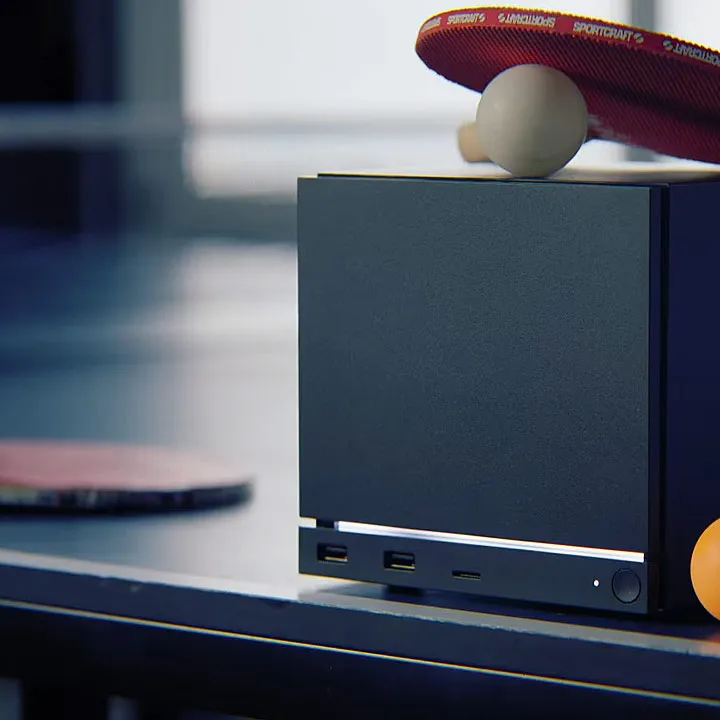
All of Valve's new hardware is now out in the wild, and while I've enjoyed everything from the Steam Controller to the Frame , it's hard to recommend any of it to anyone right now. That problem isn't exclusive to Valve either. Across the entire industry, getting any hardware that can run video games is significantly more expensive than it was a year ago, and that's spoiled some otherwise awesome gadgets.
But while prohibitively high prices might have lessened the immediate impact of Valve's hardware, its goal of expanding SteamOS support and offering a baseline configuration for developers to target still gives me hope for the future of PC gaming.
Back when Valve revealed its 2026 trifecta of hardware, I was excited to see Valve essentially create its own gaming ecosystem , free from the subscriptions and data harvesting that we've all grown used to on other platforms. That alone is still a pretty good reason to buy into something like the Steam Machine . But its relatively weak performance with a comparitively high price is a huge barrier, and I can't really blame anyone for balking at the idea of spending $1,049 on it – and that's without a controller.
Outside of Valve, Intel launched its new handheld chips, led by the Arc G3 Extreme, and it's a force to be reckoned with. When I tested it in the MSI Claw 8 EX AI+ , it absolutely trounced handhelds like the Xbox Ally X and the Lenovo Legion Go 2, but it costs $1,899, and for that price you can get a pretty decent gaming laptop , at least until those go up in price too.
That's before mentioning graphics cards. The high-end Nvidia GeForce RTX 5090 , which first retailed at $1,999, is going for about $8,000 these days due to its huge amount of VRAM and how good it is at powering AI models. Even the RTX 5070 has gone up to $850 when it's supposed to cost $549. There are shaky rumors that Nvidia will release its new graphics cards early next year, but even if it does, who would be able to afford one?
If prices across the industry were what they were a year ago, Valve's hardware and Intel's handheld chips would have been hugely impactful. I know I'm not the only person in the world who's ready to drop Windows 11 — with all its little bugbears, like needing to be online to get past setup and the pervasiveness of Copilot — altogether. I'd love to adopt SteamOS or another Linux distro full time.
Making it easier to play PC games on SteamOS was Valve's primary goal with this wave of hardware. I still believe that the Steam Machine gives game developers a good baseline configuration to target their optimization toward. That's why the Machine has specs that largely line up with what the majority of Steam users already have.
The Steam Frame is also all about expanding SteamOS software support to ARM hardware. While the standalone performance of Valve's new VR headset is lackluster, thanks to an aging phone SoC, the company was still able to use Proton and Fex to get Windows games running natively. And, now that Valve has been working on Nvidia driver support, its future vision of SteamOS running on everything is actually in reach.
And I think that's the worst part of the high prices on Valve's hardware. If the Steam Machine was able to come out at $750 , it might have been more expensive than the PS5, but it would have at least been more affordable than it is now, Valve would have been able to get its hands on more RAM to get more Machines out there, and it may have made more of an impact to Linux gaming support writ large.
I don't think that progress has been completely kneecapped, though. Even if buying a Steam Machine is off the table for a lot of people – maybe even most people – the work being done on SteamOS and Bazzite carries over to other hardware. You can still build a relatively decent alternative to the Steam Machine and install the operating system yourself, even on older, used hardware.
Ironically, that older, used hardware is the future of PC gaming, at least in the short term. Over the last few years, there's been a huge focus on the most powerful current-generation hardware and its ability to run games on the highest possible settings with ludicrous frame rates. I've contributed to that myself. But, maxing out games is mostly just a way to help justify spending thousands of dollars on a high-end rig . If you're willing to tweak some settings, most PC games will run just fine on 5–10-year-old hardware, and you'd struggle to even notice the difference unless you're zooming in on the images side-by-side.
It helps that, for the most part, PC games are getting easier to run, as long as you ignore any game running on Unreal 5. Capcom, for instance, has been on a massive winning streak with its recent games like Pragmata and Onimusha: Way of the Sword, thanks to RE Engine's ability to scale to lower-power hardware. Even Crimson Desert, with its massive open world and ridiculous draw distances, doesn't take a hugely powerful PC to run.
As weird as it feels to say, especially with a new console generation on the horizon, I hope that more developers realize how expensive hardware is right now and spend more time optimizing their games. Because at a certain point, more realistic graphics are just going to limit how many people will actually be able to play a game as intended.
Jackie Thomas is the Senior Tech Editor at IGN and the PC components queen. She's been covering gaming hardware for more than a decade for IGN, TechRadar, Gizmodo, PC Gamer and more. You can follow her @Jackiecobra
Topics in this story
Gathered from external sources. Rights to this text belong to whoever originally published it.