Top 15 Best Wolverine Comics
Wolverine has been fighting the good fight for decades in the Marvel Universe. These are his 15 greatest comic book storylines of all time.
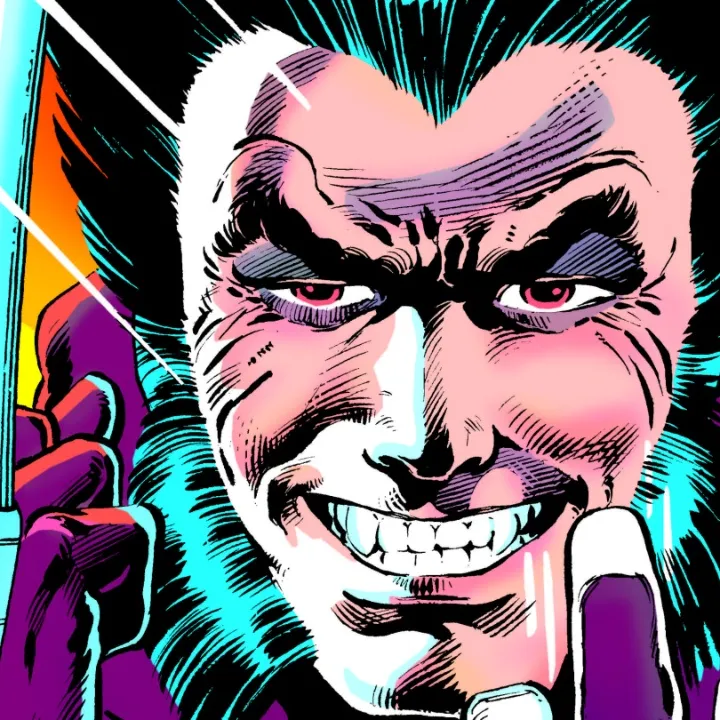
After all these years, Wolverine remains one of the biggest weapons in Marvel’s vast arsenal. He’s appeared in many thousands of comics. Hugh Jackman’s Wolverine was front and center in Fox’s long-running X-Men movie universe, and he recently made the jump to the MCU in 2024’s Deadpool & Wolverine . Looking ahead, we’re expecting Marvel to make good on the promise to keep working Jackman until he’s 90, and the character now makes a grand return to video games in Marvel’s Wolverine on the PS5 .
In light of this renewed Wolverine mania, we’ve extensively updated our list of the best Wolverine comics and graphic novels of all time. Spanning both Wolverine’s solo adventures and Logan-centric issues of books like Uncanny X-Men, these are the comics every self-respecting Wolverine fan must read.
Take a look, then head to the comments to let us know what your favorite Wolverine stories are!
Creative Team: Charles Soule & Steve McNiven
As seen in: Death of Wolverine #1-4 (2014)
We have to hand it to Marvel. They actually had the courage to kill off arguably their most popular character in 2014 and actually let that death stick for several years. And while many of the books connected to Logan’s death and eventual resurrection are better left forgotten, the core Death of Wolverine miniseries from 2014 is pretty great.
In Death of Wolverine, Logan is forced to confront his imminent mortality after his healing factor shorts out. And when Weapon X rears its head once more, the Ol’ Canucklehead embarks on one last gauntlet of foes in order to settle all scores and ensure he leaves the Marvel Universe a better place than he found it.
Death of Wolverine handles Logan’s emotional journey well, in part because writer Charles Soule is so sparing with his dialogue and narration. This series is very much fueled by Steve McNiven’s gorgeous artwork, who manages to top even his legendary work in 2008’s Old Man Logan.
Creative Team: Paul Jenkins & Andy Kubert
For decades, Marvel had slowly been peeling back the layers of mystery surrounding Wolverine's life, but most answers only tended to dredge up more questions. It wasn't until 2001 that Marvel finally went all out and revealed to readers the earliest events of Logan's life.
For starters, Origin revealed that his real name wasn't Logan, but... well, if you don't know, there's no point in spoiling it. Origin paints a tragic picture of a young man whose pleasant family life is torn apart, forcing him to embrace the beast within. Origin shows just how far back many of Logan's defining characteristics extend, from his tendency toward doomed romance to his struggle to suppress his savage nature.
And more than any other Wolverine story, this tale directly influenced 2009’s X-Men Origins: Wolverine. Certain panels from Origin are mirrored almost exactly in the film. Consider Origin a healthy primer for Logan’s cinematic journey.
As seen in: Wolverine: Weapon X #1-6 (2009)
Jason Aaron has long since established himself as one of the greatest Wolverine writers of the modern era, with a years-long run that spans multiple volumes of Wolverine and books like Wolverine: Weapon X. But for our money, Aaron peaked with this early storyline that hit the stands just in time for 2009’s X-Men Origins: Wolverine movie.
In The Adamantium Men, Logan faces off with a mercenary team created in his own image. A PMC called Blackguard gains access to Weapon X’s files, allowing them to create a new breed of super-soldiers equal to Logan in every way - from enhanced senses and healing factors to unbreakable claws. It’s up to Wolverine to prove that he’s still the best there is at what he does and bring down Blackguard by any means necessary.
“The Adamantium Men” works well as a standalone story, but it’s also a great stepping stone into Aaron’s longer run with the character. We hope you survive the experience.
Creative Team: Chris Claremont & Barry Windsor-Smith
Lady Deathstrike is easily one of Wolverine’s most compelling villains. Her hatred for Logan burns as bright as that of Sabretooth, but with the added touch that she believes Wolverine’s very existence perverts the work of her father. Never has that rivalry been better explored than this classic Uncanny X-Men issue.
In “Wounded Wolf,” Yuriko Oyama and her minions transform themselves into deadly cybernetic warriors and attack Logan, leaving him badly wounded and amnesic. It falls on young Katie Power to help our beloved X-Man regain his senses and turn the tables on his attackers. This issue is a great reminder that X-Men comics don’t get much better than when Chris Claremont and Barry Windsor-Smith are working in tandem.
Creative Team: Mark Millar & John Romita, Jr .
As seen in: Wolverine Vol. 3 #20-31 (2004-2005)
In the beginning of the new millennium Wolverine, along with his fellow X-Men, traded in traditional superhero spandex and epic battles for black leather and a more post-modern viewpoint on human/mutant relations. But by 2004, the spandex and supervillains had returned. Mark Millar and John Romita, Jr. helped induct Wolverine back into the realm of bombastic superhero storytelling with "Enemy of the State".
In this tale, Wolverine is brainwashed by HYDRA and The Hand to attack his fellow superheroes. Almost overnight, Wolverine becomes the most feared name in the superhero community. Millar's story allows an unrestrained Wolverine to test his skills against some of the finest the Marvel Universe has to offer. And when he inevitably breaks from HYDRA's control, Wolverine sets out to almost singlehandedly bring down their operation.
This is not the most realistic or grounded Wolverine tale by any stretch. However, it is a lot of fun and helps remind readers that, when he sets his mind to it, Wolverine really is the best there is at what he does.
Analysis: Not to be confused with the 2017 movie, Logan is the sort of deceptively simple story that may not immediately grab you, but by the end of the final issue you realize you just read a true Wolverine classic. Vaughan's tale begins innocently enough. With Wolverine's memories restored following the conclusion of House of M, he returns to Japan to settle some unfinished business. The story follows Logan in both the present and the past as he deals with his time as a WWII POW.
Brian K. Vaughan’s story contains many familiar elements. This is hardly the first time Logan has traveled to Japan to settle old scores. And it's certainly not the first time he's entered into a doomed romance with a pretty Japanese girl. But as always, Vaughan arranges his pieces and executes them near flawlessly.
But as Vaughan himself will readily admit, his real impetus for working on the book was the chance to collaborate with Eduardo Risso. Risso proves himself a master when it comes to Wolverine, crafting a look that falls far from the 100 Bullets tree but rivals anything to come out of that landmark series. When a new reader asks for a Wolverine story light on continuity but heavy on enjoyment, this is what you should hand them.
Creative Team: Chris Claremont & Jim Lee
As time went on, it became more and more apparent that Wolverine's shadowy past extended back untold decades. This issue of Uncanny X-Men peels the curtain all the way back to WWII, offering a classic team-up between Logan , Captain America, and Black Widow.
At a time when the X-Men still existed largely within their own little bubble, it was a treat to see Wolverine interacting with so much of the extended Marvel Universe. Claremont explores more of the character's history in Madripoor, an island that has affected and continues to influence the course of his life.
And, of course, few artists have so defined the modern look of Wolverine more than Jim Lee. Lee was all over the X-Men books in the late '80s and early, early '90s, but this is arguably one of his crowning achievements with the team.
Creative Team: Stuart Moore & C.P. Smith
When the going gets tough, the tough turn to Wolverine to get the job done. This standalone story sees Wolverine traveling to Africa to do a favor for Black Panther. The mission is simple – escort a young girl outside her native country and across the border to safety. Naturally, doing so is much easier said than done.
Stuart Moore truly puts Wolverine through the wringer in this issue, as he suffers one grievous bodily injury after another. Each bullet wound and arrow shot is hammered home by the noir-flavored art of C.P. Smith. As with Ultimate X-Men #41 (more on that book shortly), there is an inevitable sense of tragedy to the mission, but the fact that Wolverine sees it through to the end anyway tells you all you need to know about him.
Creative Team: Peter David & Todd McFarlane
When Wolverine and Hulk first met, the former was assigned by his government to take down the latter. It was strictly business. In this meeting, the lines are not as clearly drawn. In the battle between man and monster, nobody wins.
During this period, Bruce Banner existed as Gray Hulk, a cunning but brutish creature who always lusted for a fight, unlike his greener self. Wolverine, meanwhile, was doing his best to live a life of peace as taught by Xavier. But when you throw these two together in the middle of a snowstorm, watch out. What ensues is one of the most savage and bloody battles the two have ever been caught up in. When the dust settles, both are left to question their own thirst for violence.
Creative Team: Greg Rucka & Darick Robertson
As seen in: Wolverine Vol. 3 #1-19 (2003-2004)
When Marvel relaunched Wolverine’s monthly series in 2003, it came during a time when the X-Men had abandoned spandex and superheroes for black leather and a darker, more experimental tone. Accordingly, Greg Rucka and Darick Robertson came aboard to revamp Wolverine into a grittier and more grounded look at what happens when Logan isn’t on the clock at the Xavier Institute.
The result is easily one of the best Wolverine runs ever published, full stop. And while Sabretooth factors into the third and final story arc, the series is generally concerned with pitting Logan against more ordinary foes like human traffickers and arms dealers. Rucka and Robertson’s Wolverine is basically the franchise’s answer to Punisher MAX, and that should be more than enough reason to give it a look.
Wolverine is no pleasant, easygoing fella' even on his good days. That said, Ultimate Wolverine makes his classic counterpart look like a dainty maiden. Ultimate Wolverine is meaner, angrier, and even more quick to pop his claws when the situation gets hairy. His tendency towards killing takes on a tragic aura in Ultimate X-Men #41.
Though this issue serves as part 2 of a 6-part story arc, it functions perfectly well as a standalone tale. The story opens with a teenage boy who awakes to discover he is a mutant. His power instantly kills anyone who comes close. Nick Fury, not knowing what else to do, dispatches the fast-healing Wolverine to meet with the young man.
Many readers will see the ending coming a mile away. That doesn't rob those final pages of their power by any means. Bendis' script is unusually quiet in this issue, creating one of the most haunting and emotionally effective Wolverine stories ever.
Creative Team: Chris Claremont & John Buscema
There have been and continue to be a lot of great comics focused on the never-ending rivalry between Sabretooth and Wolverine. Are they father and son? Estranged brothers? Members of the same nonhuman species? At this point, you can pick the backstory you like best. But if we were to pick just one comic to showcase this never-ending feud, we have to go with 1989’s Wolverine Vol. 2 #10, by Claremont and John Buscema.
This iconic tale introduces the notion that Sabretooth makes a point of hunting down Wolverine each year on the latter’s birthday to deliver a sadistic “present.” As the story jumps between past and present, readers get a full appreciation for just how deep this rivalry goes, and how much Logan has suffered over the years because of it.
Creative Team: Chris Claremont & Al Milgrom
Issue Span: Kitty Pryde & Wolverine #1-6 (1984-1985)
Claremont and other writers have continuously revisited Wolverine's connections to Japan since the first mini-series, but rarely have these stories been as enjoyable as Kitty Pryde & Wolverine. This unofficial sequel introduces Wolverine's old sensei, Ogun. Readers receive an even closer look at what made Wolverine into the hard-drinking, hard-living warrior he is today.
But as much as this story fleshed out Wolverine, it did even more for Kitty Pryde. Wolverine has had a long history of taking young, female students under his wing. In this story, Kitty evolves from naïve young X-girl to a hardened ninja more confident in her skills. Perhaps Wolverine should have tried the same approach with Jubilee.
This series even inspired an all-ages spinoff called Wolverine: First Class that focuses on this particular Dynamic Duo. If you enjoy First Class and want a slightly harder-edged take on the pair, you would do well to check out First Class.
As seen in: Marvel Comics Presents Vol. 1 #72-84 (1991)
Easily one of the single greatest Wolverine yarns ever spun, no bookshelf is complete without a copy of Weapon X. In 1991, Barry Windsor-Smith delved deep into the Weapon X procedure that morphed Logan the man into Wolverine the killing machine. Rather than look at these events from Wolverine's point of view, Windsor-Smith tackled it from the viewpoint of his captors, including Professor Thornton and Dr. Cornelius.
You may recognize this story from watching X-Men: The Animated Series. You may think you know something of it by watching the X-Men movies. But you haven't seen anything until you read the original account. Windsor-Smith tells a story that is brutally violent, haunting, and a touch surreal all at once.
Creative Team: Chris Claremont & Frank Miller
As seen in: Wolverine Vol. 1 #1-4 (1982)
Once upon a time, it was uncommon for Wolverine to garner much attention outside of the pages of Uncanny X-Men . How the times have changed. Wolverine's first real foray into the world of solo superheroics came with this mini-series courtesy of Chris Claremont and Frank Miller.
Of course, there wasn't much superhero-y about this book. Claremont revolutionized the character by establishing him as a failed samurai in search of redemption. Logan's quest brought him back to Japan for the first time, where he fought against the ruthless Lord Shingen for the affections of his daughter, Mariko. The writing is a bit stilted by modern standards, but there's no denying the impact this story left on the character.
And one area that still holds up today is the tremendous artwork by Frank Miller. As much as Claremont revolutionized Wolverine's character, Miller established a visual tone that countless other artists have tried to mimic.
What's your favorite Wolverine comic? Cast you vote in our poll and let us know in the comments below:
For more classic comic book picks, check out the Top 27 Batman comics and the Top 28 Spider-Man comics .
Jesse is a mild-mannered staff writer for IGN. Allow him to lend a machete to your intellectual thicket by following @jschedeen on BlueSky .
Topics in this story
Gathered from external sources. Rights to this text belong to whoever originally published it.