The $1,299 Meta VR Glasses Prove That High Prices Are the New Normal
Meta finally announced its long-rumored Meta VR Glasses last night at Connect, and while they seem like a cool little gadget, they're coming in at a $1,299 asking price – the same that Valve is charging for its 1TB Steam Frame. The difference, though, is that Meta's headset has less RAM and storage, even if it comes in a flashy new form factor.
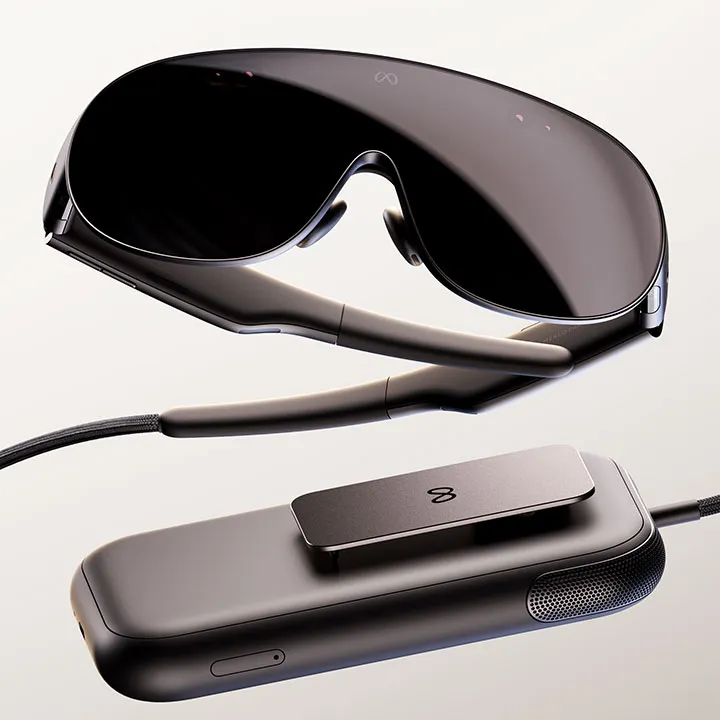
Meta finally announced its long-rumored Meta VR Glasses last night at Connect . While they seem like a cool little gadget, they're coming in at a $1,299 asking price – the same that Valve is charging for its 1TB Steam Frame. The difference, though, is that Meta's headset has less RAM and storage, even if it comes in a flashy new form factor.
The Meta VR Glasses do all of their processing through a 'computing puck' that you keep in your pocket, according to Engadget . That puck includes 12GB of RAM and 128GB of storage, which is paired with Qualcomm's new Snapdragon Reality Elite chip. That chip is built for VR and XR, and is probably going to be faster than the aging Snapdragon 8 Gen 3 found in the Steam Frame , but I don't think it's so much better that it's worth the tradeoff of less RAM and such a tiny drive.
A lot of the price of the Meta VR Glasses probably comes down to engineering a VR headset that weighs just 100g on your head – again, that's not including the 'computing puck' – but it's a stark increase over the Meta Quest 3 that preceded it. What's more, unlike something like the Steam Frame, Meta is likely going to aggressively push extra subscriptions and add-ons to unlock the full potential of the device — and that's not to mention all the data you're likely signing away when you set the thing up.
Those extra services and data harvesting should mean a more affordable device. For all we know, it might be cheaper than it would be without it, but it's just another sign that the ongoing RAM crisis is raising the price on all kinds of devices. It's hard to say how much this headset would have cost before RAM and storage went through the roof, but at least for the latter, the high prices are probably why Meta went with 128GB of storage instead of the 512GB that comes with the Meta Quest 3. Luckily, the puck does have an microSD card reader.
Back when I reviewed the Steam Frame, I kept looking at the Meta Quest 3 as this kind of golden ideal of how much a VR headset should cost, even though it's clear that Meta has defied gravity by avoiding raising the price on it so far.
The Meta VR Glasses do have more of a professional sheen to them than something like the Quest 3 ever did, but the company still spent a huge amount of time on stage talking about them like they're a "private theater screen." To be fair, that's absolutely how I would use them, but at $1,299, you start getting to the point where you can buy a pretty nice TV for far less money.
At the end of the day, if there was any company I'd expect to use software sales and data harvesting to subsidize VR hardware, it'd be Meta. And if these VR Glasses are coming in at $1,299 this spring, it's hard to imagine that any upcoming hardware is going to very affordable.
Jackie Thomas is the Senior Tech Editor at IGN and the PC components queen. She's been covering gaming hardware for more than a decade for IGN, TechRadar, Gizmodo, PC Gamer and more. You can follow her @Jackiecobra
Topics in this story
Gathered from external sources. Rights to this text belong to whoever originally published it.