From the Team That *Almost* Made Blade, Your Mother Your Mother Your Mother Takes Mahershala Ali on an Action Odyssey
Your Mother Your Mother Your Mother review: Mahershala Ali joins his would-be Blade director as a devout sword-wielding assassin.
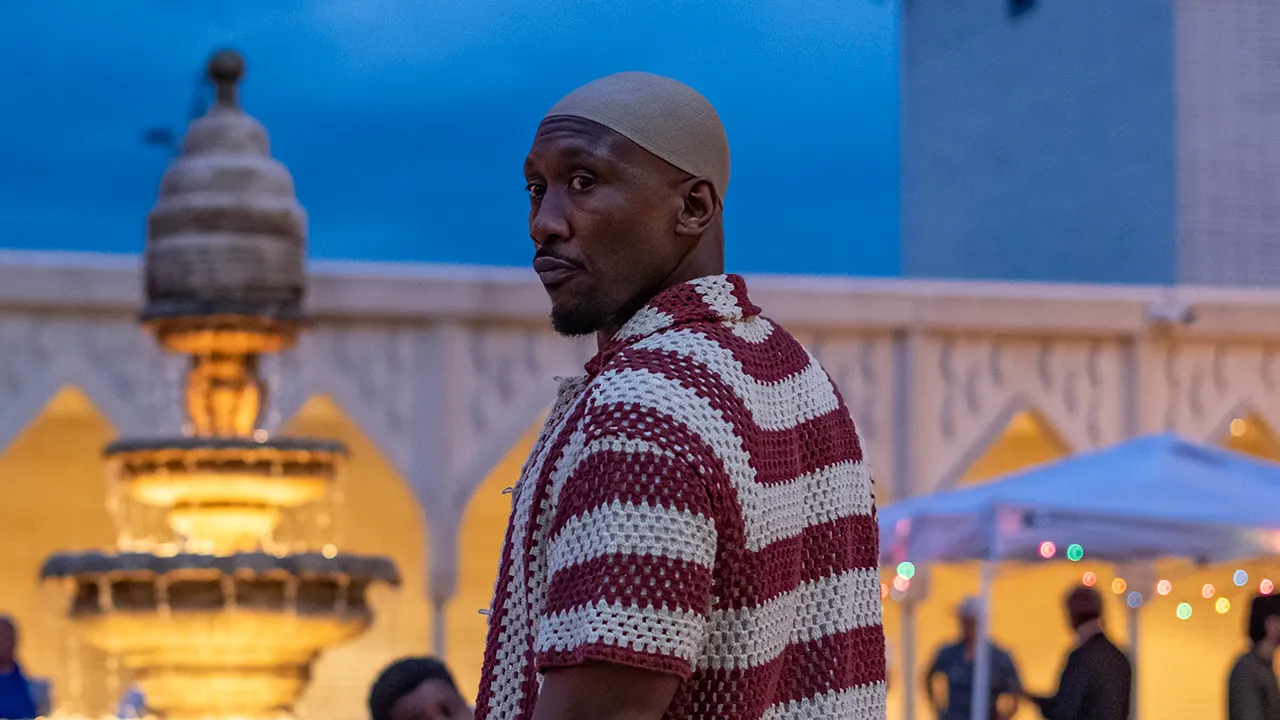
Your Mother Your Mother Your Mother arrives in theaters on September 25. This review is based on a screening from the 2026 Toronto International Film Festival.
Once upon a time, Oscar-winning actor Mahershala Ali was meant to play slick vampire hunter Blade for Marvel Studios under Mogul Mowgli and Bait director Bassam Tariq. The project never materialized, but it led the Muslim actor-filmmaker pair to team up for Your Mother Your Mother Your Mother, a surprisingly thoughtful, action-tinged crime drama about a devout hit man trying to find breast milk for his infant daughter. This takes him through mosques and strip clubs alike in rural Virginia, laying out a visually and emotionally multifaceted journey across a heightened American landscape.
The result — born of Tariq’s own experience trying to feed his newborn son while his wife was in the ICU — beats with a lived emotional authenticity, while unfolding against a borderline satirical modern United States whose religious and cultural concerns inform the movie’s sprawling drama. Ali plays sword-wielding contract killer (and former Quran teacher) Latif, a man whose strict and sometimes paradoxical principles — like using blades but never guns, although the result is just as vicious — are challenged when his wife Khadija (Shakirah DeMesier) suddenly dies. This leaves him to care for his rebellious teenage daughter Fatiha (Adia), his delightfully brash adolescent son Qadir (Jahleel Kamara), and his hungry baby girl (who doesn’t take well to formula) by any means necessary.
The repetition of the film’s title is explained numerous times in voiceover as an Islamic hadith (a prophetic edict) about the central role of mothers in Muslim tradition; in a list of important figures in one’s life, they would occupy the top three spots. Before we ever meet the radiant Khadija in brief flashbacks, Latif is informed of her death by phone call during a darkly comedic scene where he’s just finished butchering a target before clumsily disposing of the corpse. Her absence looms large over the movie, forcing Latif to fill her enormous shoes in ways he may not be prepared for, as little hints of his personal code are doled out through dialogue. He kills Christian white supremacists and Islamic terrorists alike — anyone who poses a danger to innocent people or his community at large — though his vigilantism is largely backgrounded and, for better or worse, left to the imagination.
Awkward exchanges stemming from his conservative approach to women complicate his mission to feed his daughter, but his former associate Mike (Laith Nakli), an Arab American security specialist, is eager to help… for a price. Mike’s unruly nephew (a scummy Abubakr Ali) and former student of Latif’s has not only been rejected by their community for his salacious content creation, but has a target on his back owing to suspicions of pornography and human trafficking courtesy of Korean American pastor (and respected former soldier) Hwan Yoon, played by John Cho in a maniacally fun role. Should Latif take out the heavily guarded Hwan, his needs will be taken care of, but the pious assassin wants out of the game.
Tariq crafts a detailed simulacrum of modern America split by the pull of religion — Latif’s Islam, Hwan’s Evangelicalism, and the Mormonism of a kindly neighbor — but bound by the search for community, no matter how warped. As much as Hwan is satirized as a gun-toting extremist playing to a Confederate flag-waving fan base, the purity of his convictions makes him both sympathetic and utterly terrifying. This in turn makes for a powerful mirror for Latif, whose own hard-fought beliefs are forced to waver in the face of unusually difficult circumstances, playing out at great length through arguments and verbal dilemmas. The action is surprisingly scant, but its brief eruptions are intense, realistic, and soaked in both blood and remorse.
The majority of the drama revolves around the loss of Latif’s wife and the hole it leaves in his heart, affording Ali the chance to deliver a devastating performance which Tariq and cinematographer Katelin Arizmendi accentuate through sweltering contrast and saturation. The light bouncing off Latif’s sweat-drenched brow adds as much to the movie’s bleakly comedic mood as Son Lux’s bouncy, intense score. As darkly funny as the film may be — thanks in large part to Fatiha’s rejection of her father and his faith — its drama is treated both seriously and tenderly. This is especially true in the moments Latif has to confront either Khadija’s family, like her Christianized brother (played by Tramell Tillman), or domineering members of his community, like his imam (Giancarlo Esposito), all of whom seem at least vaguely aware of his line of work.
Where the movie falters most is in its refusal to detail what Latif’s code actually looks and feels like, owing to a lack of preceding moments where we get to observe his job (or rather, his mission) unfolding as usual. This might have gone a long way toward dramatizing what it actually means for him to break his solemn vows; without this contrast, a number of turning points and major decisions feel robbed of their potential weight. However, the film is no less aesthetically inviting, accentuating fearful close-ups with spiritual halos as its conflicted antihero struggles with his duties as a father and man of faith in a violent world that has shaped him violently in return.
Topics in this story
Gathered from external sources. Rights to this text belong to whoever originally published it.