The Wolf Among Us Remastered Review - IGN
A brilliant way to either revisit or catch up on a neo-noir mystery that still deserves its flowers.
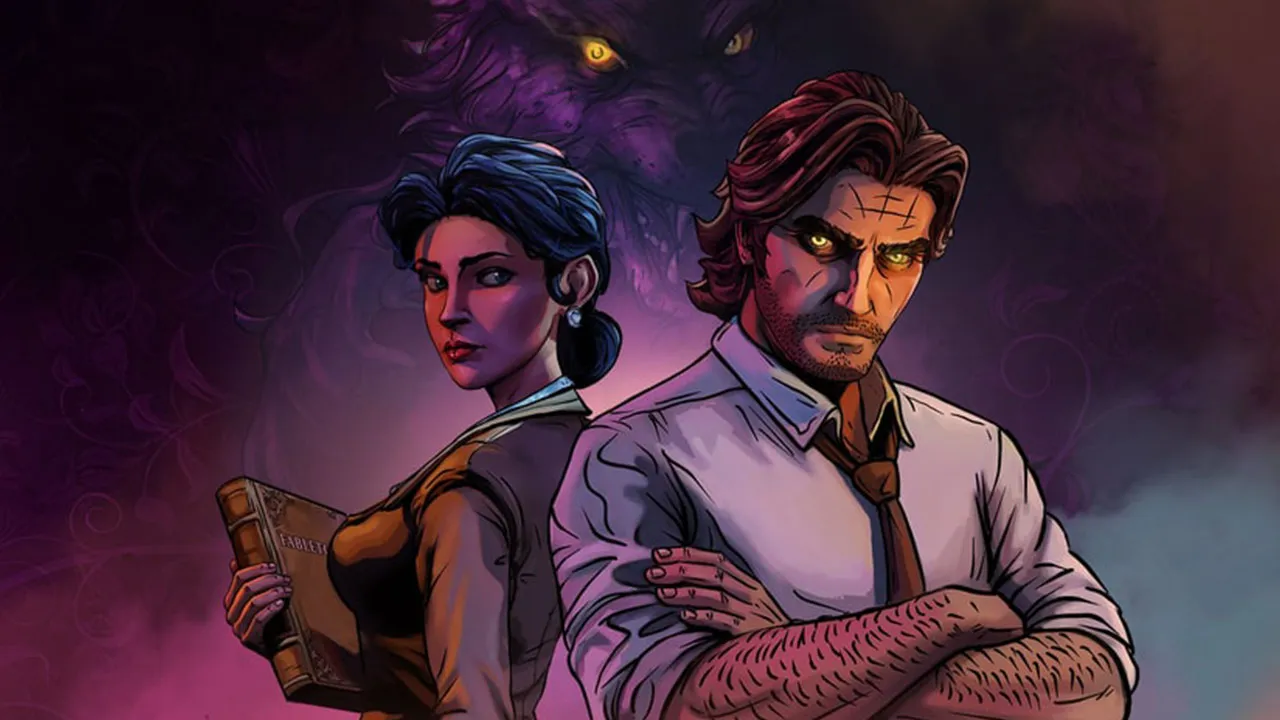
With intense performances, a heady atmosphere, and sharp writing, The Wolf Among Us’ gripping neo-noir saga rivalled the prestige TV dramas of the time when it first came out in 2013, earning acclaim as one of Telltale’s greatest yet. Now, with a long-awaited sequel in the works, it’s been given a fresh coat of paint that’s gussied up locations and added a slew of behind-the-scenes content to sweeten the pot. Some holdover annoyances haven’t been addressed, like the original’s stiff and occasionally uncanny animations, which get in the way of The Wolf Among Us Remastered feeling truly definitive. Still, this story remains a fantastic one, and the enhanced set dressing even manages to deepen its sinister mood.
For those who didn’t play the original, The Wolf Among Us thoughtfully adapts Bill Willingham’s beloved graphic novel series Fables, in which folklore characters covertly coexist with humans in a New York suburb aptly called Fabletown. Set roughly 20 years earlier as a non-canon prequel, Telltale’s adaptation artfully draws on classic noir storytelling, dropping you into the shoes of Sheriff Bigby (aka the Big Bad Wolf) to solve a bizarre but gripping murder. With a decapitated head on his stoop and little more to go on than a ribbon and an etched ring, the marshal must use his keen nose and perception to find the culprit… and he has to do it fast. With humans investigating the case and the social fabric of the mythical community at stake, failure could cause their secret society to collapse entirely.
The Wolf Among Us Remastered Screenshots
On top of that already immense pressure, there’s one more important piece of subtext to consider: after centuries of violence as a storybook baddie, Bigby’s constituents don’t necessarily trust him to get the job done and, naturally, watch his every move. As such, he’s forced to lean on familiar faces like Snow White, The Little Mermaid, and Bufkin from The Wizard of Oz to chase leads as he unravels a web of complex issues spanning class consciousness, poverty, and abuses of power. It’s a journey that proves to be thoroughly engrossing.
To peel back the seedy underbelly of Fabletown, your time as Bigby is loosely split into segments. For the most part, you’ll have intriguing conversations from a third-person perspective, choosing from a handful of responses as a clock quickly ticks down. Through this system, you can lean on witnesses who seem to be hiding something, threatening them if they continue to hold back. Or, if all else fails, you can resort to physical violence (assuming that aligns with your own moral compass). Cleverly, the language used in these interactions draws on its fairy tale source material without ever feeling corny. So, despite including terms like Witching Well and Magic Mirror, the conversations remain emotionally charged – a tribute to the writing underneath and the resonant, enduring performances of its cast.
What’s most important is that your reactions here are not one-sided. As you make certain decisions, a threatening notification pops up stating that the character you’re interacting with will remember what you did (a staple of the genre). For example, say you make a promise to deliver something and don’t come through – well, they might have a few choice words for you the next time you meet. In this way, The Wolf Among Us is not just about solving the whodunit; it is also about choosing whether Bigby will shake off his villainous origins and prove his status as Sheriff and protector.
What’s neat is that the choice is mostly up to you. If you want to, you can cruelly push the citizens to get your answers, or try as often as you might to take their side, even if that means going against the legal institution to which you are professionally bound. By exploring this curious grey area, I began to understand why the residents of Fabletown act as they do, eventually allowing me to empathise with their actions, no matter how desperate or depraved they may be.
Amidst these social calls, you’ll occasionally control Bigby directly as he picks through dingy locations – such as dive bars and ornate offices – interacting with clues to advance the investigation. Just like in conversations, there are even more ethical quandaries to consider, like whether you should interrupt a wake like an unemotional jerk or kick in a door instead of knocking like a gentleman. As the confusing haze of right and wrong settled in, I frequently struggled to maintain my good-guy persona, especially when provoked. It would be so easy to smack an obvious bad guy in the head to get the answers I needed more quickly, but then wouldn’t I be just as bad as him?
Last but not least are the interactive sequences, which require you to complete a series of quick time events to survive some of the higher octane moments throughout the tale. You’ll rip out throats, jump across city blocks, and even set broken bones, with failure occasionally leading to a game over. Thankfully, frequent checkpoints drop you right back into the action if you miss a beat. The variety and frequency of these moments do well to keep you busy as you piece together the killer's identity, particularly as many of them arrive with mesmerising (and sometimes gruesome) animations.
Mirroring the flow of the original, The Wolf Among Us Remastered takes place over five episodes that are about two hours long (all included in this single package instead of being sold individually). For the most part, the choices you make feel impactful, which keeps the momentum chugging along nicely. That is, until the penultimate episode, when the pace suddenly dips and characters start needlessly reiterating their points of view. In earlier episodes, I’d look under every stone to figure out who the villain was, and I was fairly confident I understood what was going on by episode four, so everything slowing down right when I was ready for the payoff felt slightly disjointed.
I do get why they didn’t alter this chapter more substantially; this is a remaster, not a remake, and major story alterations could ultimately do more harm than good if handled poorly. Besides, there are still enjoyable chats throughout the episode, so the dragging is only a minor blip in an otherwise brilliant story, with a finale that certainly clawed me back. But when the rest of the tale is so tight and considered, it’s still a bit annoying to spend a couple of hours rehashing information you’ve already worked hard to uncover.
That dissatisfaction is also softened by the fact that the locations you visit are so intentionally designed and brilliantly reflect the personalities of their inhabitants. While Bigby's tiny, sparsely furnished flat fits with his lone wolf status, the local watering hole’s scrappy yet warm atmosphere matches its down-on-their-luck clientele. The remaster's design glow-up further bolsters that environmental storytelling, as everything from couch upholstery to pawn shop artefacts has been redesigned with far more detail. For instance, those familiar with Aunt Greenleaf's apartment will see that it’s now even witchier than before, with hanging tassels and strewn curios. Elsewhere, the infamous Puddin ‘n’ Pie remains seedy but stylish, featuring Art Nouveau-esque pendant lights and extravagant neon piping.
With so much effort spent on the look, it’s a shame that not every detail received the same touch, and that there are still a handful of friction points on the technical side. Characters sometimes move as if on a swivel, and Bigby’s animations when finding clues tend to feel strangely rigid and occasionally robotic. In the 2013 original, these blips were passable, but in a 2026 remaster, the awkward animations and jerky movements stand out. That’s not to say they are so distracting that they undo all the impressive polishing elsewhere, just that I wish those edges had been similarly smoothed over in order to soundly mark this as the definitive version of the tale.
Harkening back to a simpler era of DVD extras, The Wolf Among Us Remastered also includes a gaggle of bonus features for fans who might want a peek behind the curtain of development. There’s a toggleable Noir game mode that lets you play out the tale in black and white, a digital gallery that compares old art stills with new ones, plus developer and cast interviews about the making-of. As someone who likes to sift through every scrap of lore, I found these additions certainly fun to pilfer through… even if the interface is a tad old-fashioned, leaning more toward sentiment than usefulness. The most compelling add by far is a handful of playable deleted scenes that, while rough around the edges, highlight interesting plot threads and deviations that are exciting to experience after the final credits roll.
Topics in this story
Gathered from external sources. Rights to this text belong to whoever originally published it.