Joe Boyle’s Durham Development
The Rays acquired Joe Boyle, the towering, hard-throwing reliever, from the Athletics as part of the trade for Jeffrey Springs and Jacob Lopez. Since then he...
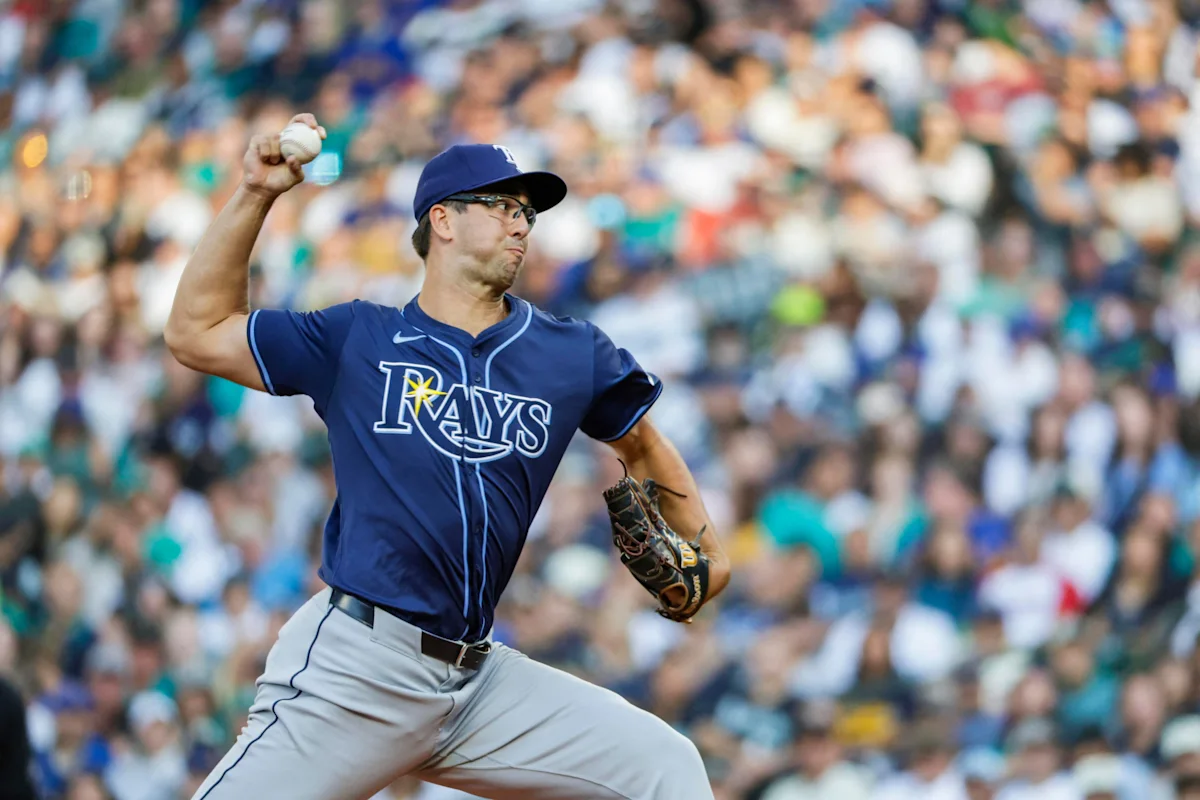
The Rays acquired Joe Boyle , the towering, hard-throwing reliever, from the Athletics as part of the trade for Jeffrey Springs and Jacob Lopez . Since then he's pitched just over 70 innings for the Rays, spending most of his time in Durham.
This year Joe Boyle has made meaningful strides in his command while retaining the stuff that made him an intriguing pitching prospect. In limited major-league opportunities, his topline numbers haven't been great but there's no question has major league stuff and the upside that goes with it. Boyle has developed enough command to support an increasingly sophisticated arsenal, and his ability to adjust that arsenal on the fly is what makes his starter projection particularly interesting.
Before joining the Rays, Boyle posted a 15.7% walk rate in the majors and an 18.9% walk rate in the minors. Since joining the organization, those numbers have fallen to 12.1% and 14.4%, respectively. This is meaningful growth driven by some mechanical adjustments, usage rates, and shape changes.
Boyle has gone from a high three-quarter slot delivery through 2024 to a low three-quarter slot delivery in 2025 and 2026. The lower slot seems to suit him better, giving him a more repeatable delivery and helping him find the zone more consistently.
The adjustment appears to have given Boyle a more consistent foundation from which to repeat his delivery and attack the strike zone. His zone rate has gone from 44.2% in AAA in 2024 to 46.9% in AAA so far in 2026 – despite shifting toward a more secondary-heavy mix, with his non-fastballs historically less likely to land in the zone. And because he has the quality stuff to stick in a rotation, the next step was to revamp his arsenal to attack both sides of the plate.
Here are Boyle's Triple-A usage rates to righties and lefties in each of the last three seasons:
Boyle is now throwing a wider variety of shapes – most of them relatively new given his change in slot – and he's still filling up the zone at a higher rate than ever before. He has more advanced feel and pitchability than he gets credit for. Boyle's command gains coupled with an expanded arsenal are more exciting than either development would be on its own.
Some interesting things have happened with Boyle's usage and cut-slider shape during the 2026 season so far that give even more reason to be excited. The changes become even more interesting when we look at how he's using each pitch against right- and left-handed hitters.
The biggest thing that stands out to me is that Boyle's fastball usage has fallen below 50% against both sides of the plate for the first time in his professional career. His cut-slider is now his highest usage pitch and for good reason: it's the pitch he commands best. I wondered what it would look like if he pitched off of his cut-slider back in January because he has the best location consistency of that pitch.
Boyle's cut-slider has gradually evolved since he joined the Rays. Before joining the organization, the pitch looked more like a traditional two-plane slider, with velocity in the mid-to-upper 80s. By April of 2025, it had developed a tighter, gyro shape. Since his August major-league call-up this season, Boyle has pushed the pitch even further toward a harder, cutter-like offering. It now sits in the low 90s and, for the first time, is more vertically oriented. The pitch's zone rate has increased from 52.5% to 60.6% with the new shape, while maintaining a whiff rate in the 35-40% range. That suggests Boyle has improved his ability to locate the pitch without sacrificing its bat-missing ability.
Since returning to Durham with this new cut-slider shape, Boyle has cut his walk rate to 7.3% across 19.1 innings in four appearances. His strike rate has also climbed from 57.7% to 64.1%, moving from below average to roughly league average. While the sample is small, the trends are encouraging – Boyle is throwing more strikes.
The growth we've seen from Boyle makes me more confident he can stick as a major-league starter, and potentially more than just a back-end option. The stuff has always been there; now his command is becoming good enough to let that arsenal play consistently. The most exciting developments this season have been his ability to improve his zone rate while increasing his secondary usage and his ability to manipulate his cut-slider shape in-season.
The Rays could always simplify Boyle's arsenal in relief, where his fastball and cut-slider combination would give him a relatively straightforward path to success. But the organization's continued investment in his expanded arsenal suggests they see more than a relief role in him. His improved command and ability to manipulate pitch shapes are precisely what give him a chance to remain in a rotation. Whether that opportunity comes down the stretch in 2026 or beyond, Boyle has developed into a legitimate candidate for a major-league rotation spot.
Topics in this story
Gathered from external sources. Rights to this text belong to whoever originally published it.